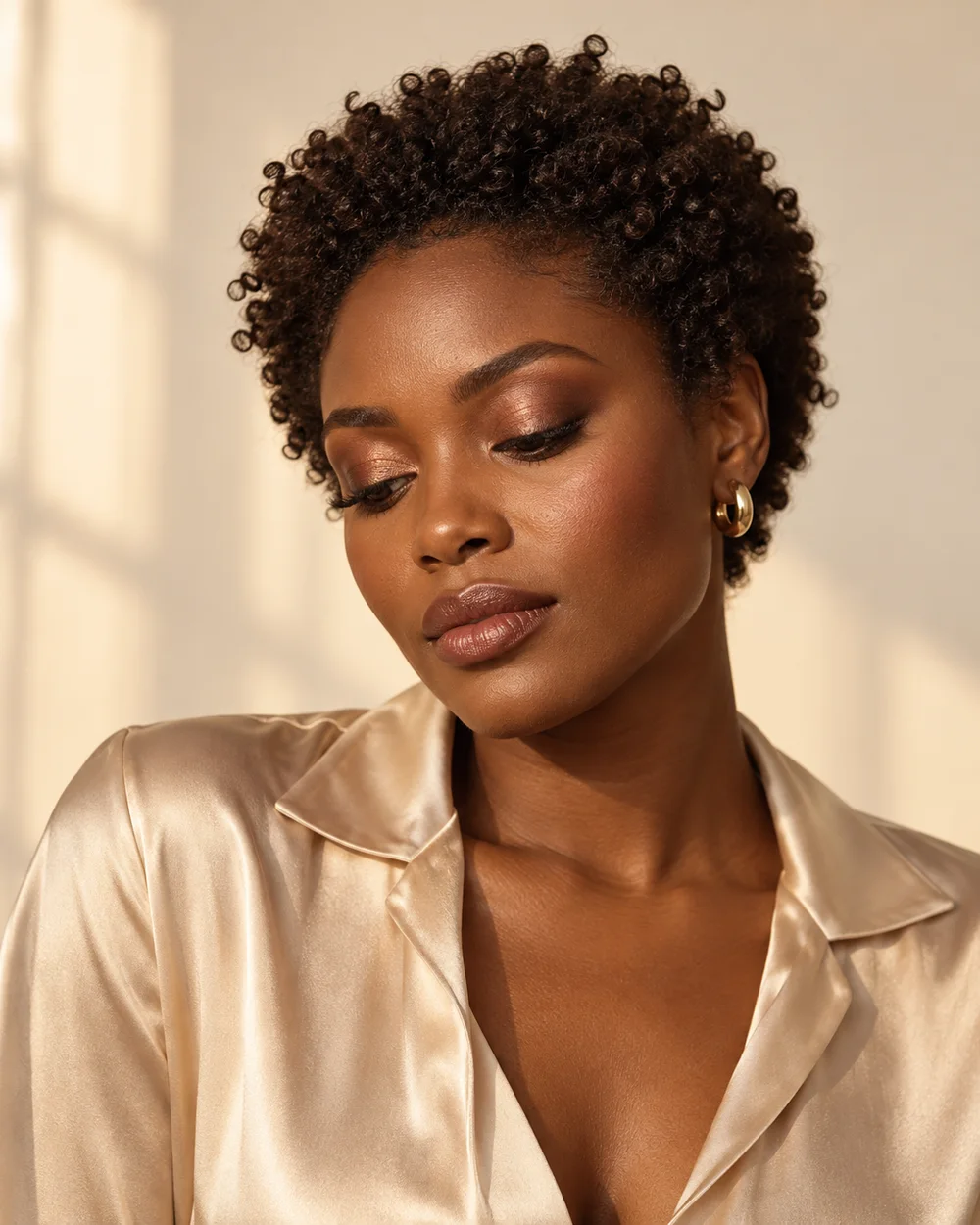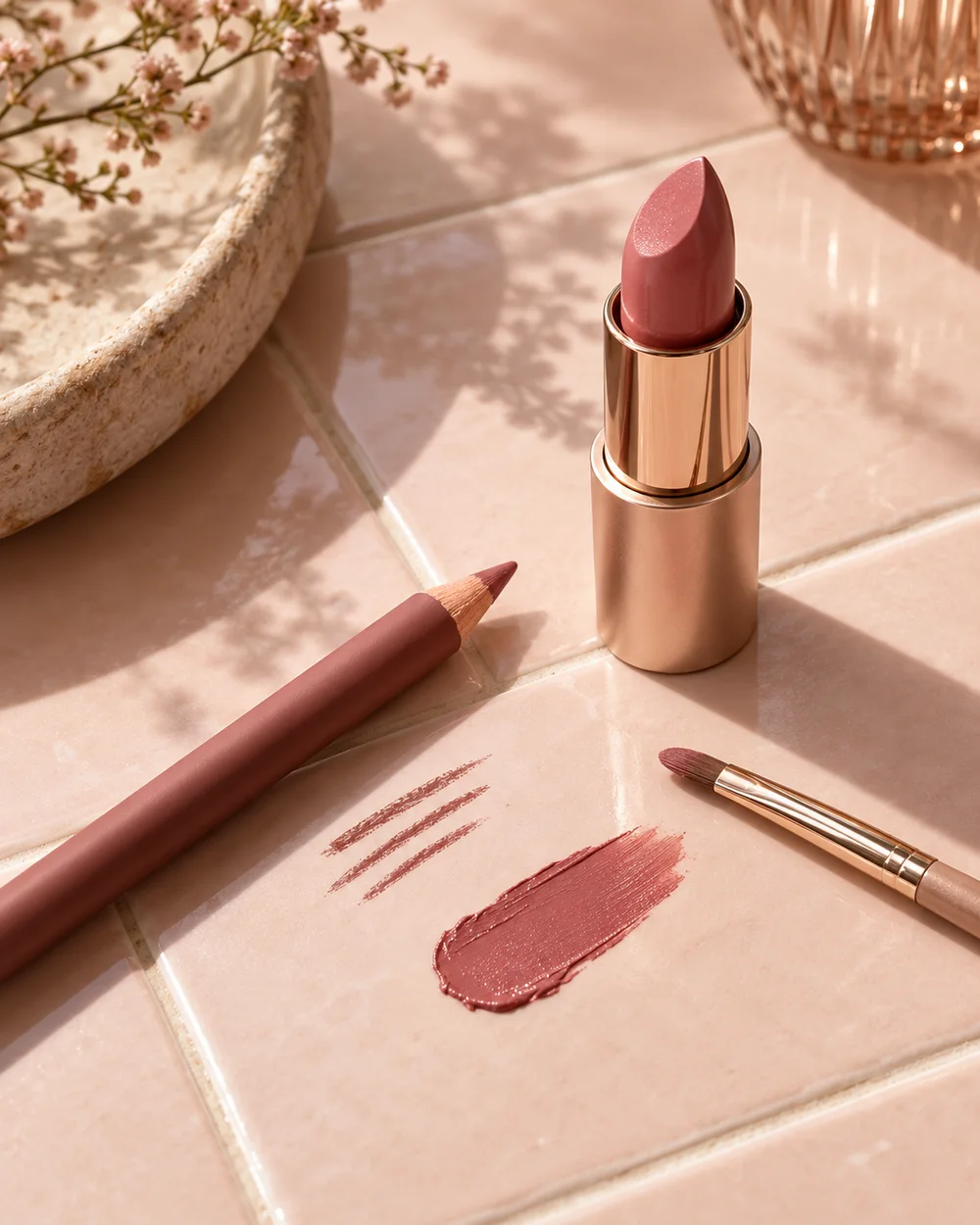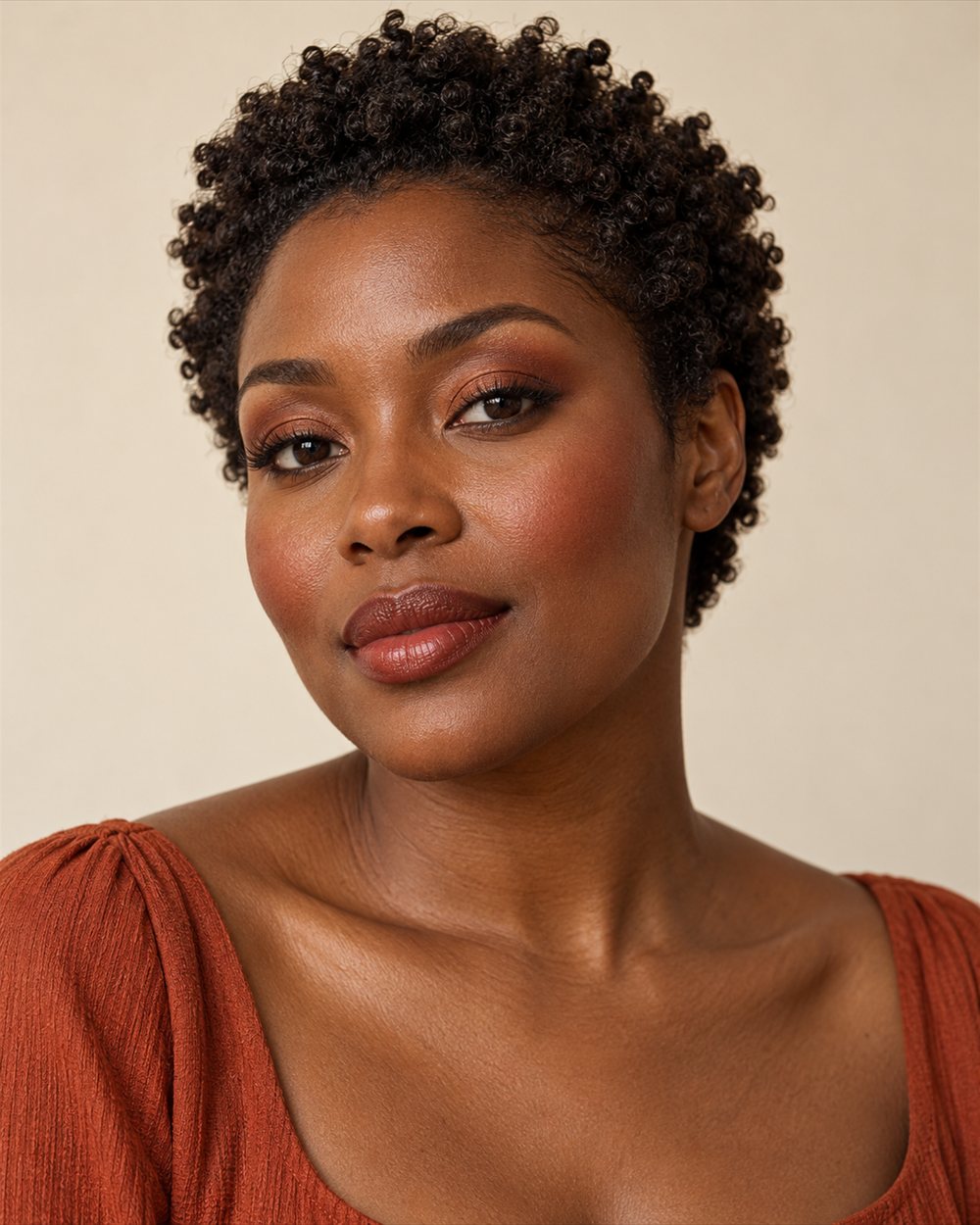
Terracotta is a family resemblance: peach-brown on the cheek, a deeper brick at the lip, perhaps a small copper reflection on the eye. The colours belong together without needing to be identical.
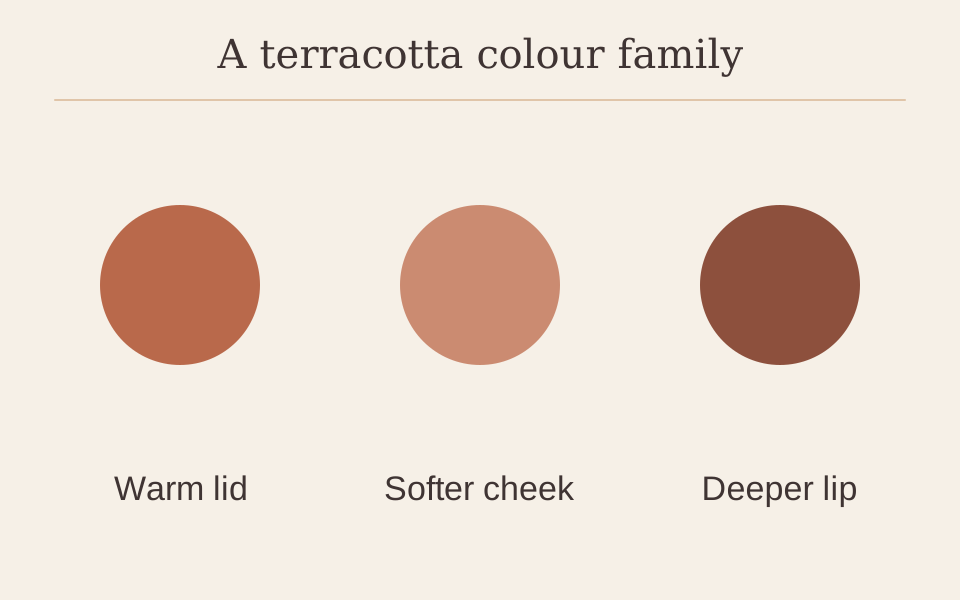
Choose the cheek as the anchor
Start with the blush you want to wear. Is it soft peach, muted rust or a clearer red-brown? Place a little on your preferred cheek area and blend the perimeter. Judge it straight ahead and as you turn, before building more colour.
Now hold the lip colour beside it. Look for shared warmth or softness. A deeper lip can give the cheek room to remain light; a stronger cheek can sit beside a sheerer rose-brown mouth. Exact matching is only one possibility.
Let the lip change the mood
Warm rose-brown gives a quieter interpretation. A more visible brick lip makes the same palette feel more deliberate. Follow your natural outline, adding a compatible liner only if that control is useful. A thin satin layer and a soft edge create a different balance from a crisp, opaque border.
If the pair already feels finished, stop there. Familiar mascara or a quiet brow can be enough. An eye accent should add something you want to see, rather than complete an imaginary list.
Brown gives depth; copper gives light
Choose an eye-safe brown for a small outer-lid patch, then soften its boundary with a clean tool. A little copper on visible lid space changes the finish as well as the colour. Check with your eyes relaxed before extending either area.
Keep the jobs separate. Spreading several browns through the whole lid can lose the small contrast that made the palette interesting. If colour has gone beyond the intended area, pause rather than adding more elsewhere to match.
Find your version of the warmth
If the colours look too orange, compare muted rose-brown or red-brown at a similar depth. If a shade barely shows, try a deeper or clearer version before stacking many layers of the same one. Undertone labels do not decide whether you may wear terracotta.
Use separate products for each area unless the labels permit the intended uses. A matching cheek and lip colour is not evidence that either belongs around the eyes. Keep the cheek-and-lip pair you enjoy, then change just the eye’s light or the lip’s depth when you want another mood.
Makeup placement and colour are personal choices; adjust the steps to suit you. Follow the directions on your own products.