Link blush and lipstick through one visible choice: a shared rose note, a similar level of softness, or a deliberate contrast between a warmer cheek and a cooler mouth. You do not need two products with the same shade name. What matters is the colour each becomes on your own skin and lips, in the amount you choose to wear.
The pictured pairing uses softly blended terracotta cheeks beside a muted berry lip. The cheek provides a warm area, while the lip supplies a clearer, deeper boundary. Quiet eyes leave that relationship easy to see. It is one original colour suggestion to adapt, rather than a rule about which complexion may wear it.
Let one product establish the mood
Begin with the lip colour you already want to wear. Apply a small, connected layer using its own applicator or a clean lip brush, keeping the boundary where you want it. Look at the whole face before choosing the cheek. A transparent rose balm gives you a different starting point from an opaque plum lipstick, even when both packages use the word berry.
If blush is your favourite part instead, place that first and choose a lip to join it. Keep the order useful to the decision: the first colour is the one you want to preserve while comparing the other. Bobbi Brown’s blush tutorial offers bare lip colour as one reference when choosing a blush; here, the comparison extends to the actual lip colour you have decided to wear.
Choose the connection you want to see
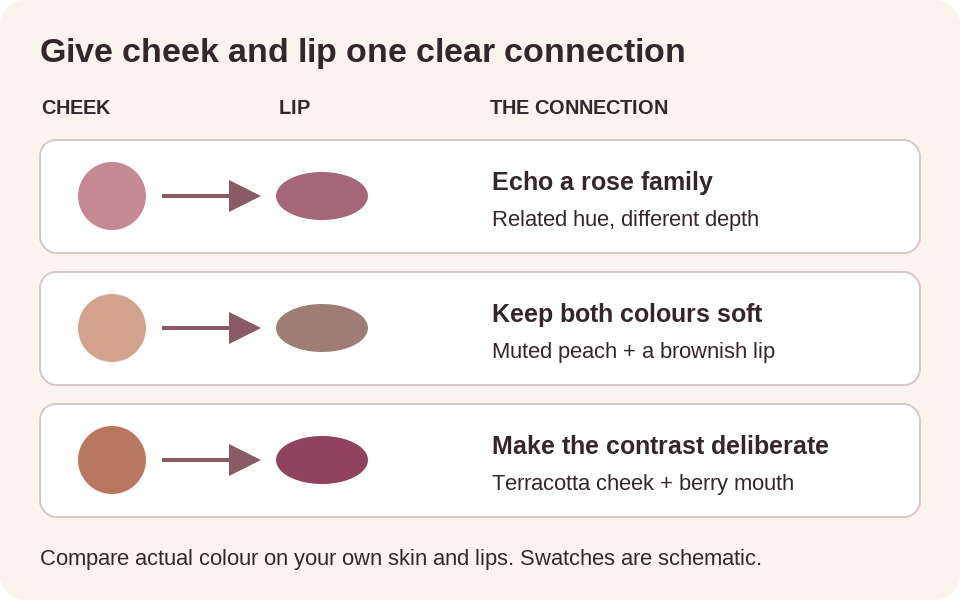
Echo the family. A rose lip beside a rose-brown cheek creates a recognisable thread without requiring identical depth. Keep the blush lighter in amount if you want the mouth to lead. If the whole face feels more pink than intended, soften one area before replacing both colours.
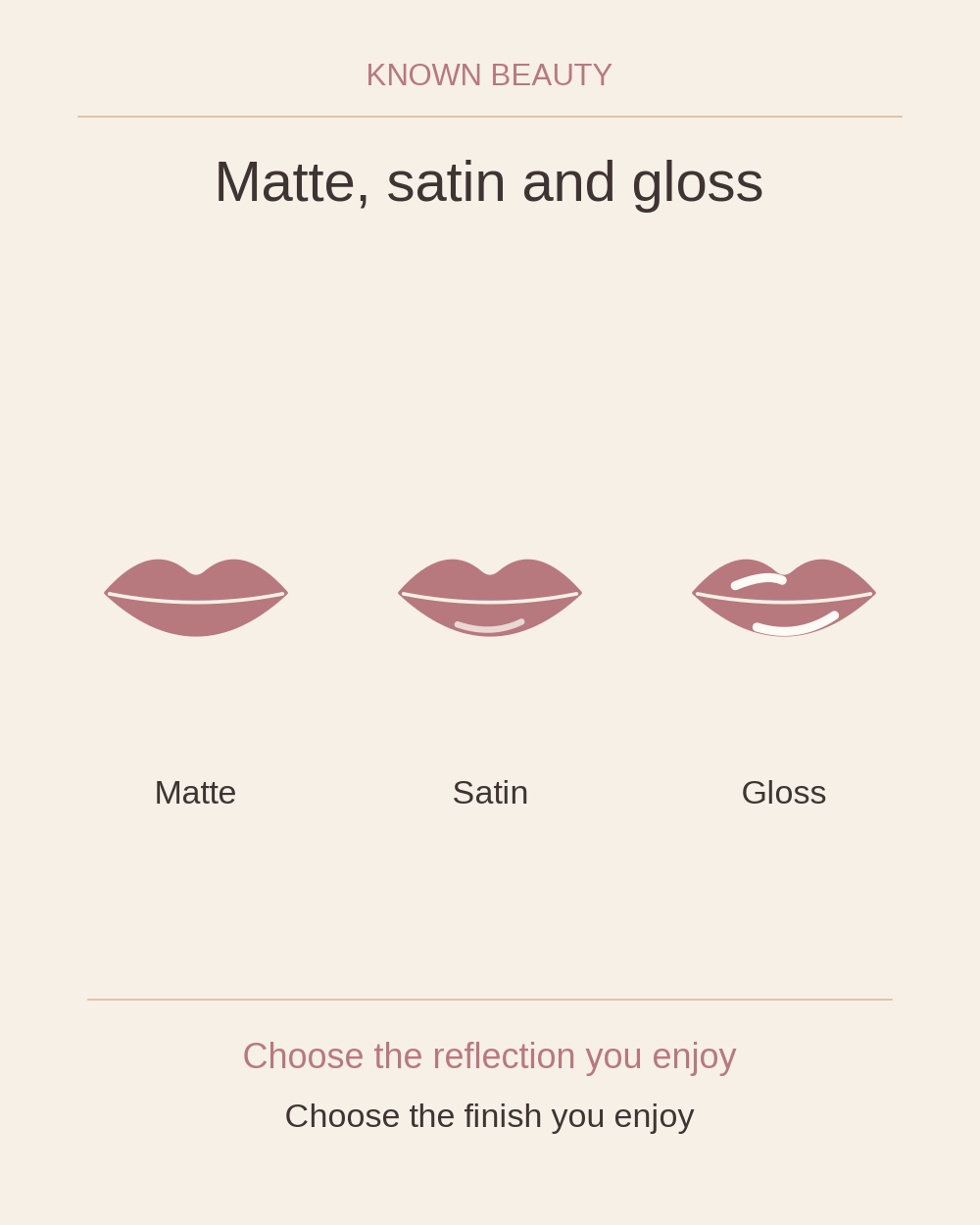
Link through softness. A muted peach cheek and a soft brownish lip can share a quiet, subdued quality even when they are not the same hue. Compare the actual finish too: a small reflective lip area beside a less reflective cheek changes the balance without adding another shade. The lip-finish comparison helps separate colour from sheen.
Make the contrast deliberate. For the pictured terracotta-and-berry idea, start with the lip at the depth you want. Add a small amount of terracotta blush in your preferred cheek area and blend its outside boundary. Keep a little skin visible between the areas rather than trying to merge them into one continuous colour. If both feel equally strong, reduce the cheek amount first and look again.
Change one amount before buying another colour
Stand back far enough to see the eyes, cheeks, lips and neckline together. Check in another ordinary light if the first makes the colours difficult to judge. Your top may make a pink or brown note more noticeable; compare it before deciding the products are wrong for each other.
If the cheek feels too separate, try less of the same blush or a softer lip edge, changing one thing at a time. If you want the cheek to lead, reduce the lip’s opacity rather than automatically choosing a paler shade. A thinner layer and a different colour are separate choices.
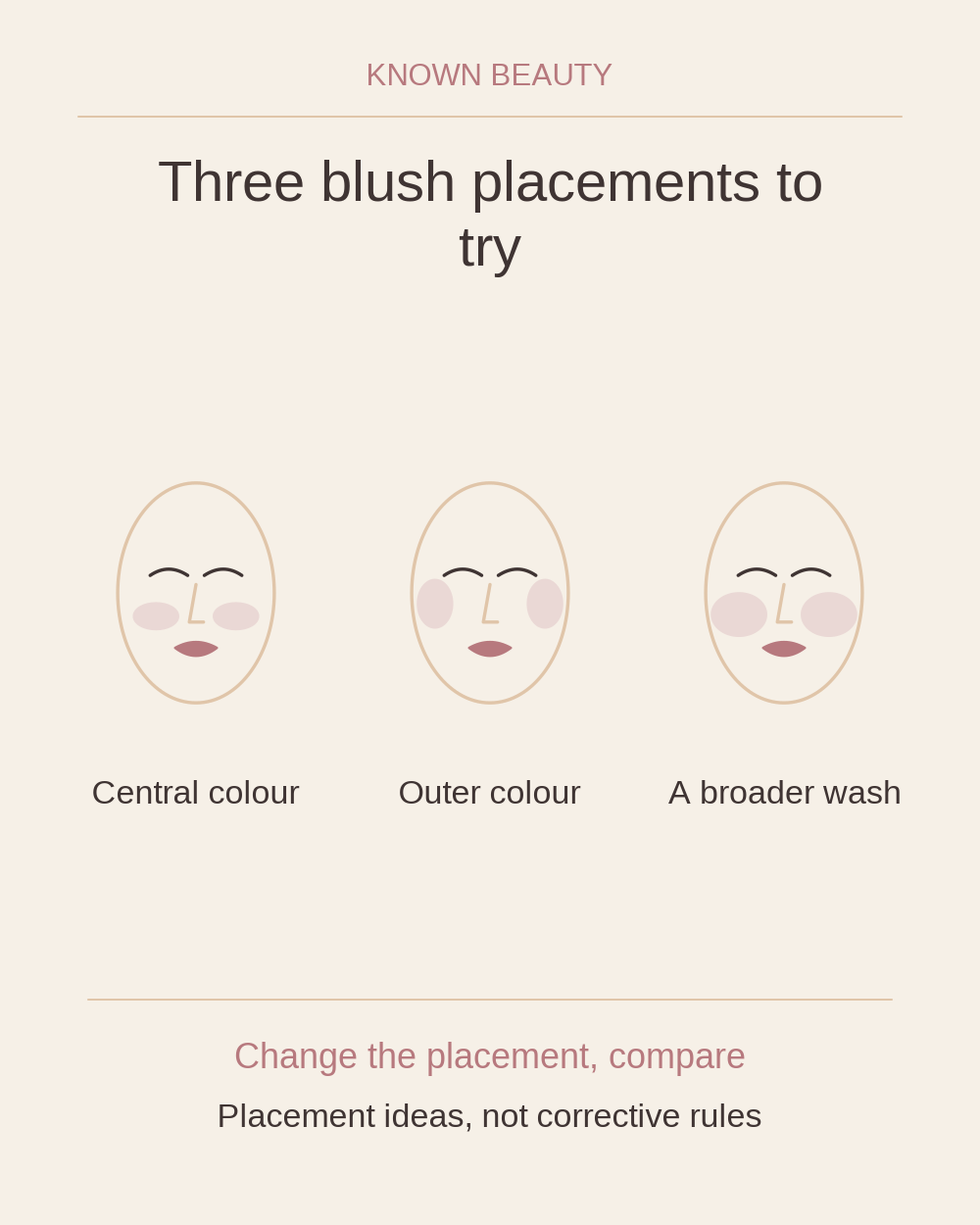
Use each product only on the areas its directions allow. A lipstick does not become a cheek product simply because the shades relate. The blush-placement guide offers ways to compare the area of colour without changing the palette.
Keep the connection that you enjoy seeing at ordinary distance. An exact match can be attractive, a quiet echo can be enough, and a little disagreement between terracotta and berry can supply the whole interest.
Makeup placement and colour are personal choices; adjust the steps to suit you. Follow the directions on your own products.