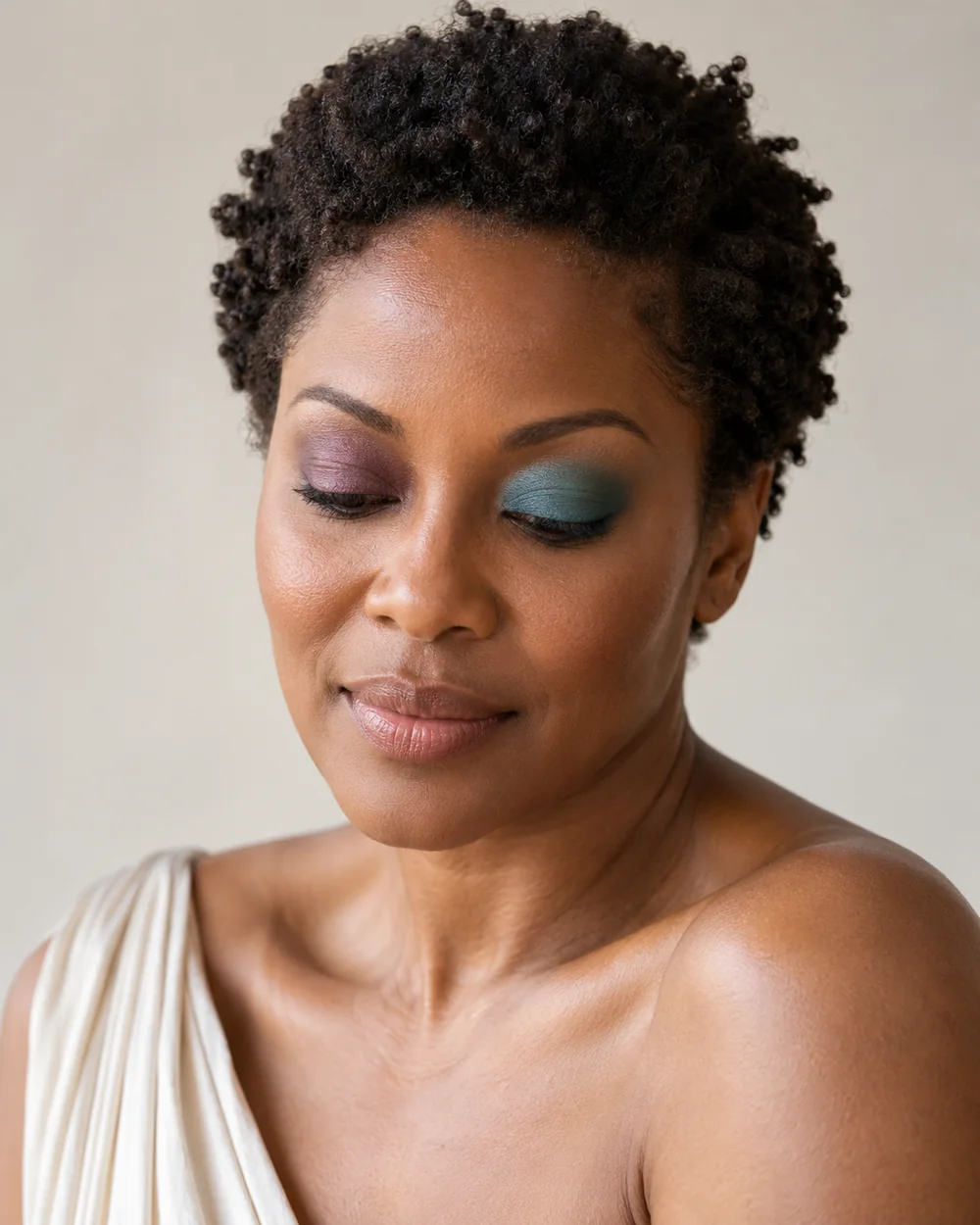
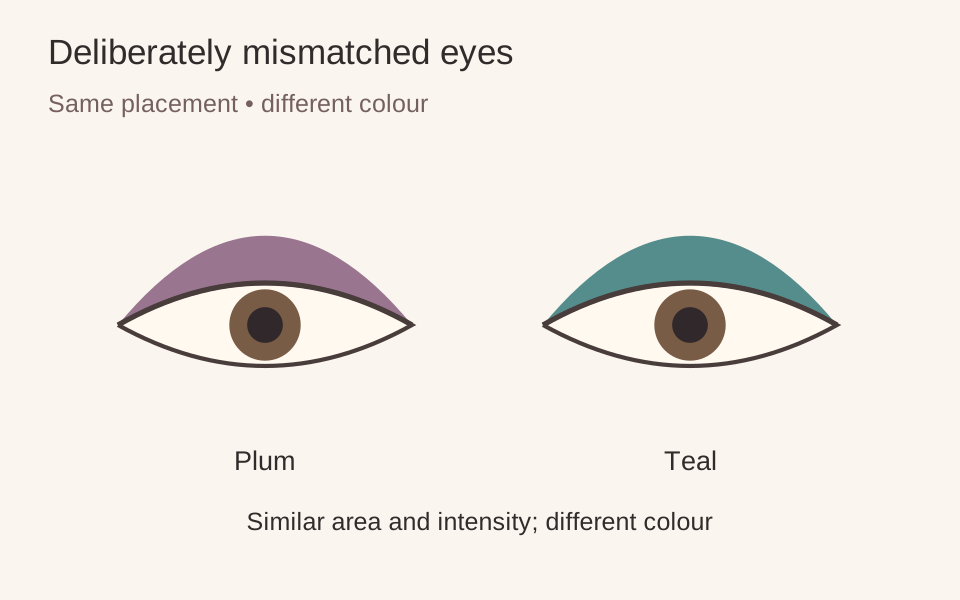
A plum eye beside a teal eye changes the face without needing an elaborate drawing. The colours differ; the shape gives them a reason to belong together. In our fictional model’s illustration, both washes occupy a similar lid area and meet the same quiet lip. The asymmetry is the feature, rather than a mistake hidden under more makeup.
Pinterest’s 2026 forecast proposed mismatched makeup within its Glitchy Glam theme. Our useful translation is a two-colour exercise with a few shared decisions.
Find the common shape
Choose two colours with a similar visual weight. Muted plum and muted teal make a different pair from pastel lilac and very dark navy; the latter combines changes in colour and depth. Neither is wrong, but holding depth roughly steady makes the first attempt easier to assess.
Look forward with your face relaxed. Decide how much lid colour you want visible. A compact rounded wash can work across different eye shapes, but the exact height may differ on each eye. Aim for a comparable impression when open, not identical measurements on closed lids. Natural asymmetry does not need to be concealed before you begin.
Give each colour its own space
Place the first colour lightly on one lid and soften its perimeter. Use another clean brush or a thoroughly clean, dry brush for the second colour so plum residue does not turn teal muddy. Add a little at a time until the two sides feel balanced in intensity. Do not keep increasing both simply because one became darker during blending.
Keep the lower lashes bare during this comparison. If you later add shadow there, choose the same placement rule on both sides or consciously leave one different. Several kinds of asymmetry at once can still be interesting, but they make it harder to see which decision you enjoy.
Make room elsewhere
A familiar mascara, softly groomed brow and comfortable neutral lip can be enough. If you love a bright lip, try it after the eyes are finished and compare the full arrangement. You are choosing the number of focal points, not following a rule that colour must be earned by wearing everything else bare.
Glasses may frame the two colours differently because of light, lens reflection or a strong frame colour. Check through your actual frames before deciding that one lid needs more. On a hooded eye, let a glimpse of contrasting colour be sufficient if that is comfortable; a large painted area is not necessary for the idea to register.
A simple way back
If the pair feels distracting, remove one lid’s colour and return to the shade you prefer on both sides. That is a colour decision, not a failed trend attempt. Use eye-intended cosmetics with clean tools, following FDA eye-cosmetic guidance, and remove them with a suitable product. The strongest version is the one in which you can explain the choice in a few words: same shape, different colour.
Makeup placement and colour are personal choices; adjust the steps to suit you. Follow the directions on your own products.