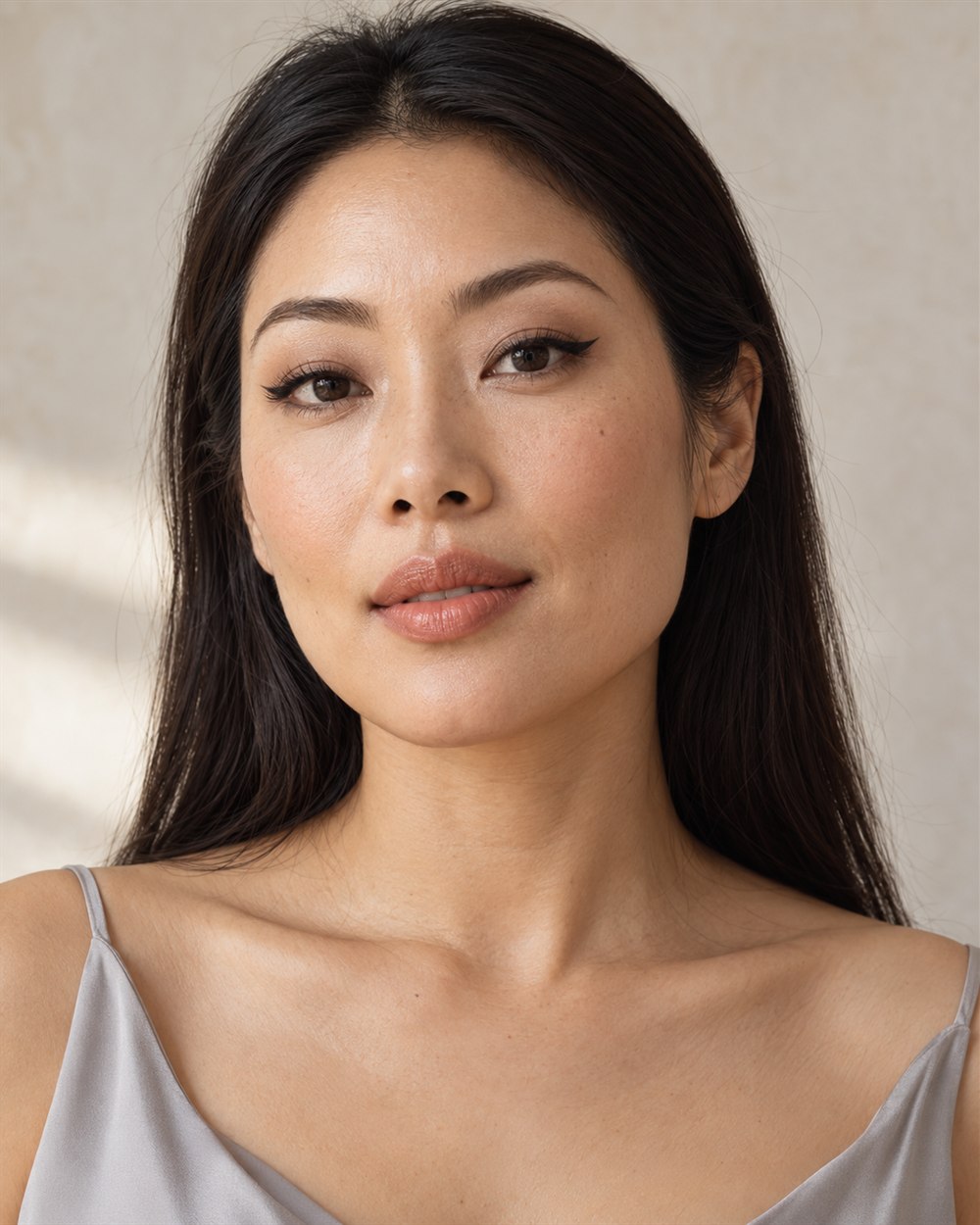
A lifted-liner look uses an outward line to create a directional makeup shape. Keep the wing compact and the surrounding face simple. Your useful starting point is what you can see with eyes open and brow relaxed, rather than the angle of somebody else’s closed-eye photograph.
Set up a relaxed view
Place your mirror so you can look straight ahead without repeatedly raising your brow. Keep your liner, a clean small brush and suitable remover within reach. Use products intended for eyes. If you want neutral eyeshadow, apply it before the liner so the shadow brush does not cover the finished line. If learning, practise the tip before the rest of your makeup: removing one small practice line is easier than repeatedly correcting a finished face. Allow more than the guide time for your first attempt.
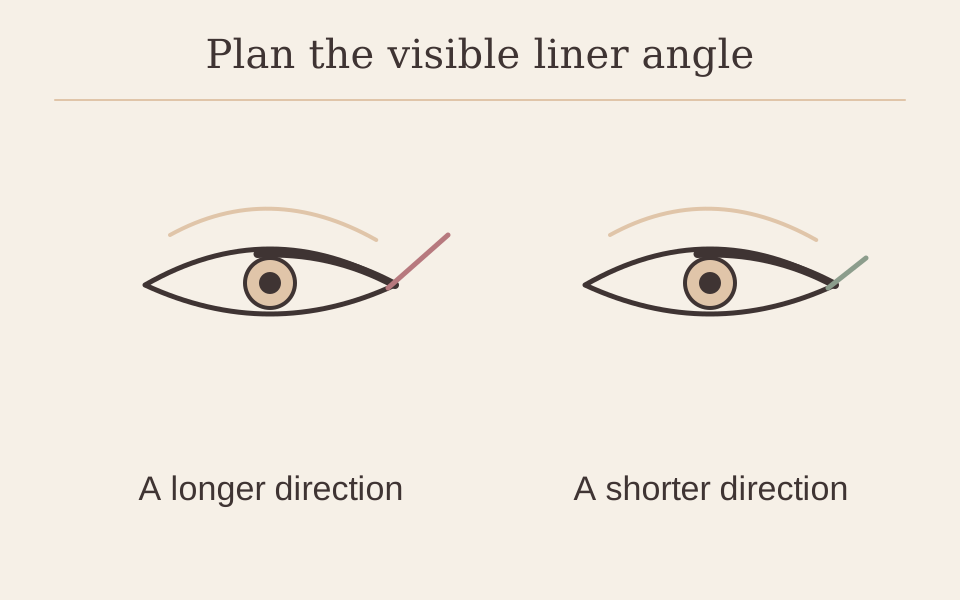
Work from the tip back towards the lashes
- Choose where the tip can stay visible. With eyes open, look at the outer corner and where the lid folds when you blink. Imagine a short extension beyond the upper lashes, then make a tiny guide mark on external skin. You are testing a direction, not drawing a long finished wing. Repeat the mark on the other eye before making either larger.
- Connect a narrow upper line. Draw short sections just above the upper lashes, starting towards the outer half if easiest. Join them to the guide mark without making the entire line thick. Look ahead between passes. A shape interrupted with the eye closed may look continuous in your normal gaze; assess the view you will actually wear.
- Fill only the space you need. Fill a small outline instead of extending its tip again. With a pencil designed to blend, soften the upper boundary using a clean brush if wanted. Keep the tip itself deliberate. Follow the liner’s directions about drying or setting before another product goes over it; the formula determines what is practical.
- Add a quiet frame. With any optional shadow already in place, add your familiar mascara if wanted. The wing is already a distinct shape, so the lower lash line can stay bare. If the line needs a repair, correct that short section rather than tracing repeatedly over the whole shape.
- Balance the rest of the face. Use your preferred coverage, a little cheek colour and an easy lip. Compare both eyes from a normal viewing distance with your face relaxed. Correct a short segment where needed instead of making the opposite eye progressively bigger. The wing practice guide breaks the same task into a smaller session.
Choose your approach
A soft directional line
Use a blendable pencil and keep the extension short. A diffused boundary gives a different finish from liquid liner without needing a separate shadow shape.
A crisp small wing
Use a familiar liner with the control you enjoy. Keep the lid simple and leave drying time as directed. Crisp does not have to mean large.
When the line grows beyond the plan
| What you notice | Check first | Try next |
|---|---|---|
| Tip disappears in a fold | Look ahead with brow relaxed. | Try a shorter tip or different direction in a fresh attempt. |
| Both wings keep growing | Identify the short segment that differs. | Remove and redraw that section instead of enlarging the whole other wing. |
| The line feels severe | Compare width and colour contrast. | Try a shorter brown line or softer pencil boundary. |
Symmetry is a viewing decision
Your folds may differ, so identical measurements are not always useful. Compare visible colour and direction with both eyes open. A small difference can be acceptable if you like it. If you stretch skin or hold an expression to make the line look right, reset your view and try a shorter version instead.
Questions you might have
Does every eye need the same angle?
No universal angle accounts for every fold or preference. Choose a direction you can comfortably see and apply.
Can I skip the extended tip?
Yes. The brown-liner look gives outer-lash definition without a separate wing.
What if sharp lines never feel like me?
Use a soft pencil edge or a little shadow instead. This is an optional design exercise, not a skill you must master to enjoy eye makeup.
Makeup placement and colour are personal choices; adjust the steps to suit you. Follow the directions on your own products.


