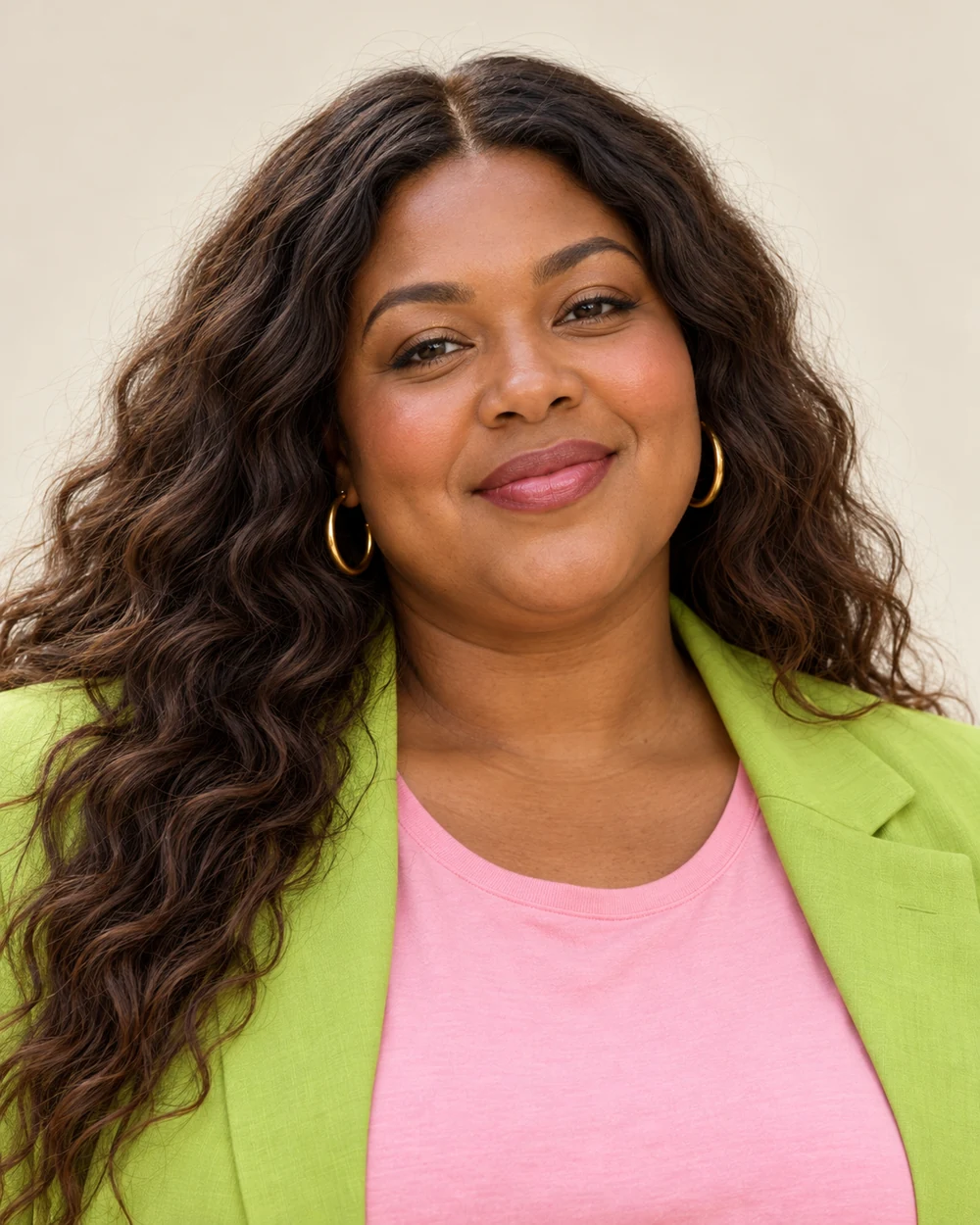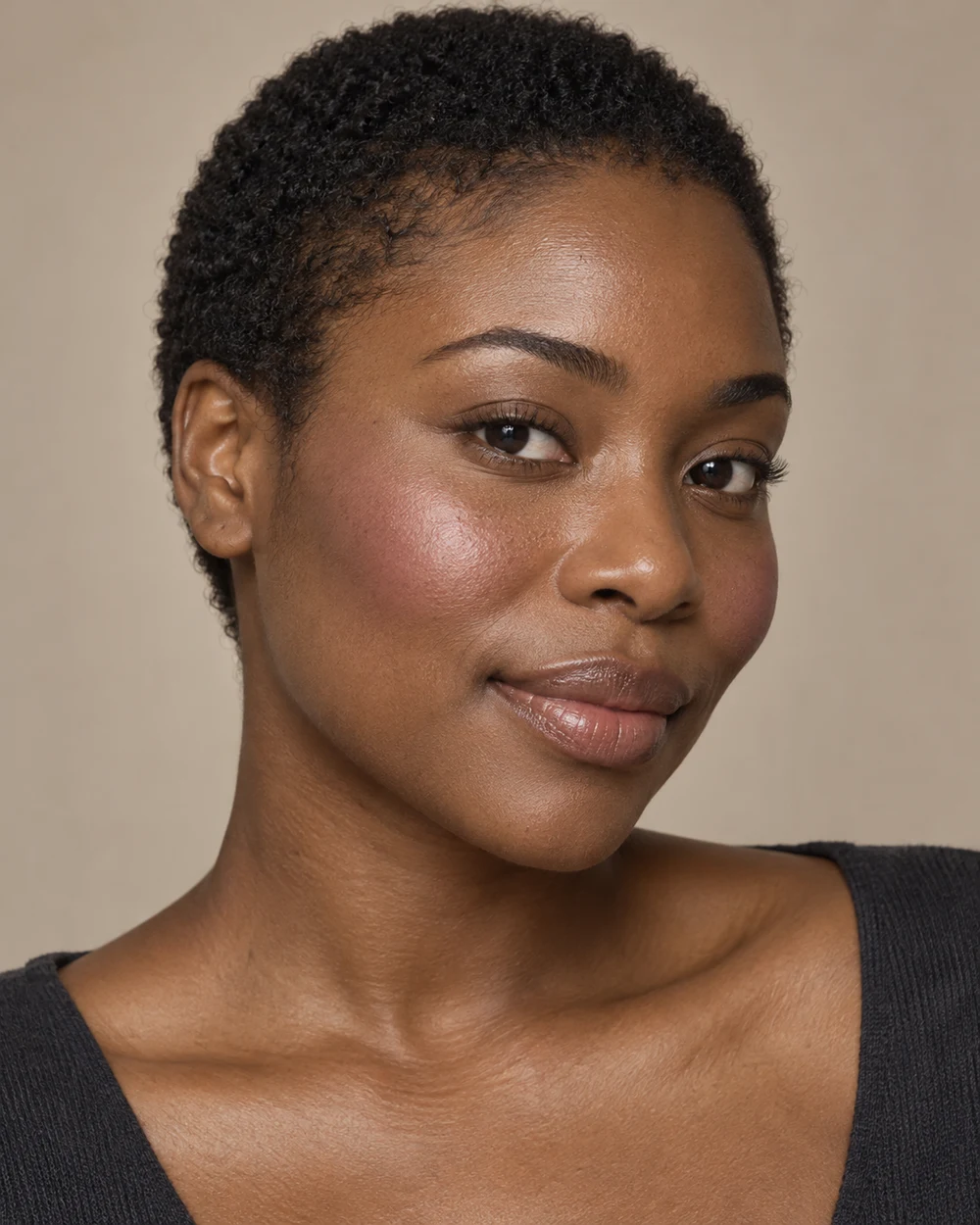
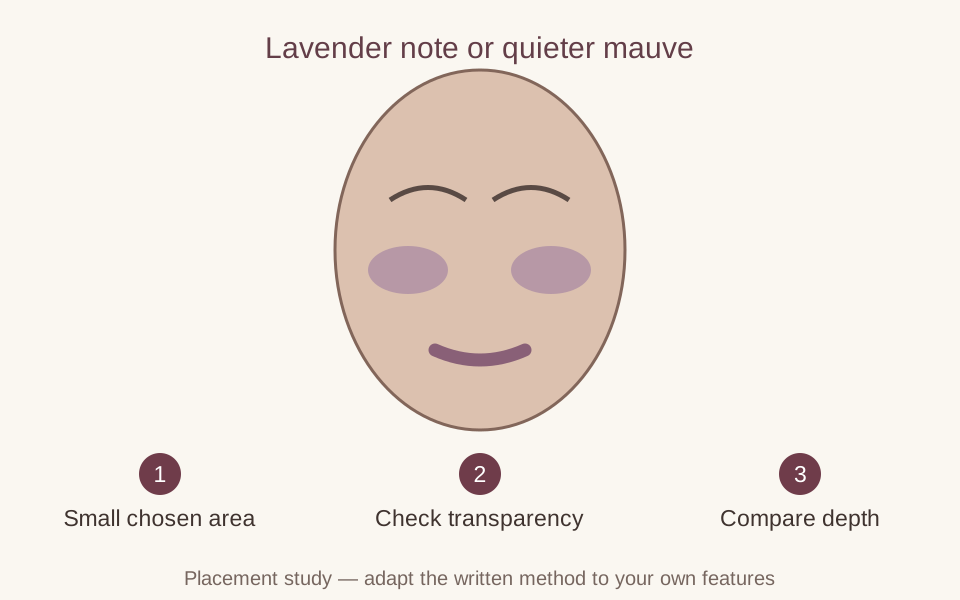
The choice is between a lavender note you want to notice and a quieter mauve that connects more easily to an existing routine. Both can occupy a small cheek area. Neither needs to become a rule about which skin tone is allowed to wear purple. Compare the actual colour and transparency on your face, then choose the version that makes sense beside a neutral lip. The illustrated version takes the quieter mauve route.
When a clearer lavender earns its place
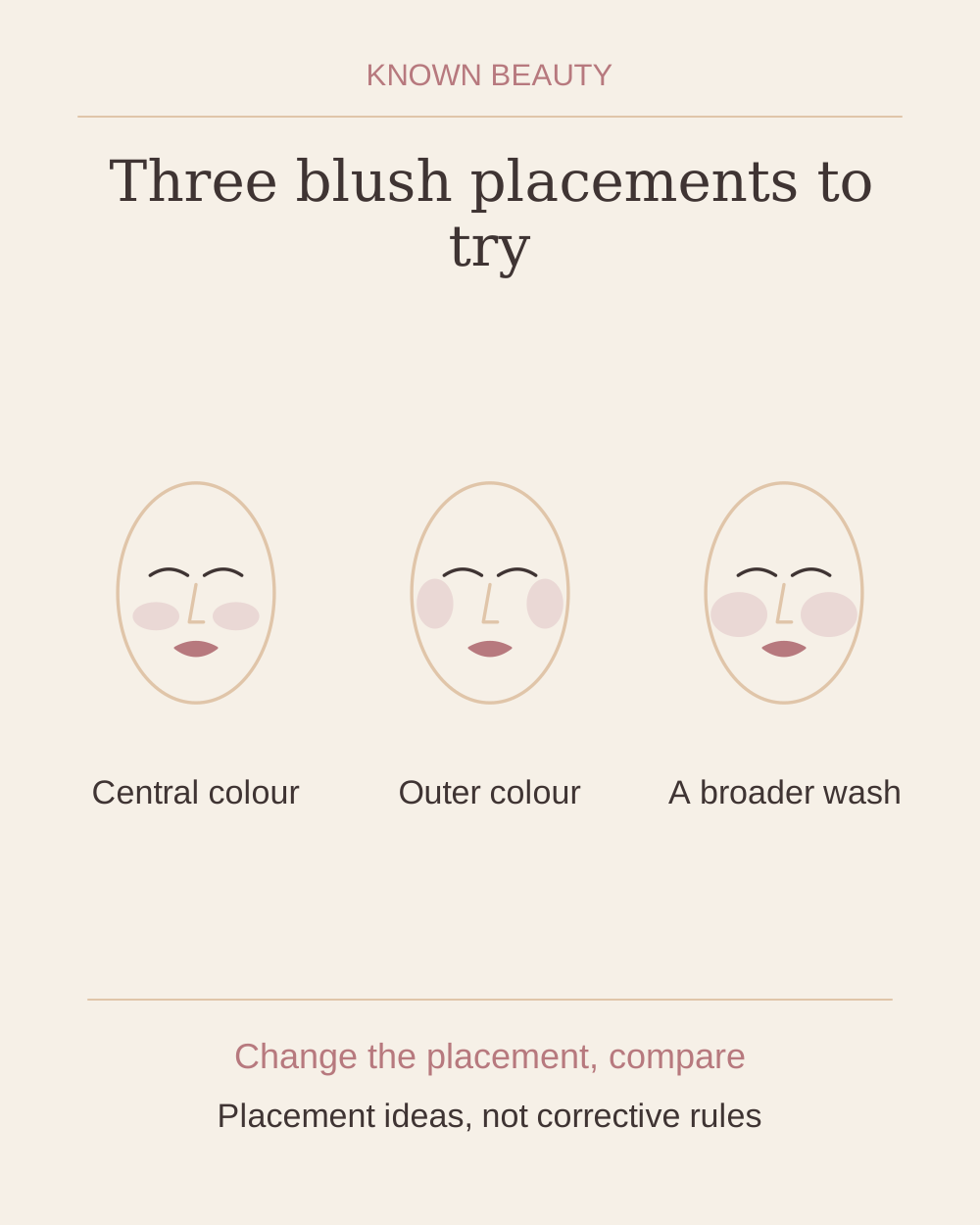
A recognisable violet-pink note is useful when you want the cheek itself to be the colour detail. Begin with a little blush expressly intended for cheeks, placed where you enjoy cheek colour and blended according to the formula’s directions. Leave space around that area. Spreading a pale shade over more skin can make it more noticeable without making it the colour effect you wanted.
Look at the result in ordinary light and beside your actual neckline. If the lavender reads as a chalky veil, try less opacity or compare a deeper lavender before buying another matching product. The colour in the container and its name are only starting information.
When mauve is the more useful route
A deeper, browner mauve can keep some violet character while making a less pronounced pastel statement. It can also connect to a familiar lip colour without requiring you to repeat lavender there. Use the same small placement test so you are comparing colours rather than accidentally comparing a thick layer with a thin one.
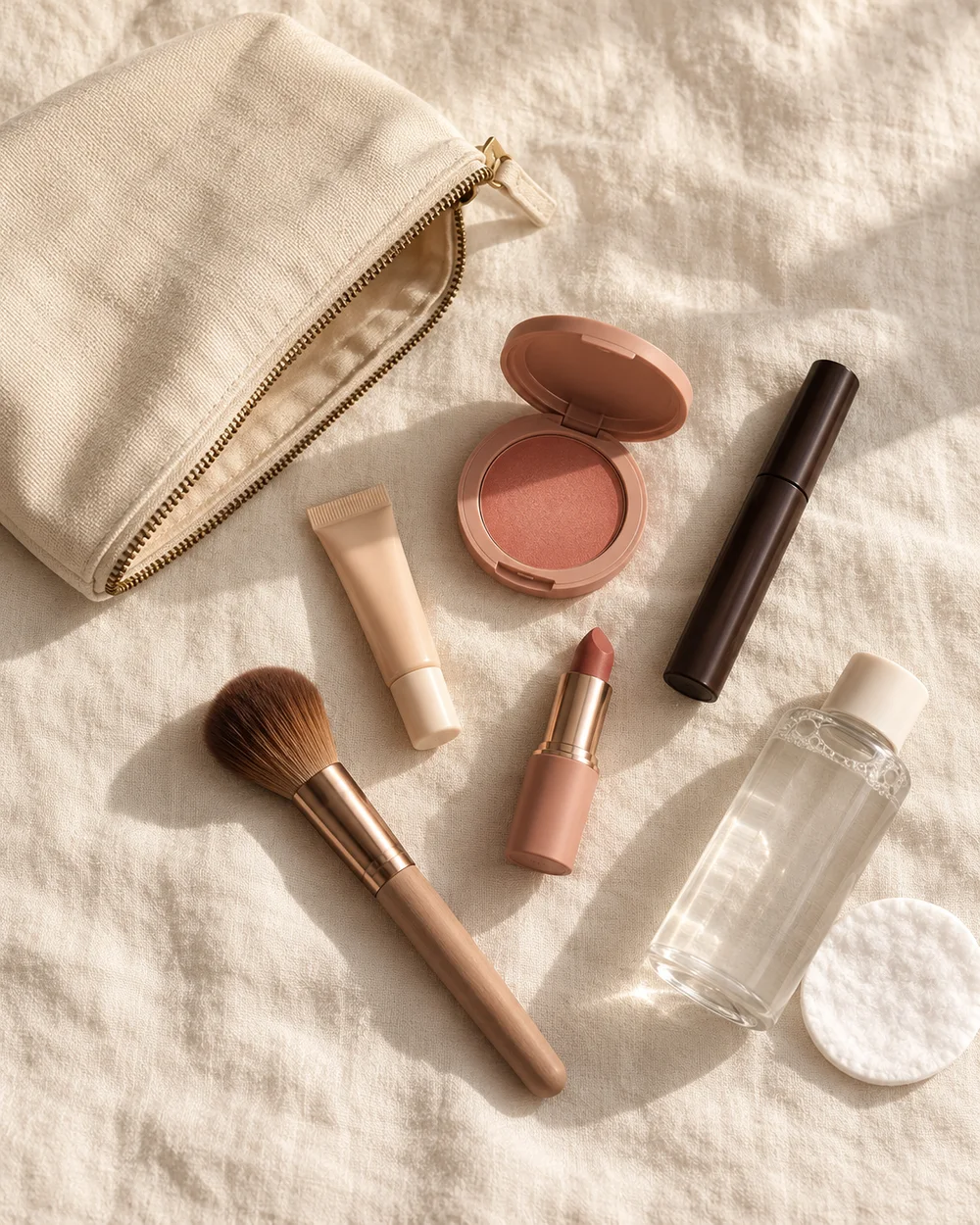
Finish with the neutral balm you already enjoy, or leave the lips at their usual comfortable finish. For this five-minute core, the cheek decision gets the attention. A new shadow, coloured mascara and matching lip would be a different, longer edit.
Choose the amount for your plans
Everyday. Try the mauve or a very transparent lavender in your familiar cheek area. Keep the lip neutral and check the result beside an ordinary top. Stop when you can see the note of colour you wanted without needing to rebuild the rest of the face.
Weekend. Let the lavender occupy a slightly clearer small area if the cheek is the detail you want to play with. Use familiar tools and compare the whole face before making it wider. A softer day does not require a colourless face.
Holiday. Choose the single blush that earns room in your own travel kit. Pack its appropriate applicator and follow your normal preparation and protection directions before the cosmetic edit. Two near-identical pastel blushes are unnecessary if one gives the effect you enjoy.
If both options feel too pale
Remove the unwanted excess locally instead of covering it with another light blush. A more transparent formula or a deeper muted purple may be a better comparison. If the first patch is hard to judge, return another day with your usual preparation rather than layering several new products into the same small area.
Keep the route whose colour and transparency you like on your own face. The label lavender can remain a useful question without becoming a compulsory answer.
Makeup placement and colour are personal choices; adjust the steps to suit you. Follow the directions on your own products.