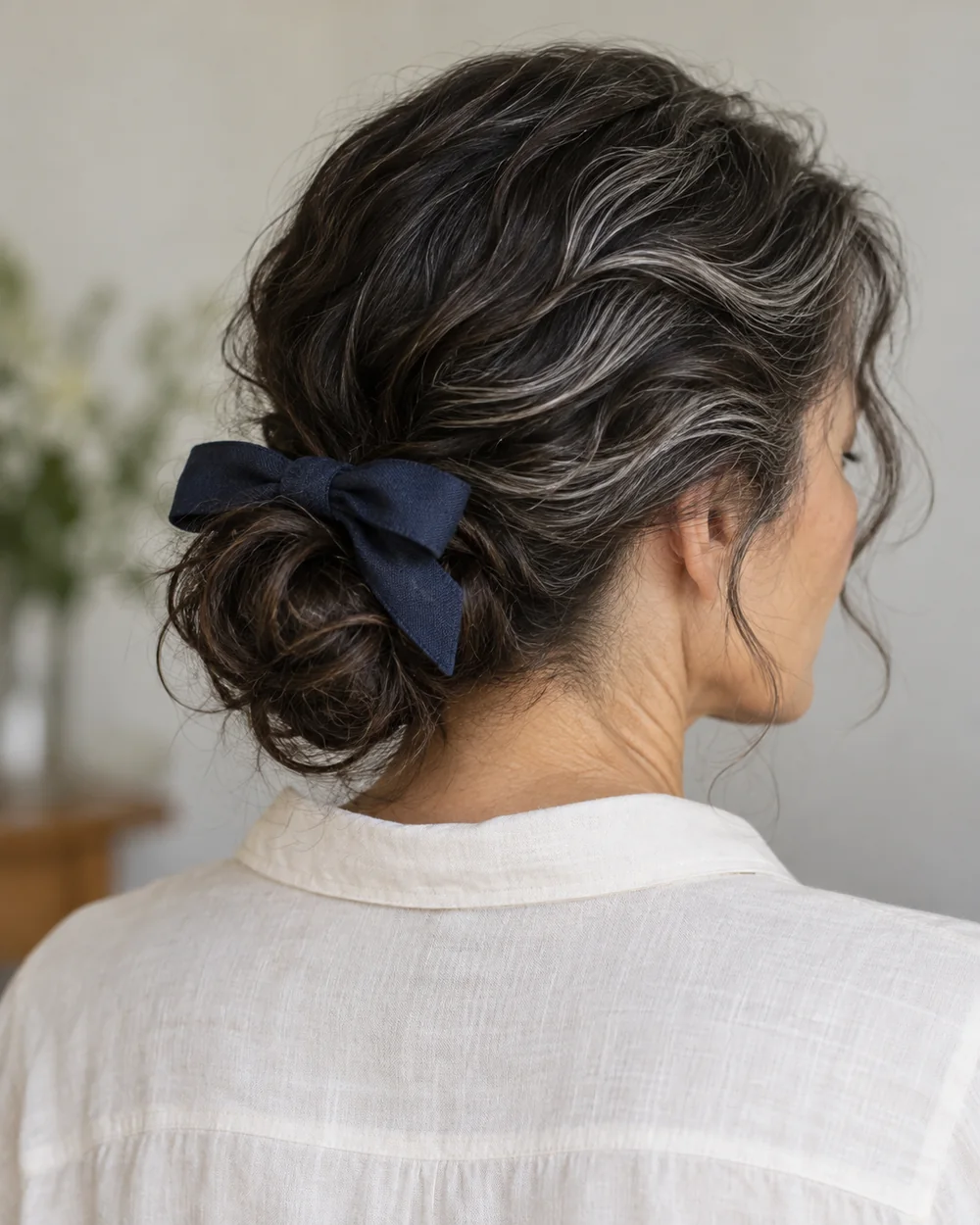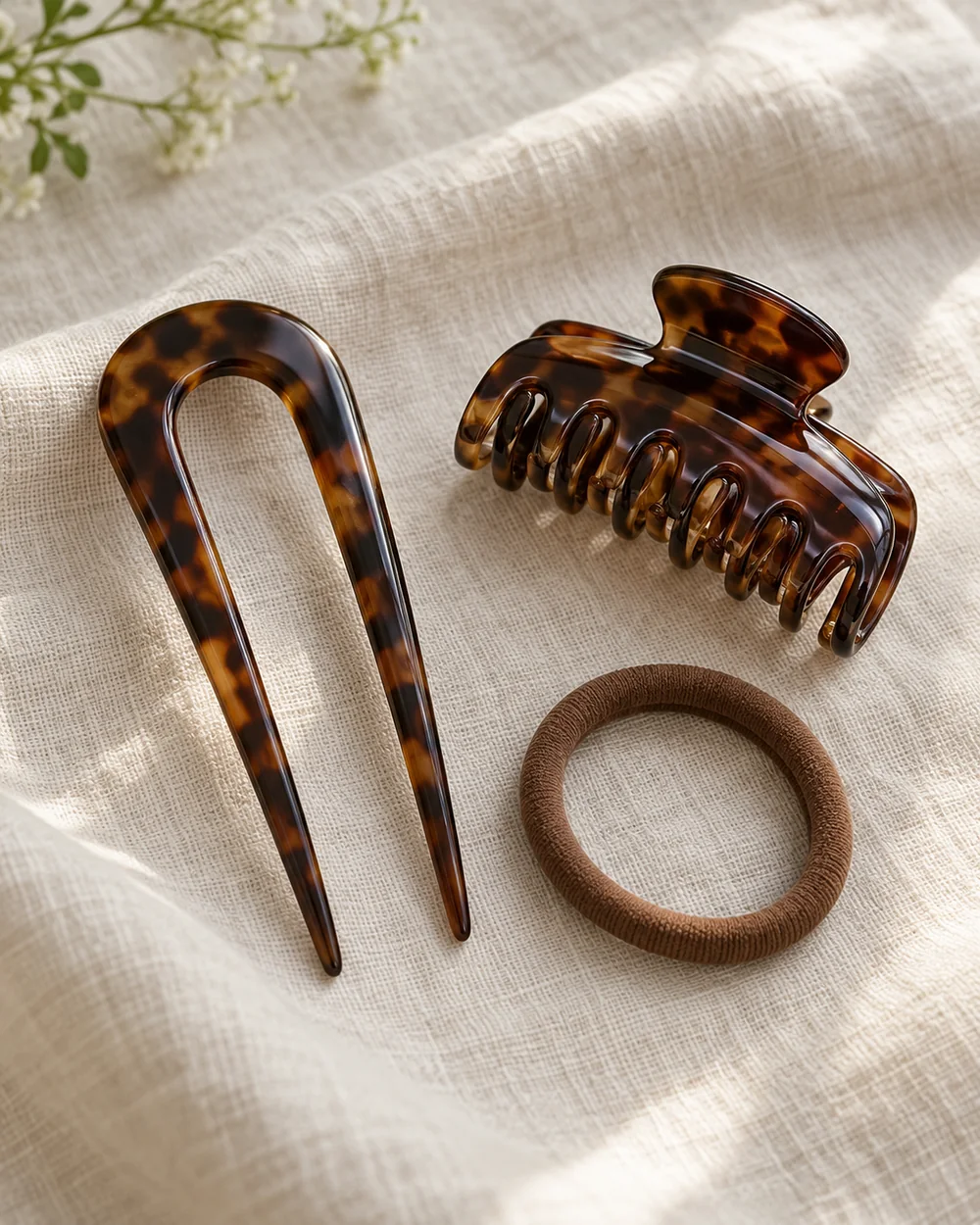
Start with the updo you can comfortably form in your hands. A claw clip opens around a section and closes to grip it. A French pin anchors hair that has already been gathered or twisted. Choosing between them is a question about the movement you can manage and the amount of hair you want to hold, not a test of which accessory is more fashionable.
Google’s April 2026 report recorded growing interest in French-pin tutorials. A clear comparison helps you choose whether the tool belongs in your routine.
Keep the tool that matches the section
For a claw, check the opening, spring and teeth with the amount of hair you plan to hold. The jaws should close comfortably rather than being forced around a section that is too large. A smaller half-up section may suit a tool that struggles with a full twist. Very short layers may need a different style instead of more pressure.
For a French pin, inspect the surface for rough edges and choose a length appropriate to the twist. Kitsch’s original directions begin with forming the desired updo, holding it and sliding the pin through without snagging. Those directions belong to its design; follow the guidance for your own pin rather than forcing every shape through the same motion.

A simple trial before leaving home
Gather hair low at the back and form a loose twist you can hold without pulling. For a claw, open it fully, position it around the twist and release it carefully while checking that the teeth do not press uncomfortably against the scalp. If it cannot close easily, use less hair or another size.
For a pin, keep holding the twist while following that pin’s insertion method. The accessory needs to catch and anchor the formed section; do not push it hard against the scalp in search of grip. If it slides out, take it out and reform a smaller or differently positioned twist. A soft hair tie can support a simple bun if that is easier, but it is not a reason to tighten everything excessively.
What can wait
You do not need several decorative versions before knowing which movement works. Keep one smooth tool that fits the section you enjoy wearing. Fine, dense, curly, straight and layered hair can respond differently; the label alone does not guarantee hold. Test the actual style while walking and turning your head.
Release and reset if the style pulls, pinches or gives discomfort. Do not keep tightening it to prevent every loose strand. Check the tool against your coat collar, headphones, headrest or usual travel position, and remove a rigid accessory if it presses awkwardly. A half-up clip is a finished alternative to a full twist.
Buy another size only when you can name the gap: more room for a larger section, a shorter pin for a small bun, or an easier grip for your hands.
Adapt the styling idea to your hair length, texture and preferences. Follow the directions on your own tools and products.