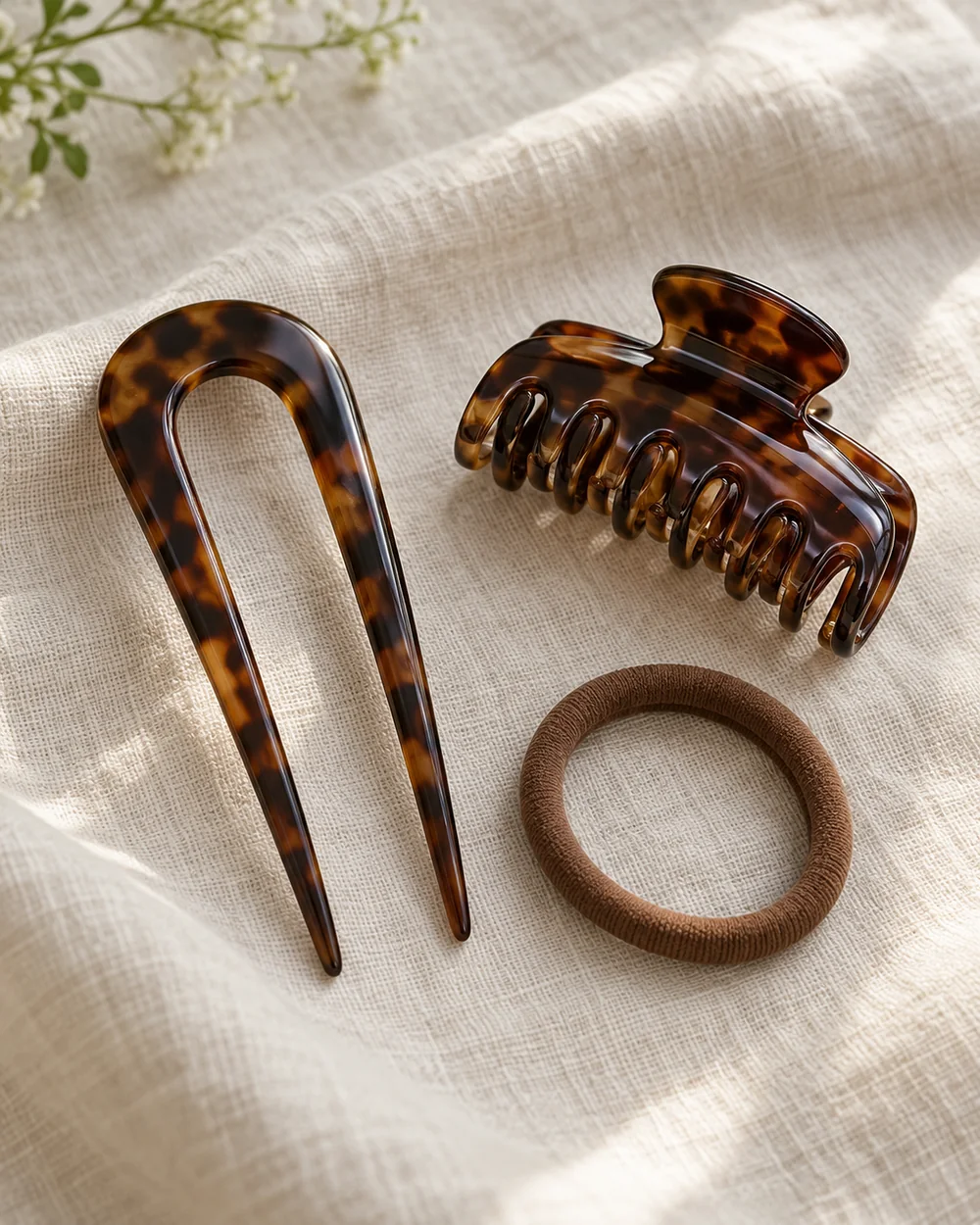
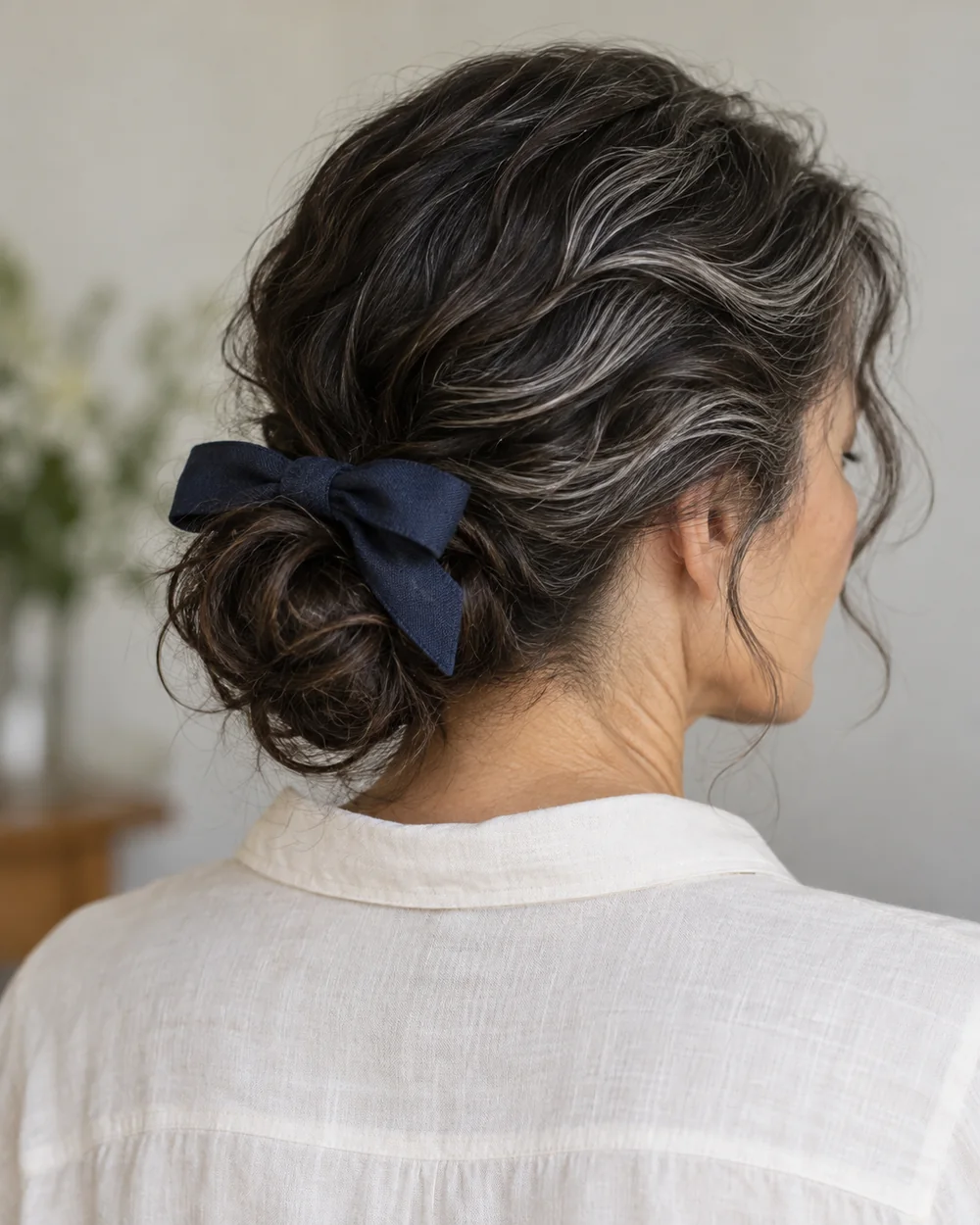
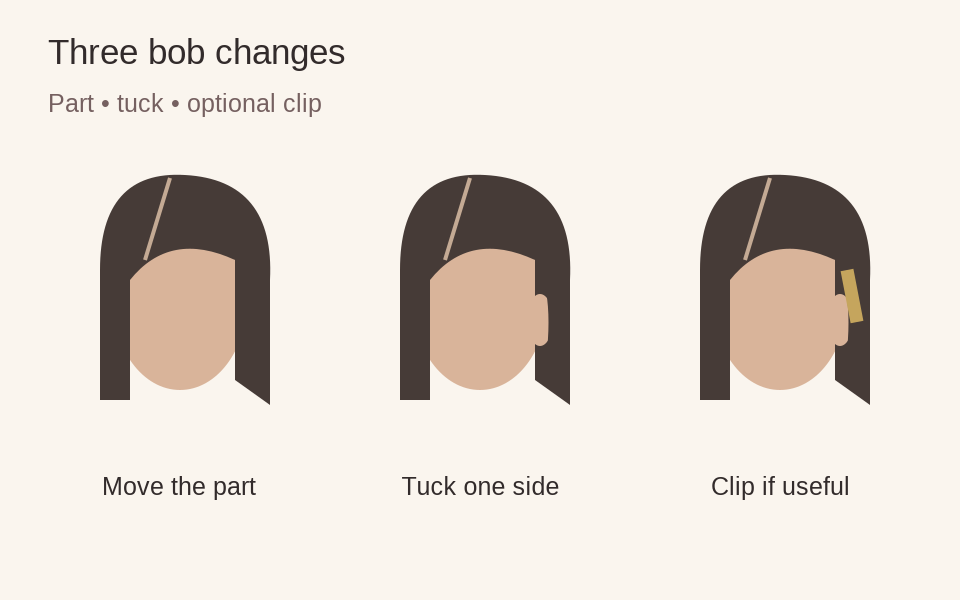
A bob can look different without a different cut. Move where the hair divides, expose one side of the face and choose whether a clip makes that arrangement easier to keep. Those are the three anchors of this refresh. In the fictional model’s illustration, an off-centre part and a gold bar clip create an open side while the opposite side keeps its natural movement.
Google’s April 2026 spring report highlighted interest in hair jewellery, and Pinterest’s October report includes bob-related searches. Small accessories and placement choices let you explore those ideas with the cut you already have.
Anchor one: change the division
With hair in its ordinary wearable state, try a slightly different part using your fingers or a comb you find comfortable. You can move from centre to off-centre or shift an existing side part a little. Check the result without forcing the roots flat. A strong growth direction may make one placement easier than another.
Look at the length on both sides and decide how much asymmetry you like. You do not need to choose a part to disguise a feature or create a prescribed face shape. The part simply changes which section moves forward and which section can sit back.
Anchor two: tuck a manageable section
Take a small section on one side and tuck it behind the ear. Leave the rest where it naturally falls. For a short bob, that may be all the hair that comfortably reaches. For a longer one, a wider section can create a more open side. Do not pull the whole front tightly back if a smaller tuck does the job.
If you wear glasses, try the tuck with the frames in place. Notice where the hair, frame arm and ear share space. A shape that looks neat without glasses may press or slip when the frames return. Keep the more comfortable arrangement rather than adding extra clips by default.
Anchor three: let the clip have a purpose
Use one smooth bar clip if it helps secure the section or supplies a detail you want. Position it where it grips hair comfortably without pinching the ear or pressing against the frame arm. Check the closure and remove it if the surface catches strands. A plain gold clip adds a small reflection; a dark clip can make the hardware quieter.
For finer hair, a smaller section or a different clip construction may work better than a heavy decorative piece. For dense or curly hair, do not force a small clip shut around more hair than it can hold. A tuck without hardware remains a complete option.
The real-day check
Turn your head, put on your coat and sit as you normally would. If the section continually falls forward, decide whether that movement bothers you before tightening it. You may prefer a more relaxed version. This guide requires no cutting, chemical change or heated tool. Keep the part, tuck or clip that changes the arrangement in a way you enjoy; you do not need all three to make the bob feel refreshed.
Adapt the styling idea to your hair length, texture and preferences. Follow the directions on your own tools and products.