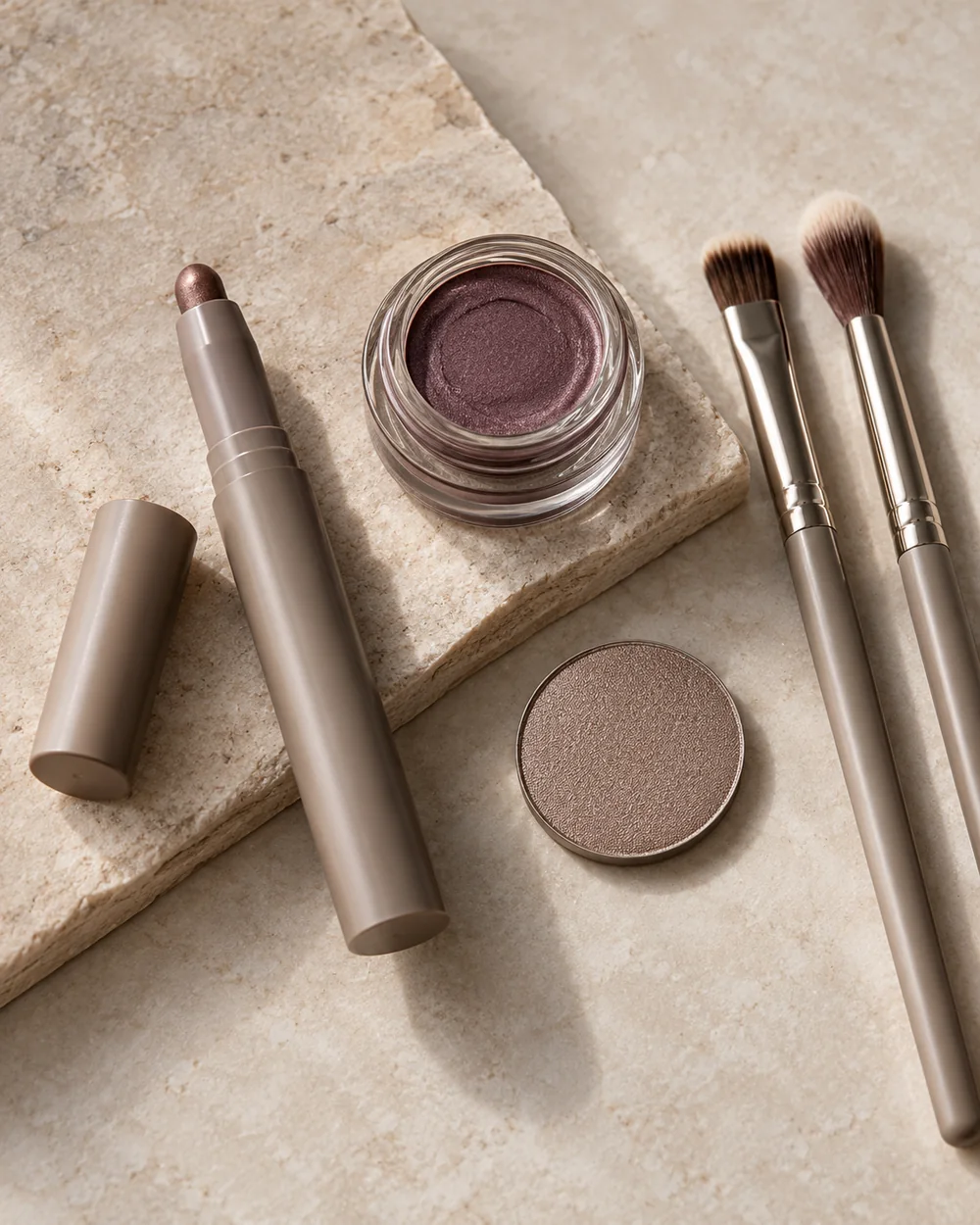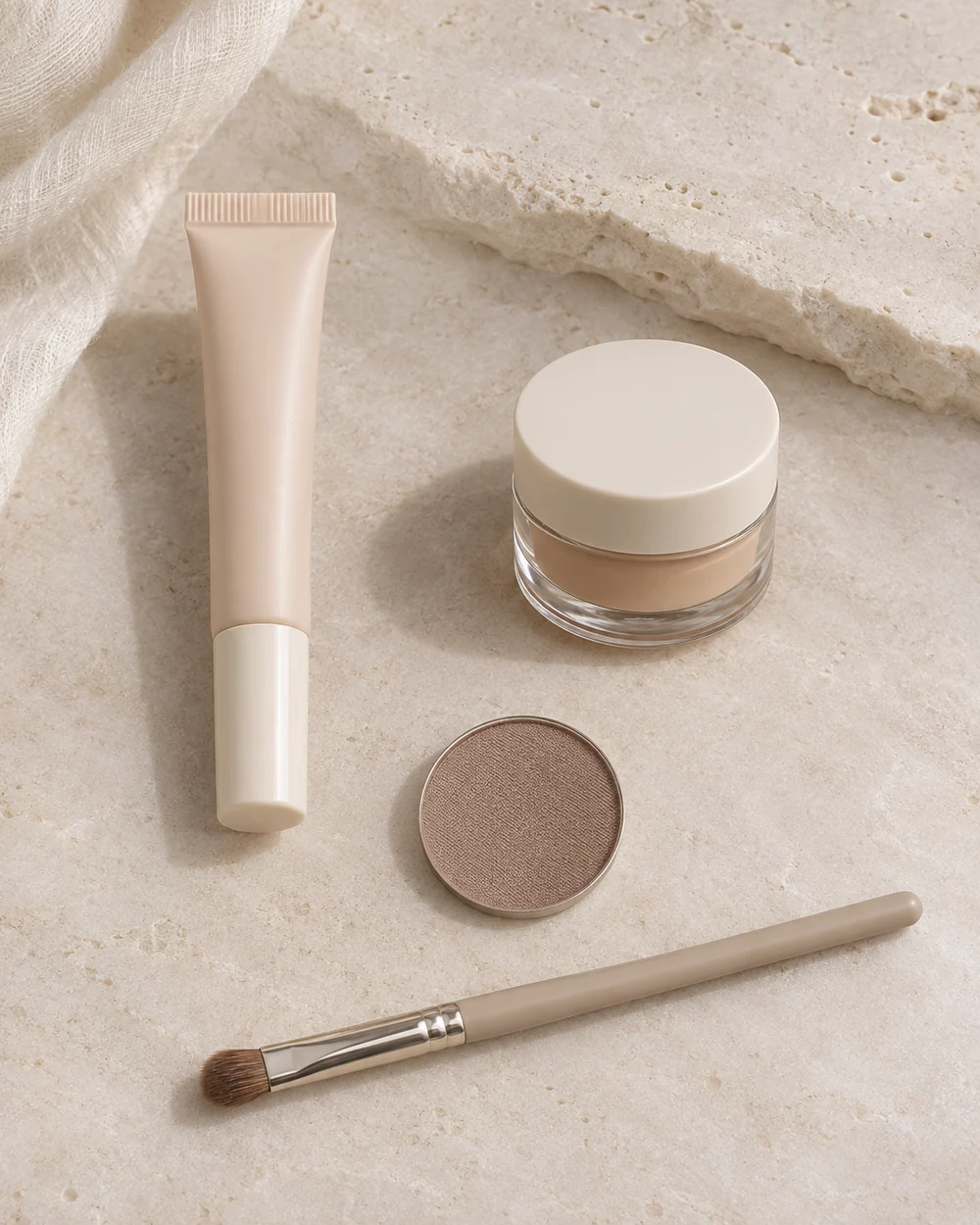
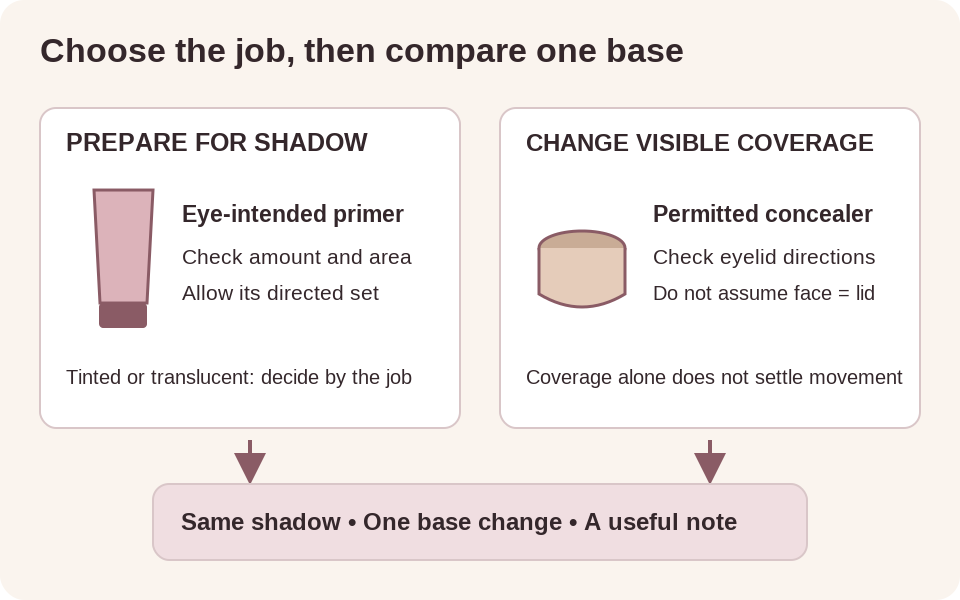
Choose between eyeshadow primer and concealer by the job you need. If you want to prepare the lid for shadow, start by considering an eye-intended primer. If you want to change the visible colour underneath, consider a concealer only when its directions permit eyelid use. Neither category name tells you how the whole combination will behave on your lids.
Oily-feeling lids and a line of collected shadow do not automatically call for more products. Before buying, notice whether colour moves after application, gathers in the fold later, or simply shows your natural lid colour through it. Those are different observations.
Coverage and preparation are separate decisions
A tinted eye primer may provide enough of the colour adjustment you wanted as well as a base for shadow. A translucent one may leave more of your natural lid colour visible. Concealer can offer another level of coverage, but a face product is not automatically intended for every part of the eye area. Check the actual label rather than treating a familiar tube as an unrestricted substitute.
Urban Decay’s primer guidance, for example, directs a small amount on clean, dry lids, blending and a brief setting stage before shadow. Its claims about grip and preventing creasing describe its own products; they are not independent proof that every primer outperforms every concealer. Use the sequence and application area stated for the base you choose.
A comparison that can change the next purchase
Begin with one familiar shadow and the base you already use, if any. Keep your usual preparation and protection as directed, and avoid introducing a new brush, shadow and base together. Record the formula names and where the shadow becomes uneven. A simple note such as “colour gathered at the outer fold after lunch” is more useful than a general verdict that the whole palette failed.
On another ordinary attempt, change the cosmetic base alone. Use the amount and settling time in its instructions, then repeat the same small shadow placement with clean tools. This is a personal comparison, not a controlled product test: light, activity and the amount applied can still differ. You are looking for a routine you can comfortably repeat.
If you do not own a permitted concealer for the lids, compare the eye primer with your usual shadow route instead of buying two bases. If the shadow’s own directions specify use alone or a particular base, begin there. The stick, pot and powder guide addresses the separate choice of how you pick up and place the colour.
Read the result before adding another layer
The base collects before the shadow goes on. Recheck its directed amount and settling stage. Remove and reset the small area as needed rather than burying the collected line under powder.
The shadow is neat when closed but disappears when open. Compare the visible placement. A different base does not create more visible lid space. The open-eye placement lesson helps you choose that small area.
The colour looks different but stays where you placed it. You may be judging opacity or the base’s tint rather than movement. Decide whether you enjoy that colour relationship before changing the whole formula.
Use products intended for the area and stop if they irritate; persistent irritation needs medical advice, not another layer. Keep the smallest base-and-shadow combination that does the job you wanted. Adding concealer, primer and setting powder together can wait until you can name what each is missing.
Makeup placement and colour are personal choices; adjust the steps to suit you. Follow the directions on your own products.