A wrap skirt that looks settled while standing can separate when you sit or take a normal step. First notice what moves: the waistband, the overlapping edge, or both. That observation is more useful than pulling the tie tighter. The aim is the coverage and movement you want, with a comfortable waist.
The waistband moves as you sit
Put the top in its intended position before fastening the skirt. A thick tuck can change the room inside the waistband. Sit without holding the panels in place, then stand and check where the waistband has moved. If it keeps climbing or turning, compare the skirt’s waist and hip room separately. A different cut may settle better than a tighter knot.
On a plus-size fit, do not let a waistband that fastens become the only test. Check the room across the seat and hips, the position of any side opening and how much underlap remains when seated. Those are garment choices; the body is not a problem the wrap has to disguise.
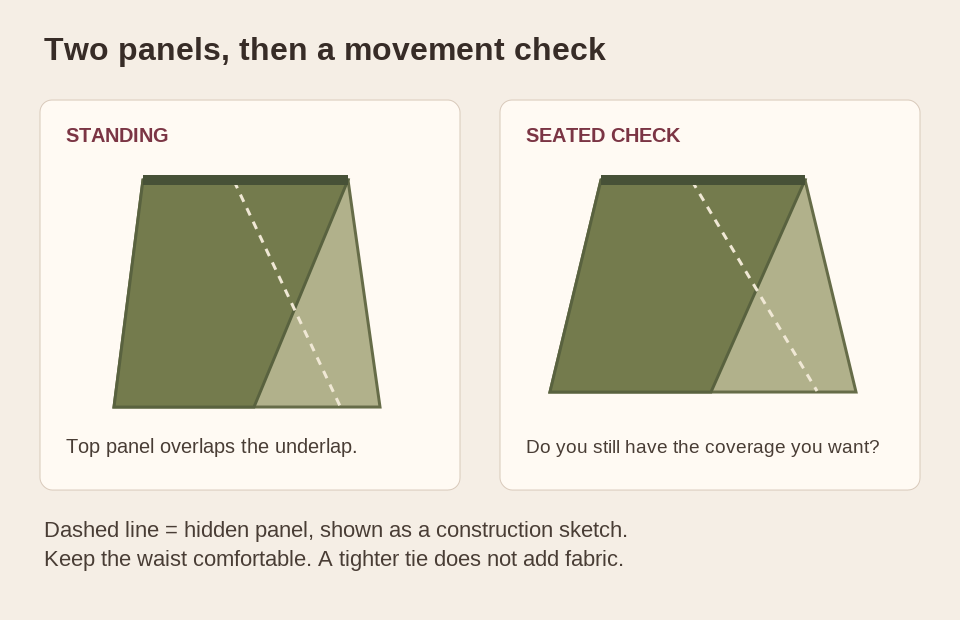
The waist stays put but the front opens
Keep the waistband in the same comfortable position and look at the panel underneath the visible edge. The overlap is the panel on top; the underlap is the one beneath it. A skirt can have enough circumference at the waist while offering less underlap than you want in movement. Compare another size or design for that specific job, rather than expecting a new fastening position to add fabric.
If you enjoy the diagonal front line but not a moving opening, try a fixed skirt with a wrap-look front. Check its sitting and walking room too. It is a different construction, not a failed version of a true wrap. A slip or other familiar underlayer can be a preference, but it does not add missing room or stop a panel from moving.
Recheck the fastening before changing it
Follow the garment’s intended fastening route, including any inside button, tie opening or inner closure. If you cannot tell how it fastens, ask the maker or a garment professional rather than cutting a new opening. Avoid adding a pin or fastener under tension just to hold a narrow overlap shut; it may change the hang or damage the cloth.
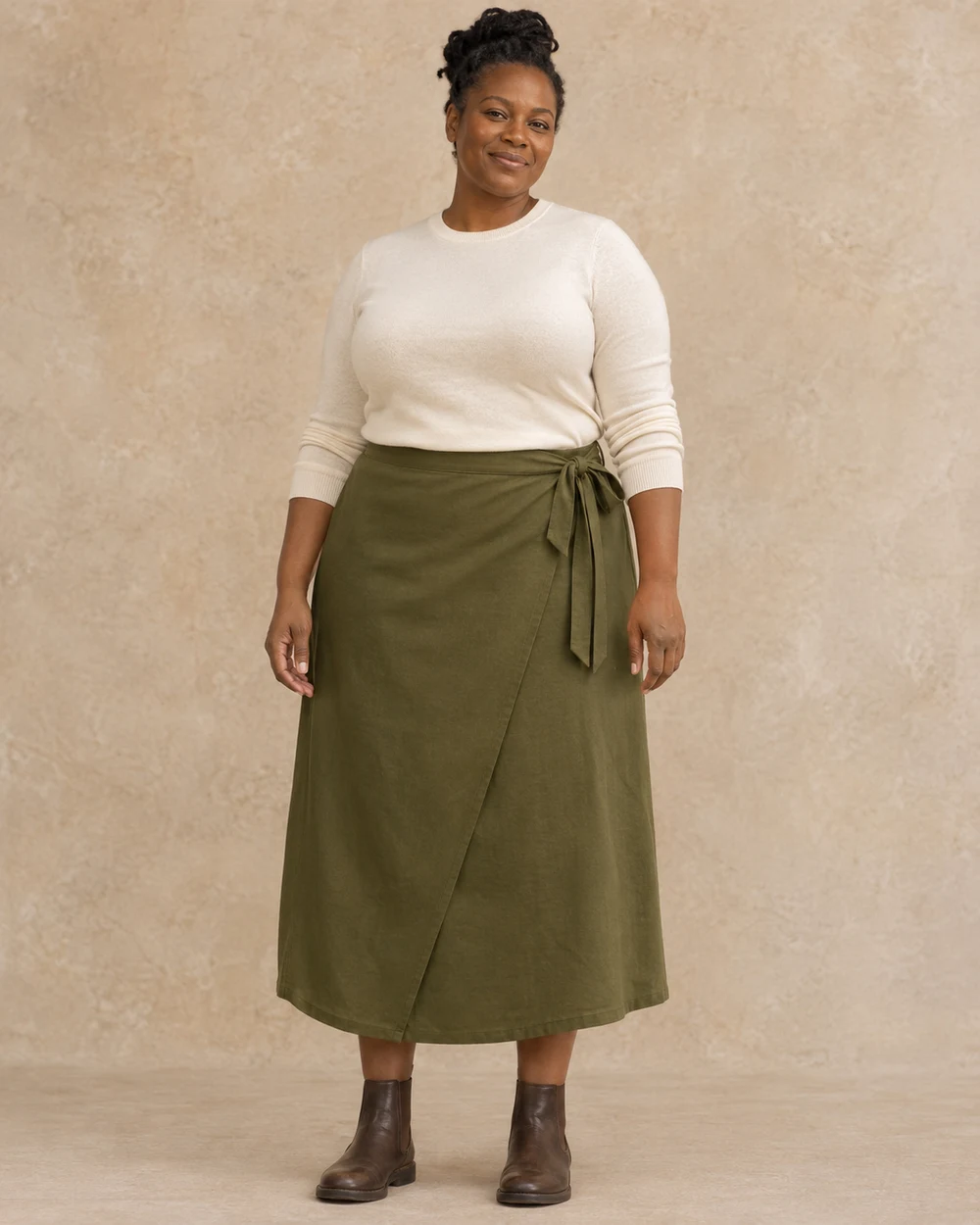
The pictured outfit pairs an olive midi wrap skirt with a fine ivory knit and dark brown flat ankle boots on a fictional plus-size adult. Use the same simple top and shoes while comparing skirts, so you change one variable. There is no extra outer layer in this version. Add the optional tote only after the skirt works without being held.
Before an everyday outing, sit in an ordinary chair, stand and walk at your usual pace. Keep the skirt when its fastening remains comfortable and its coverage meets your preference through those movements. If it needs continual guarding, choose another garment for that day.
Use the outfit as a starting point. Adjust the fit, coverage and footwear to your preferences and plans.