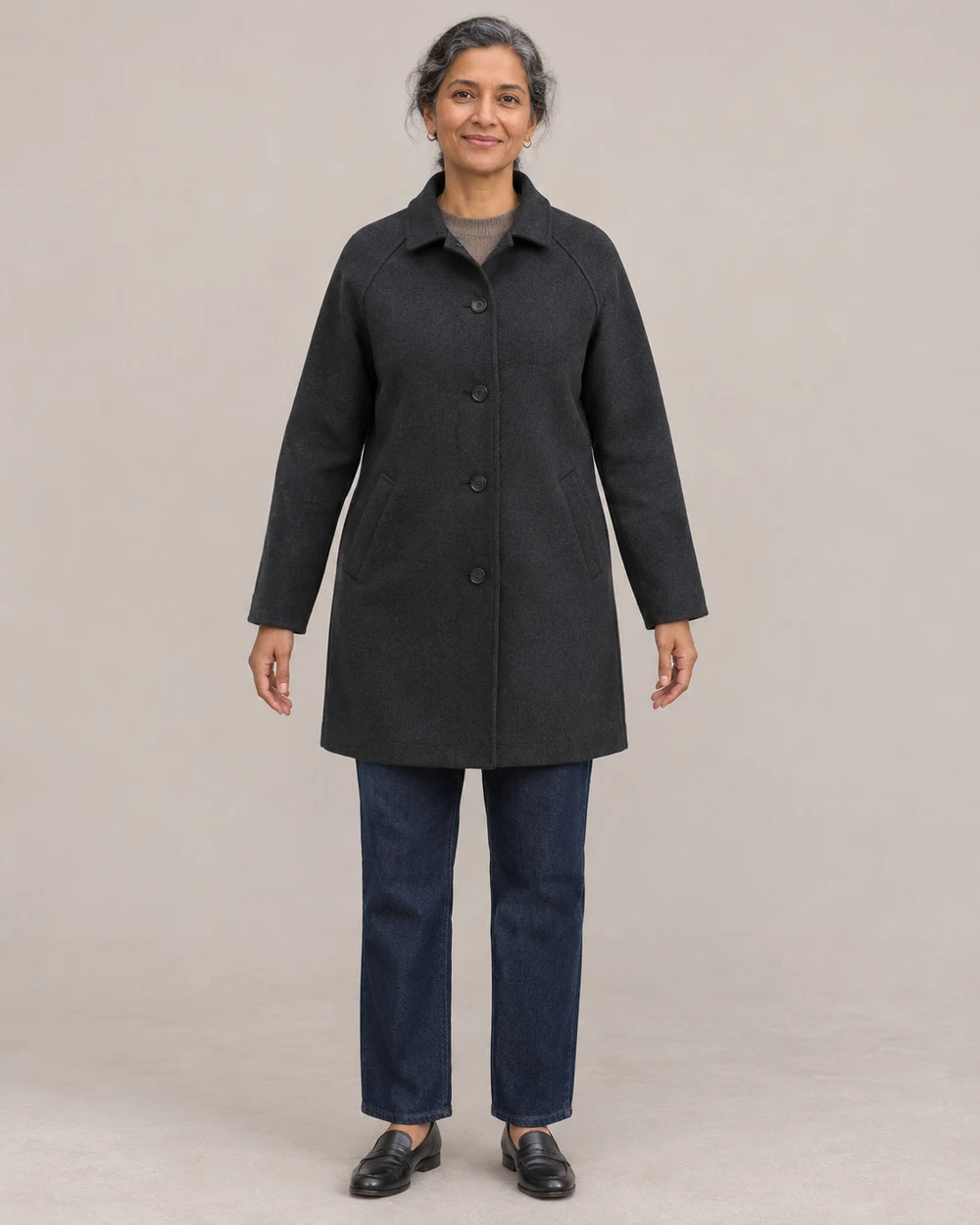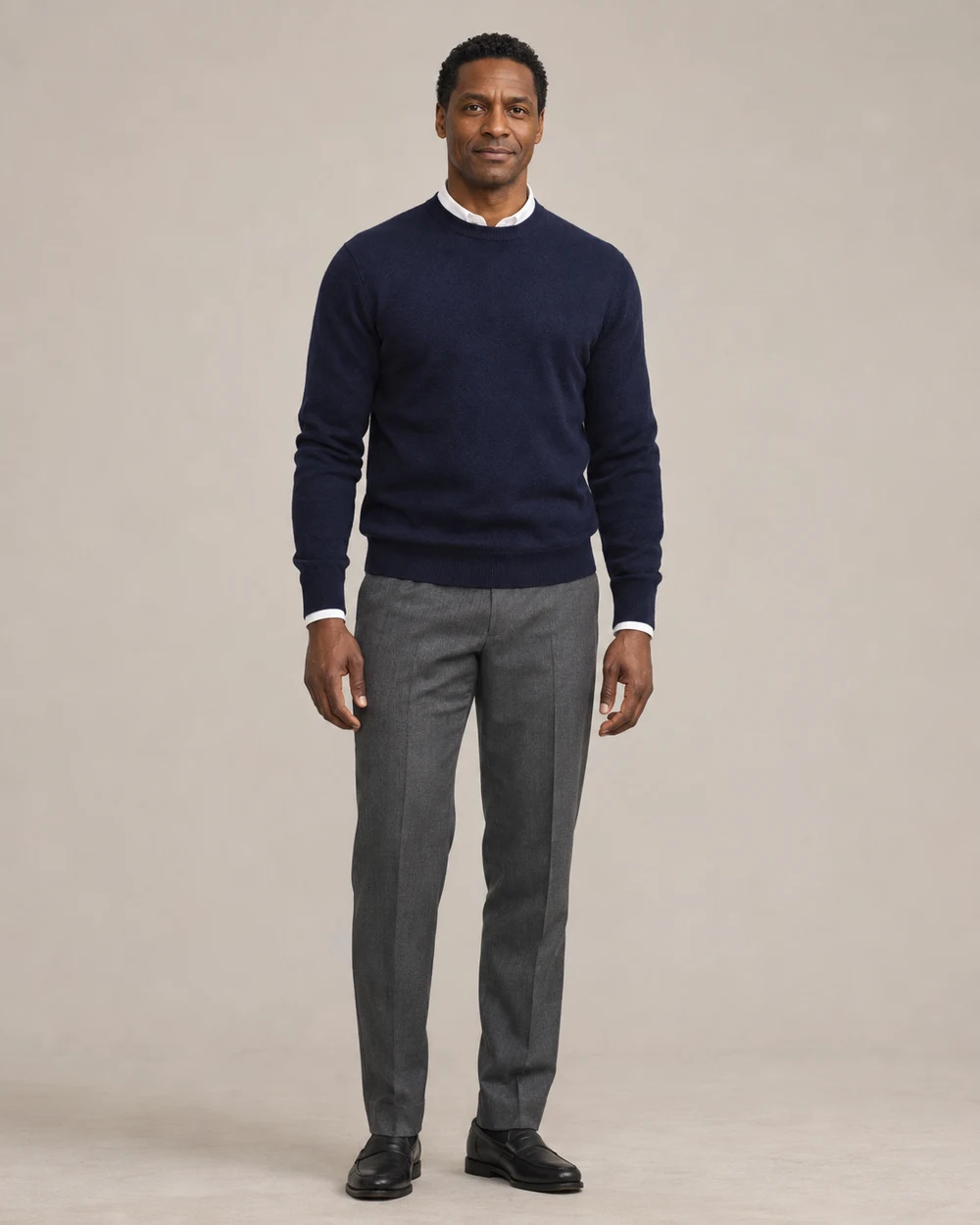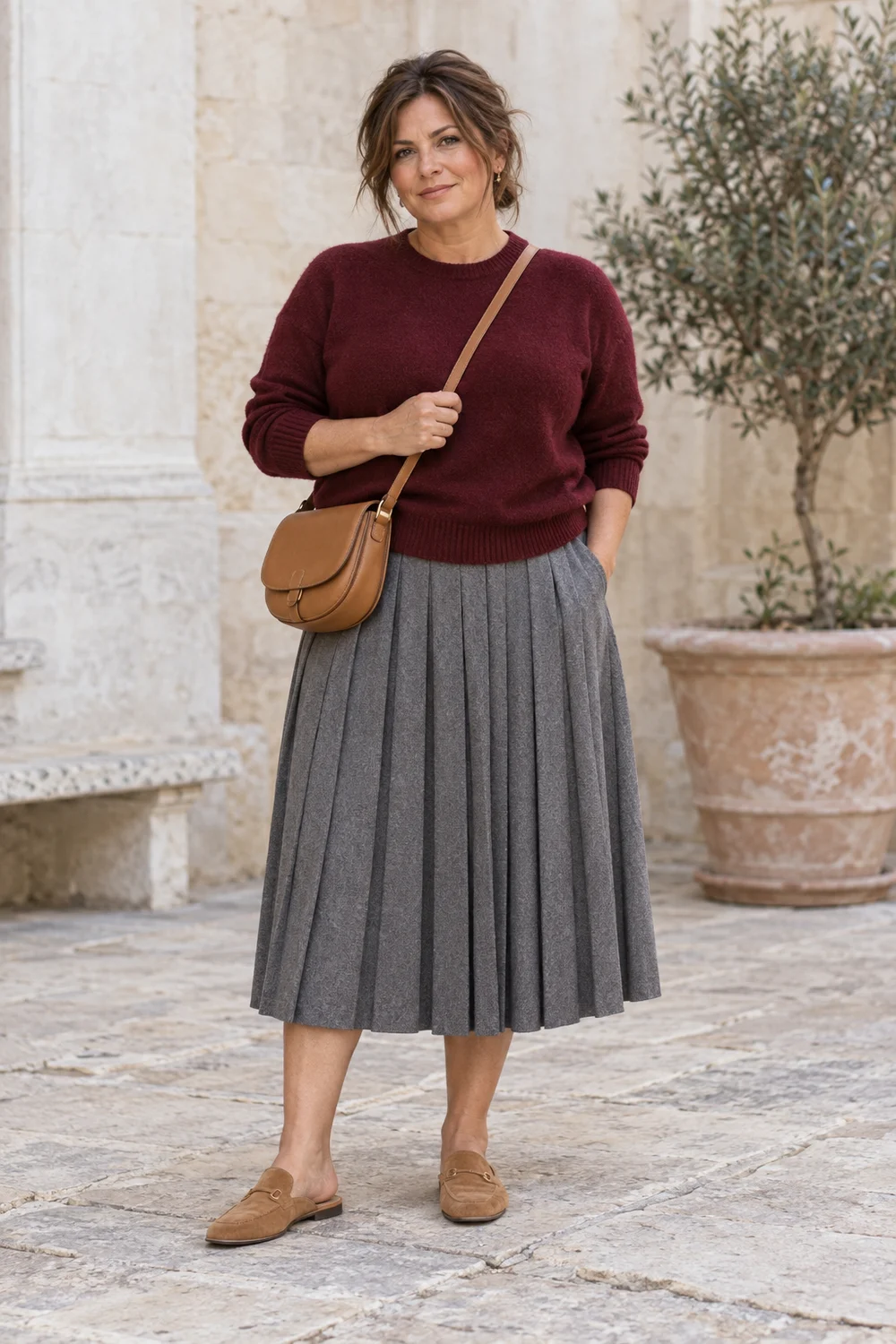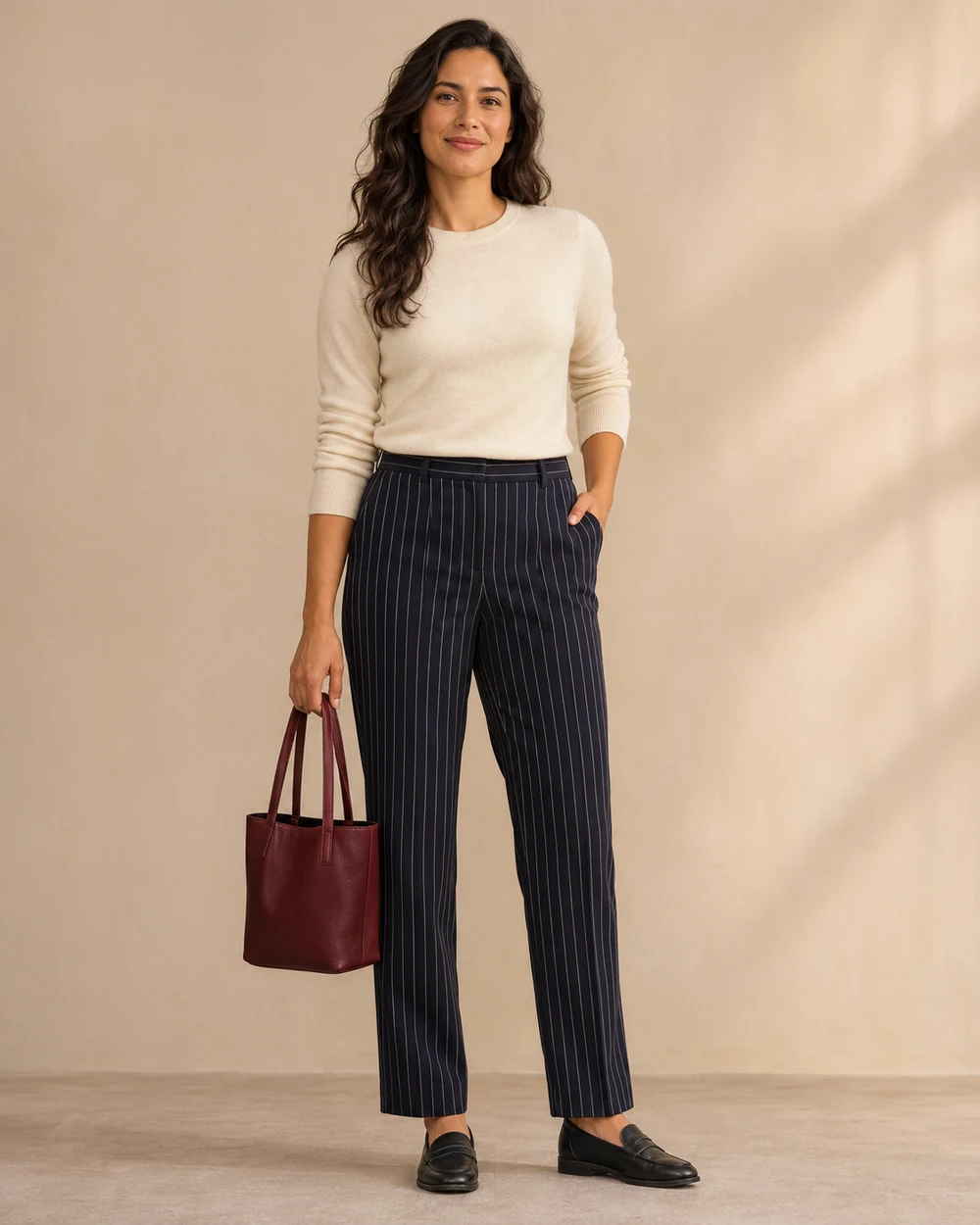
Let the fine cream lines in navy trousers find a larger echo in a plain cream knit. The trousers bring repetition; the top gives the eye somewhere quiet to rest. A small burgundy tote adds one warm colour, while black flat loafers keep the lower edge simple. The relationship works through contrast and scale, without asking the stripes to make a body look taller or smaller.
Choose how much line you want to see
Look at the trousers close up, then from across the room. Fine pale lines may merge into a quieter surface at a distance; wider spacing or a brighter stripe will read differently. Choose the version you enjoy beside your actual knit. The words navy and cream cannot settle how warm, dark or reflective the two fabrics look together.
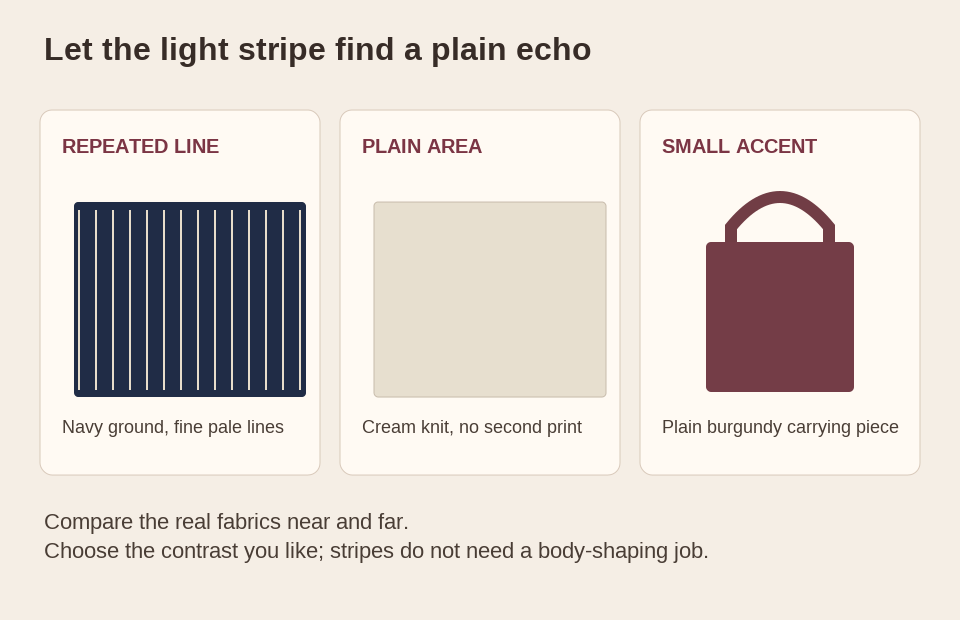
The pictured outfit uses straight navy trousers with fine cream pinstripes and a cream crew-neck fine knit tucked into the waistband. Check the trouser waist, rise and seat before judging the stripe. If the cloth pulls across an area, compare the garment’s room and cut rather than treating the broken line as a body flaw.
Keep one repeated detail
The cream top repeats the stripe’s lightest colour on a different scale: one broad area instead of many narrow lines. Leave its surface plain if you want that distinction to remain clear. A ribbed or textured knit is another possibility, but compare it with the trousers before adding jewellery or another patterned layer.
Stripe placement may change around pockets, darts and seams. Decide which alignments you enjoy rather than expecting every line to continue through every shaped part. A deliberate change of direction can be a design detail. This is a visual preference, not a reliable quality or price ranking.
Adjust the edge, then the colour
If a tucked knit feels bulky inside the waistband, try it untucked before replacing it. Sit and check where the hem rests against the trouser rise, then choose whether you want that boundary visible. Keep enough trouser length to clear the ground over the loafers. The low shoes are part of the pictured proportions; no heel is needed to make the stripe eligible.
For a quieter version, use a plain navy knit with the same trousers and loafers, then keep either the burgundy tote or a plain navy bag. You will have less contrast at the waist while retaining the fine line as the leading pattern. Choose that change because you like its mood, not to conceal a part of yourself.
For everyday plans, let the loaded bag and walking hem decide whether the combination is practical. For a workplace that allows a knit and separate trousers, keep the neckline and footwear as considered as the pattern; follow the actual dress code rather than treating a pinstripe as a suit. Finish when the line, the plain area and the small colour note each have a job.
Use the outfit as a starting point. Adjust the fit, coverage and footwear to your preferences and plans.