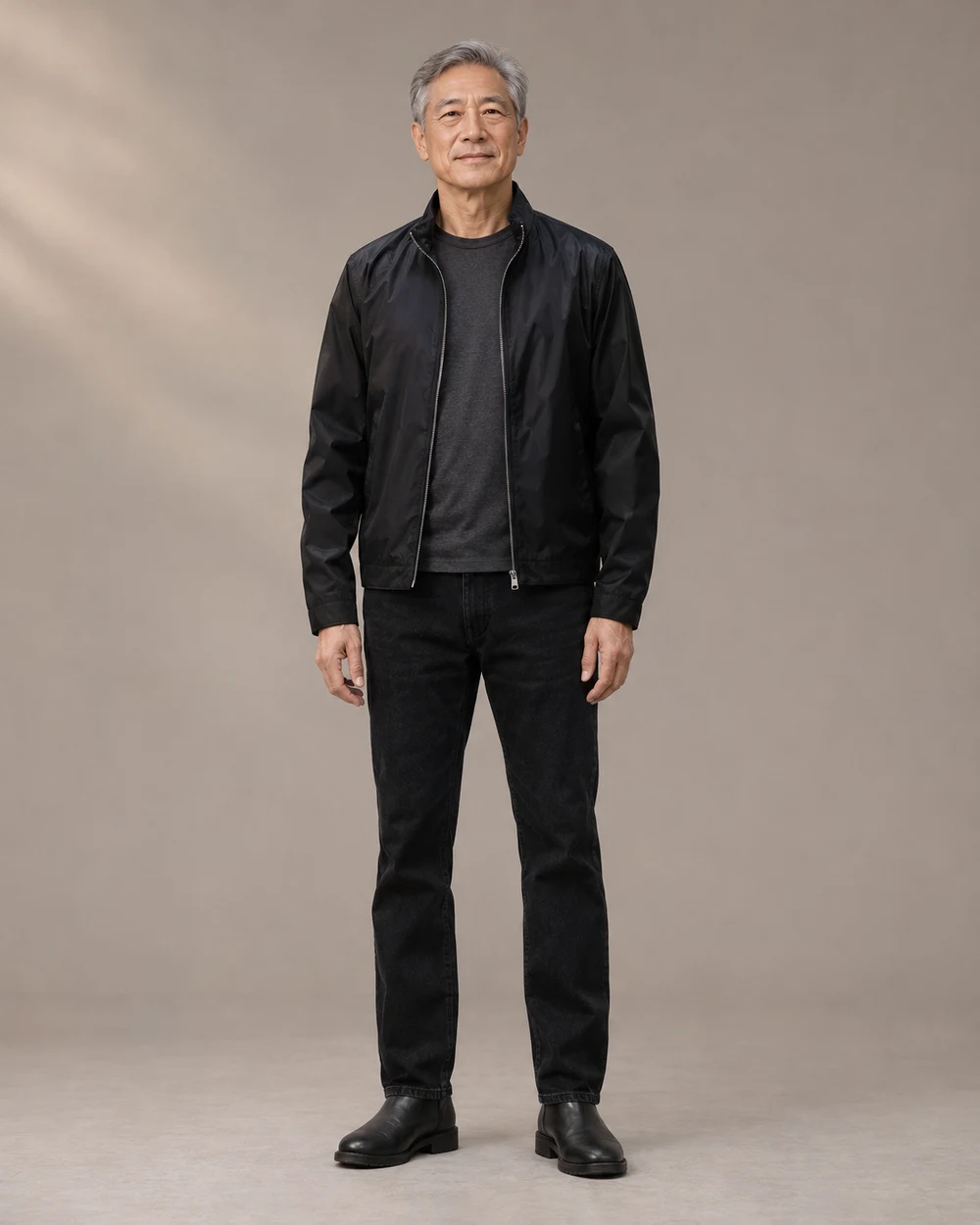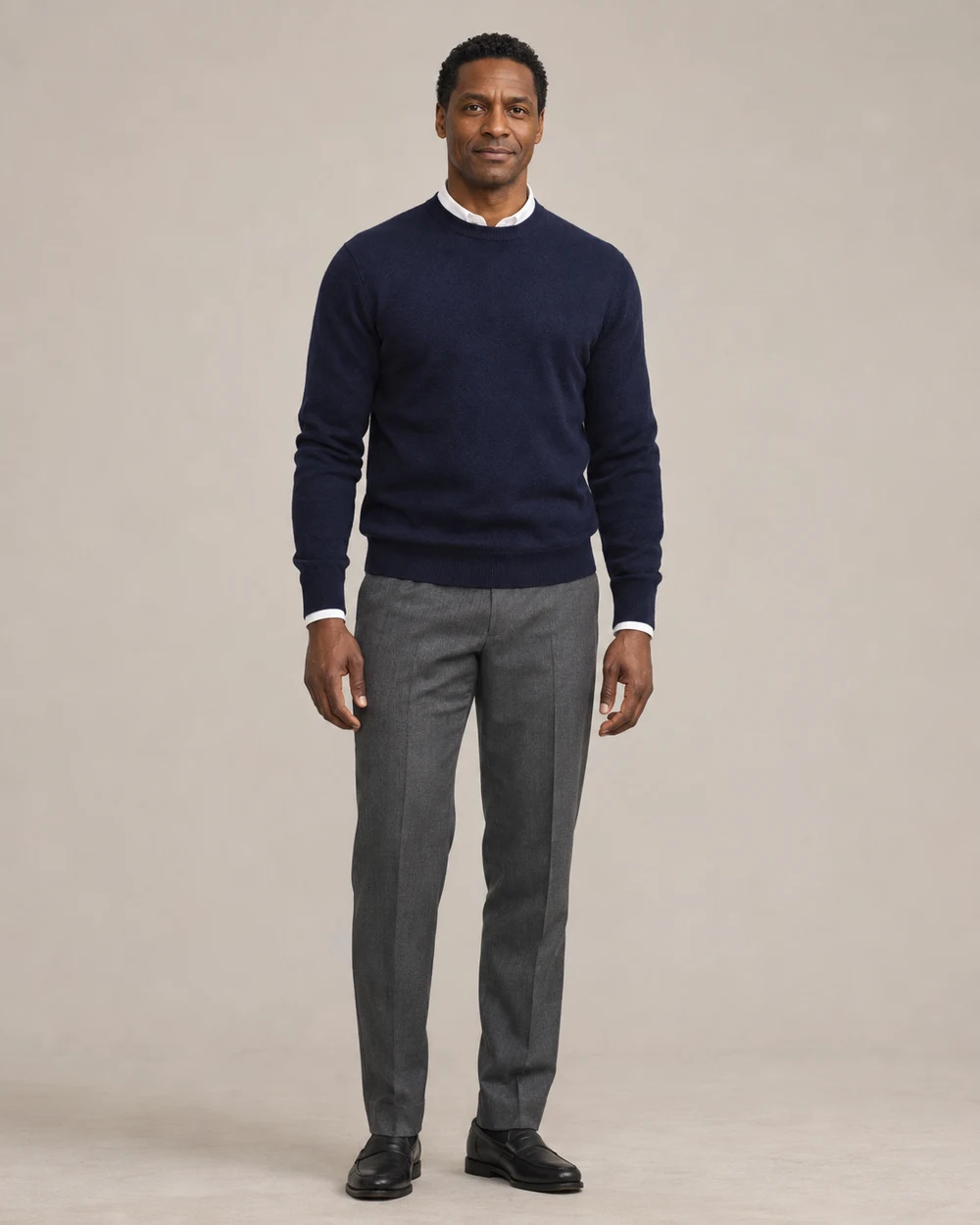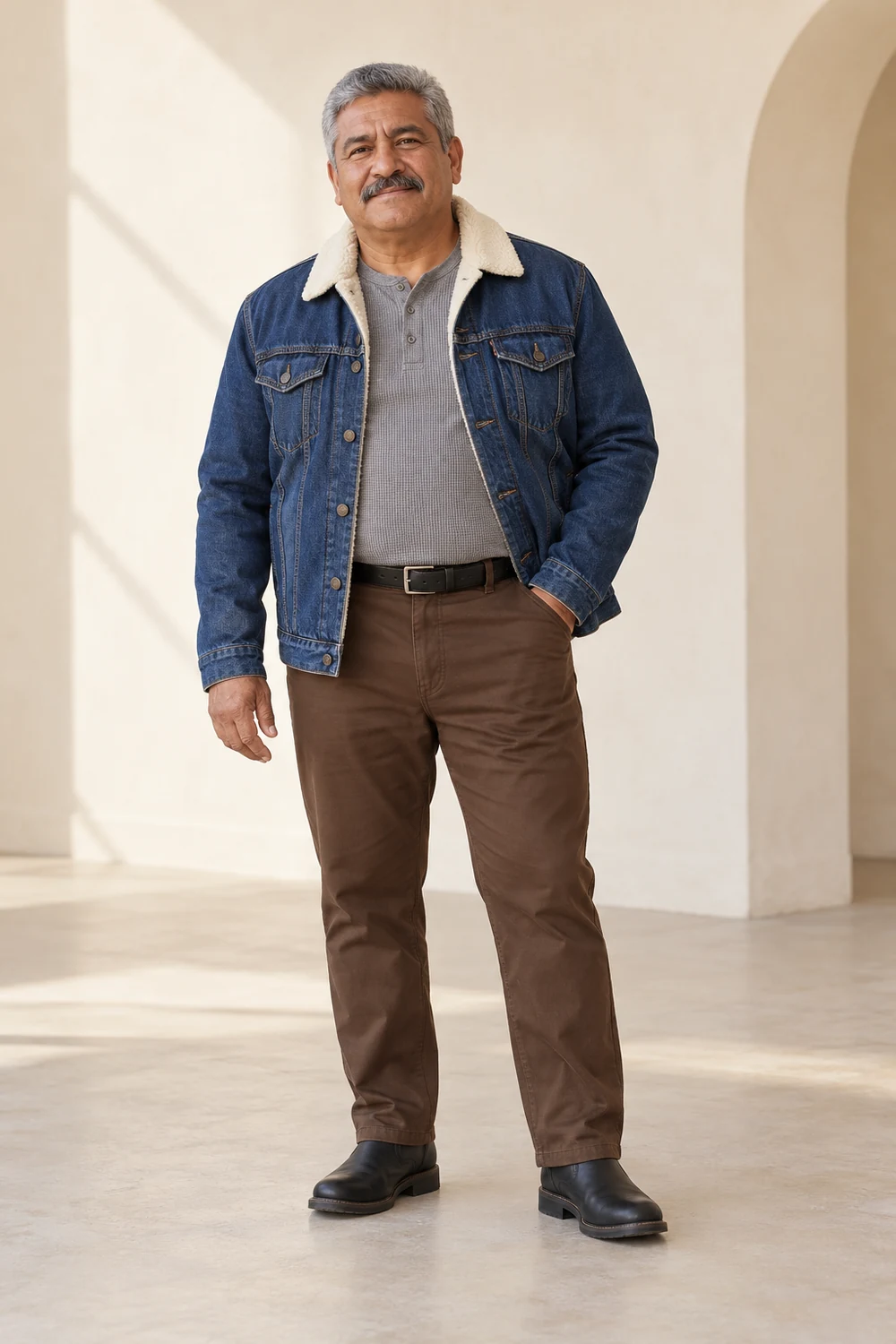
Raglan or set-in is a choice about where the sleeve joins the coat. It is not a guarantee of movement. Try both over the same layer and compare the neck, upper arm, upper back and front closure before choosing the outline you prefer.
Read the seam before judging the fit
A raglan seam runs from the neckline towards the underarm, with the sleeve continuing into the shoulder area. A set-in sleeve meets the body around an armhole. A coat may also have a deliberately dropped shoulder, so do not treat every seam beyond your own shoulder as a fault. Identify the intended construction first, then test what the actual garment lets you do.
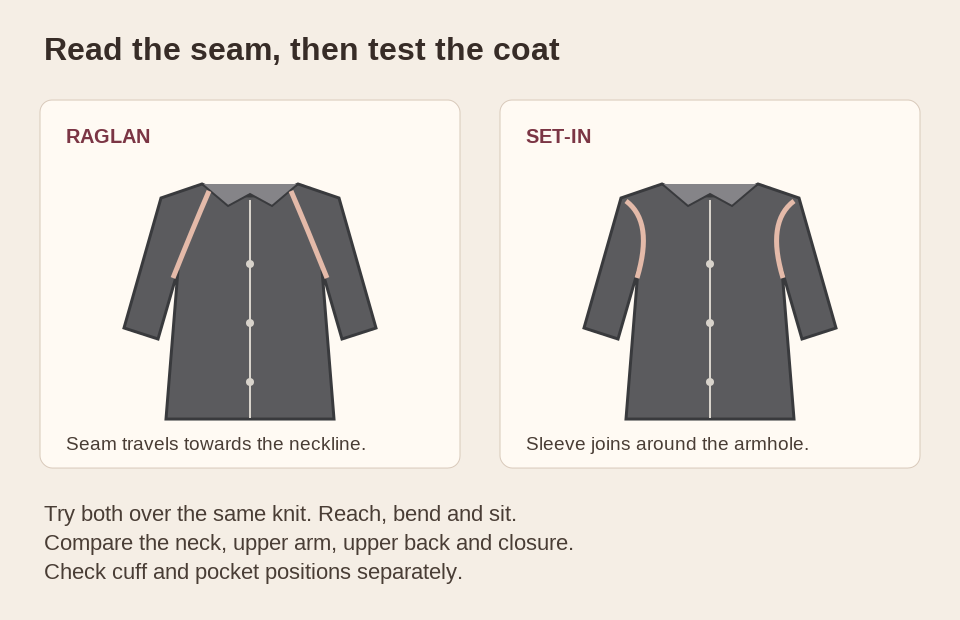
| Compare the same job | Raglan coat | Set-in coat |
|---|---|---|
| The visible line | The sleeve seam travels towards the neckline. | The sleeve joins around the armhole. |
| Room over a knit | Check upper arm and upper back; the diagonal seam alone does not prove there is room. | Check the same areas; a defined shoulder can still allow movement. |
| A shorter proportion | Look at neck, cuff and pocket placement as separate decisions. | Look at those same positions before deciding a sleeve-length alteration is enough. |
Keep the comparison fair
Put on the fine knit you expect to wear and settle its sleeves before adding the coat. Fasten the coat as intended. Reach forward as if taking a shelf item, bend your elbows and sit. Notice where the movement stops: an upper arm that catches, a collar that presses or a front that pulls need different comparisons. Do not judge only the outline with your arms hanging down.
Try a second cut with the same base layer. You may prefer the raglan line but find that one set-in coat gives better room, or the reverse. Fabric, lining, sleeve width and the rest of the cut all remain part of the garment. A construction label cannot settle them.
Make the length decisions separately
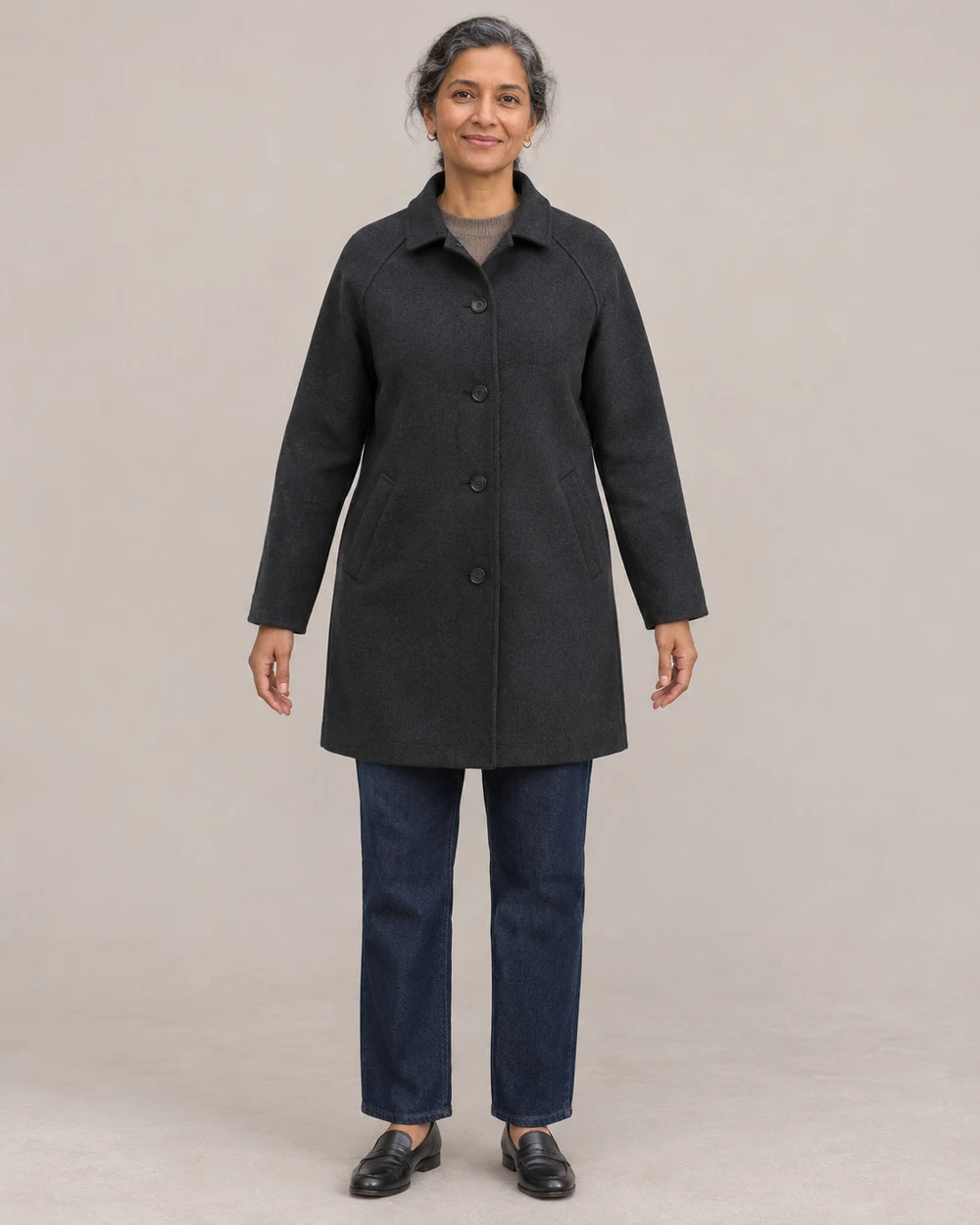
The pictured version uses a charcoal raglan coat, taupe fine knit, indigo straight jeans and black flat loafers on a fictional petite adult with a lean frame. Check where the pockets land and whether the sleeves finish where you want them when your elbows bend. On a shorter torso, compare the coat’s body and pocket positions as well as its cuff length. A sleeve alteration does not relocate every other detail.
For an everyday coat, carry the bag or other item you normally use during the final reach and walking check. The illustration has no bag. If your usual day needs a thicker layer, repeat the trial over that layer before deciding. Keep the coat that gives the movement and outline you actually wanted; the sleeve name can remain a description.
Use the outfit as a starting point. Adjust the fit, coverage and footwear to your preferences and plans.