Small rolls appearing as you move a brush are an application problem worth observing before buying another foundation. They may be product balling at the surface; they are not, by themselves, a diagnosis of your skin. Continuing to rub often produces more visible debris and makes it harder to see where the problem began.
Charlotte Tilbury’s manufacturer explanation of pilling identifies product quantity and rushing between layers among possible contributors. Compare those application variables one at a time.
First distinguish what you see
Small balls or rolls while rubbing: pause the application and note the layer being added. A smooth layer becoming patchy hours later: that is a different observation and may need a wear or transfer comparison. Visible dry or irritated skin before makeup: cosmetics troubleshooting cannot diagnose or treat it. Avoid repeatedly rubbing the area in an attempt to make it disappear.
The smallest repair today
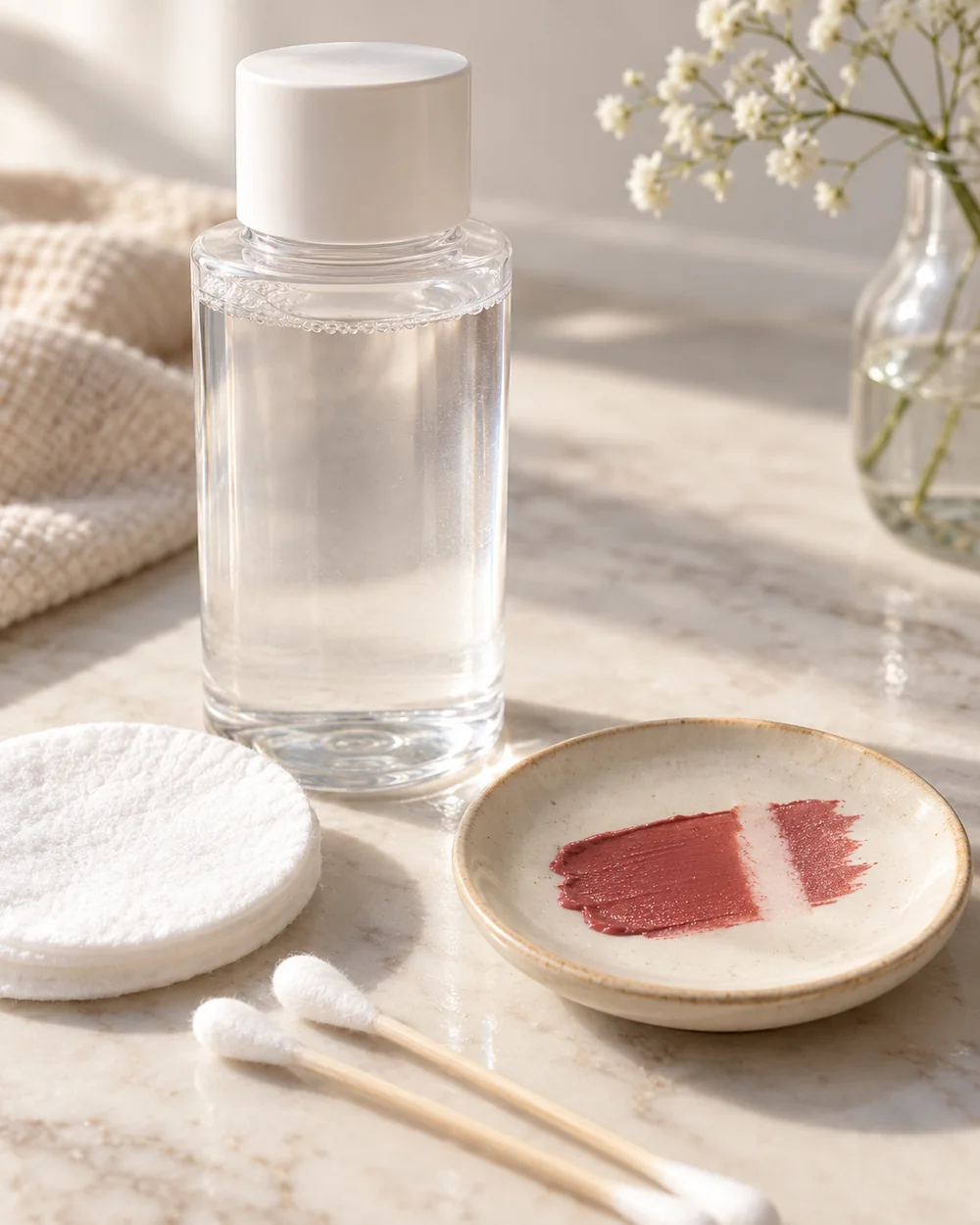
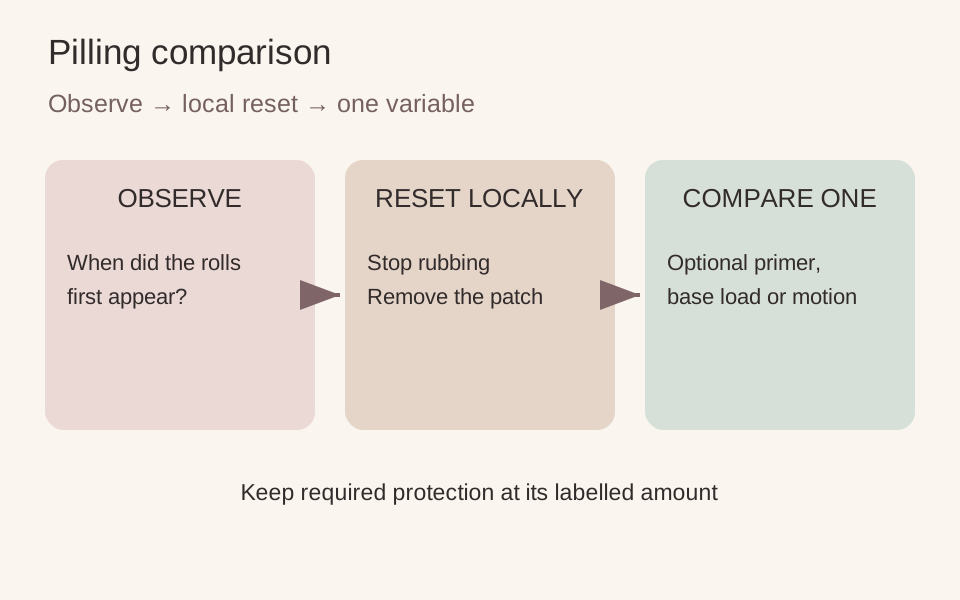
Stop adding product to the affected patch. Remove it gently with a suitable makeup remover, following the directions for that part of the face. Complete any required rinsing or cleanup and let the surface be ready for reapplication. Replace only the coverage you still want, using a light press rather than repeated circular buffing. Leaving the small area with less coverage can be a better immediate choice than rebuilding several layers under time pressure.
If the patch includes sunscreen or other required protection, restore that product according to its directions before cosmetic layers. Do not skip it, dilute it or apply less than directed as a makeup experiment. This guide changes optional cosmetic choices, not a protection routine or prescribed treatment.
Find one useful comparison
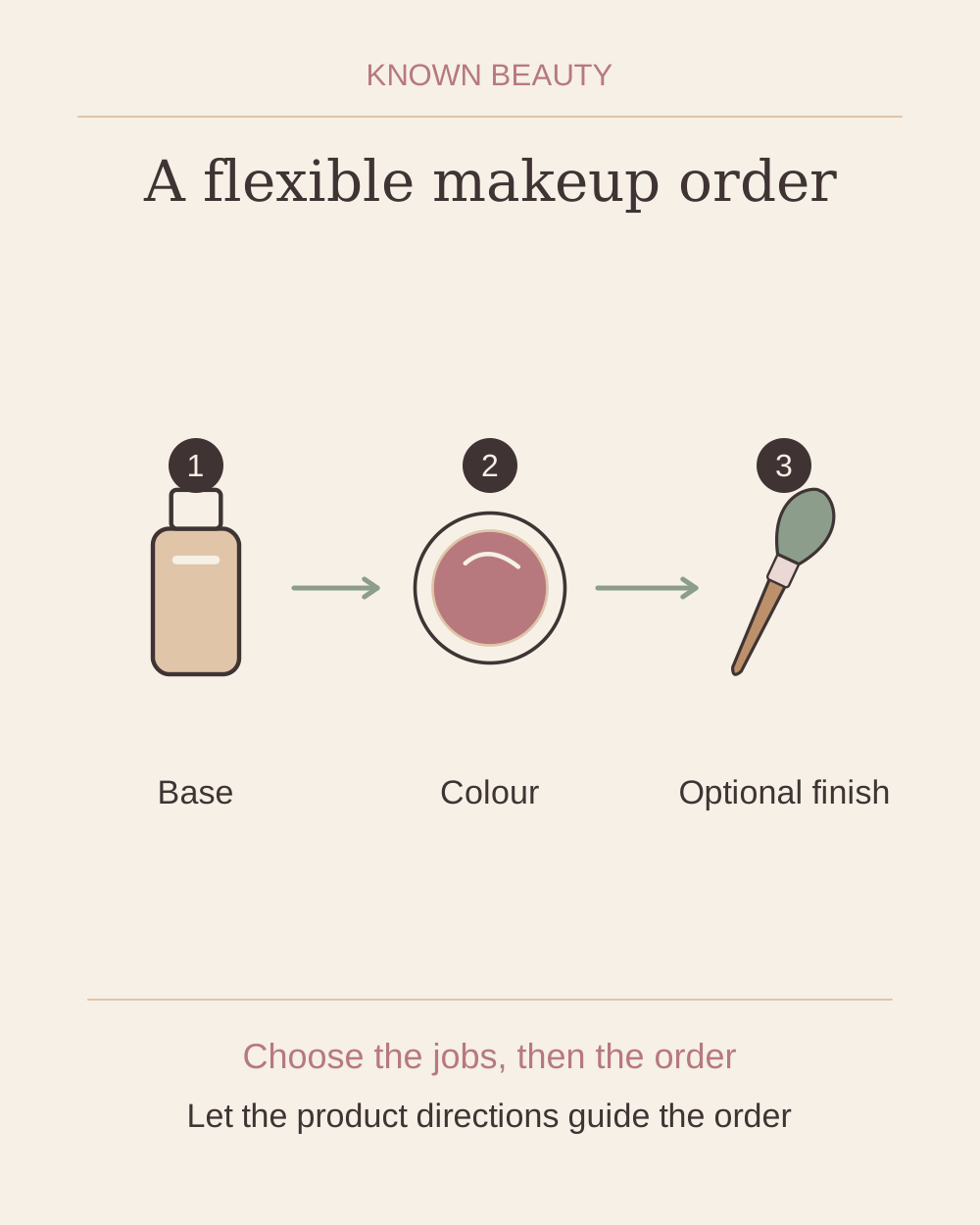
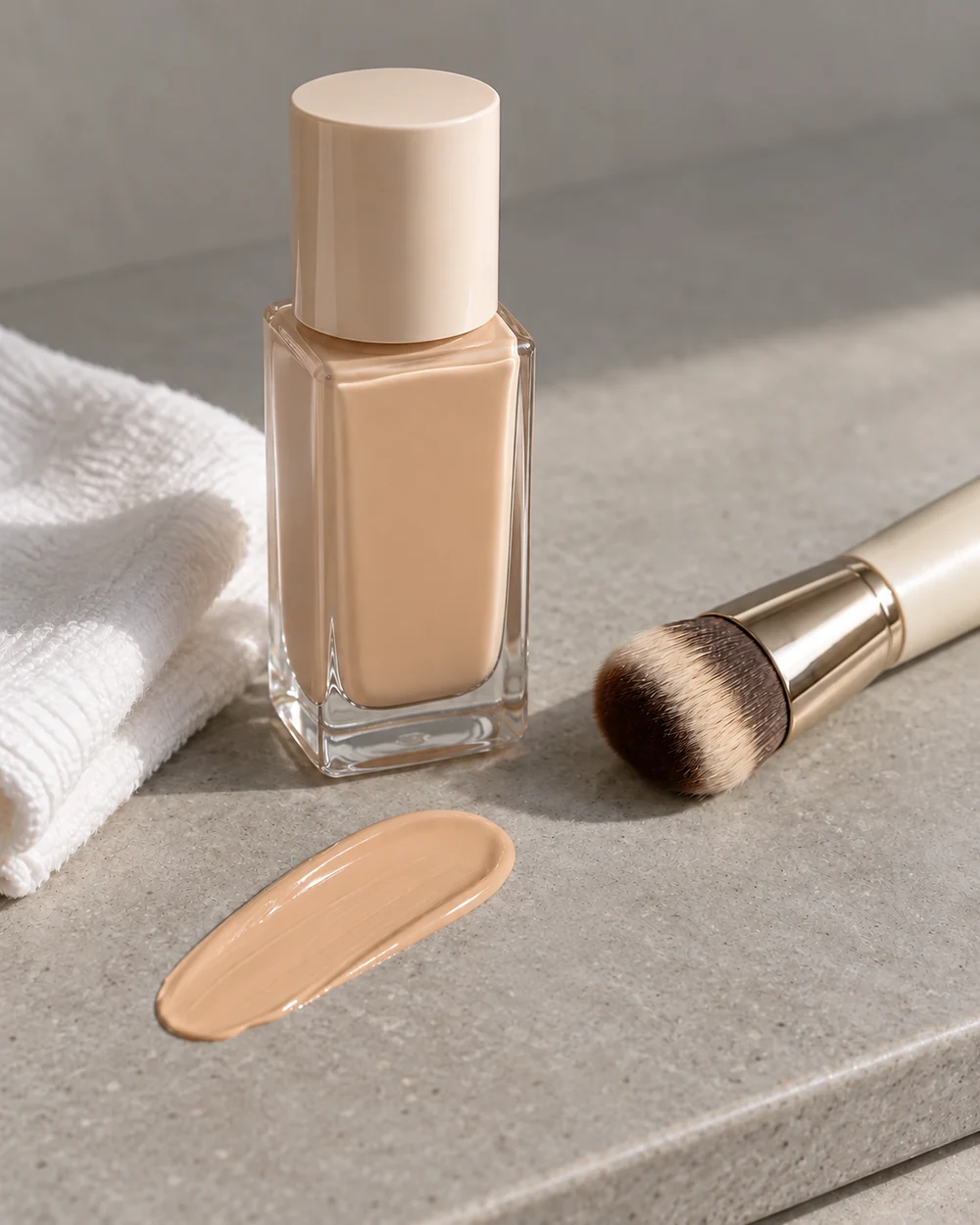
On the next ordinary makeup day, keep a short note of your layer order and when the rolling first appears. Change only one optional element. For example, compare foundation without an optional primer, or use less foundation while keeping the underlying routine unchanged. You can also compare pressing with your usual brush movement. If you change quantity, primer, applicator and timing together, you will not know which change helped.
Allow layers the settling time their instructions require rather than adopting a universal waiting period. A product may remain intentionally tacky, while another needs to dry. The first ingredient on a label is not a complete compatibility test, so simple claims that all water-based and silicone-based products must be kept apart are not enough to explain a particular result.
Use the result to edit the routine
If removing an optional primer consistently makes application easier, leave it out for this pairing. If a smaller amount of foundation does the job you need, keep that amount. If balling returns with several combinations, stop buying replacements by guesswork and ask the manufacturer about the exact products and application directions.
Keep the note factual: layer, movement, visible result. Persistent discomfort, inflammation or changes in the skin call for appropriate professional advice rather than stronger cosmetic rubbing or an improvised exfoliation routine.
Makeup placement and colour are personal choices; adjust the steps to suit you. Follow the directions on your own products.