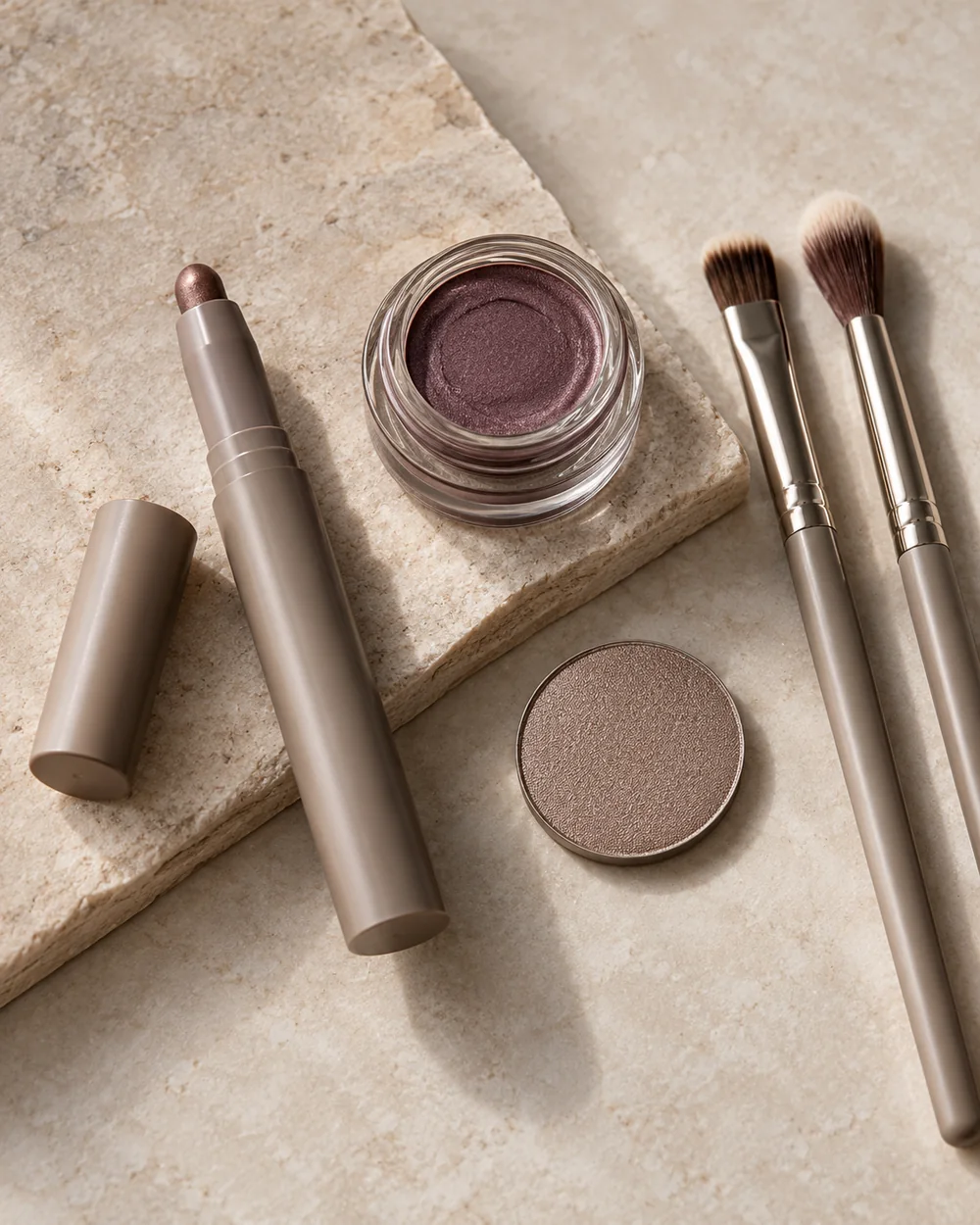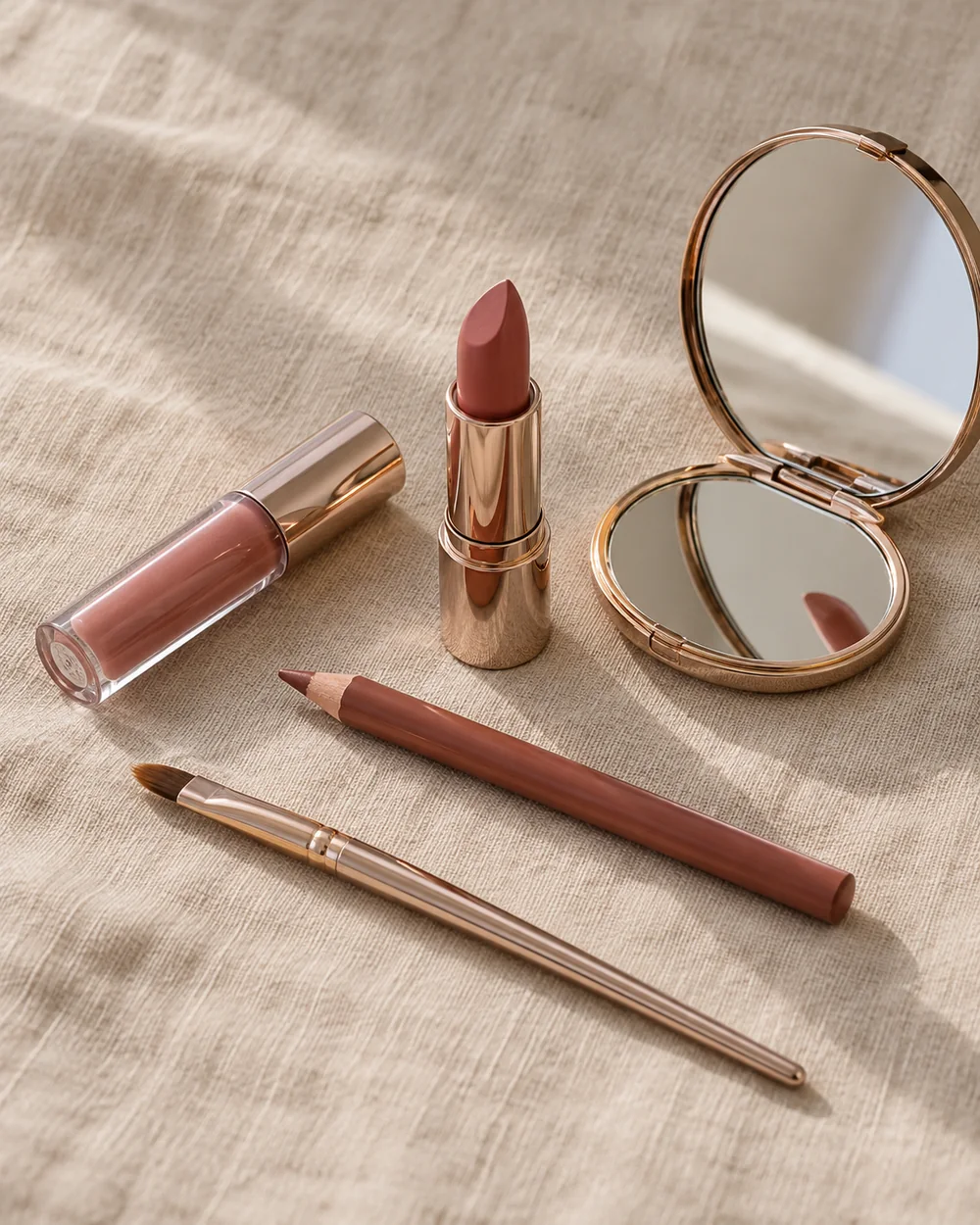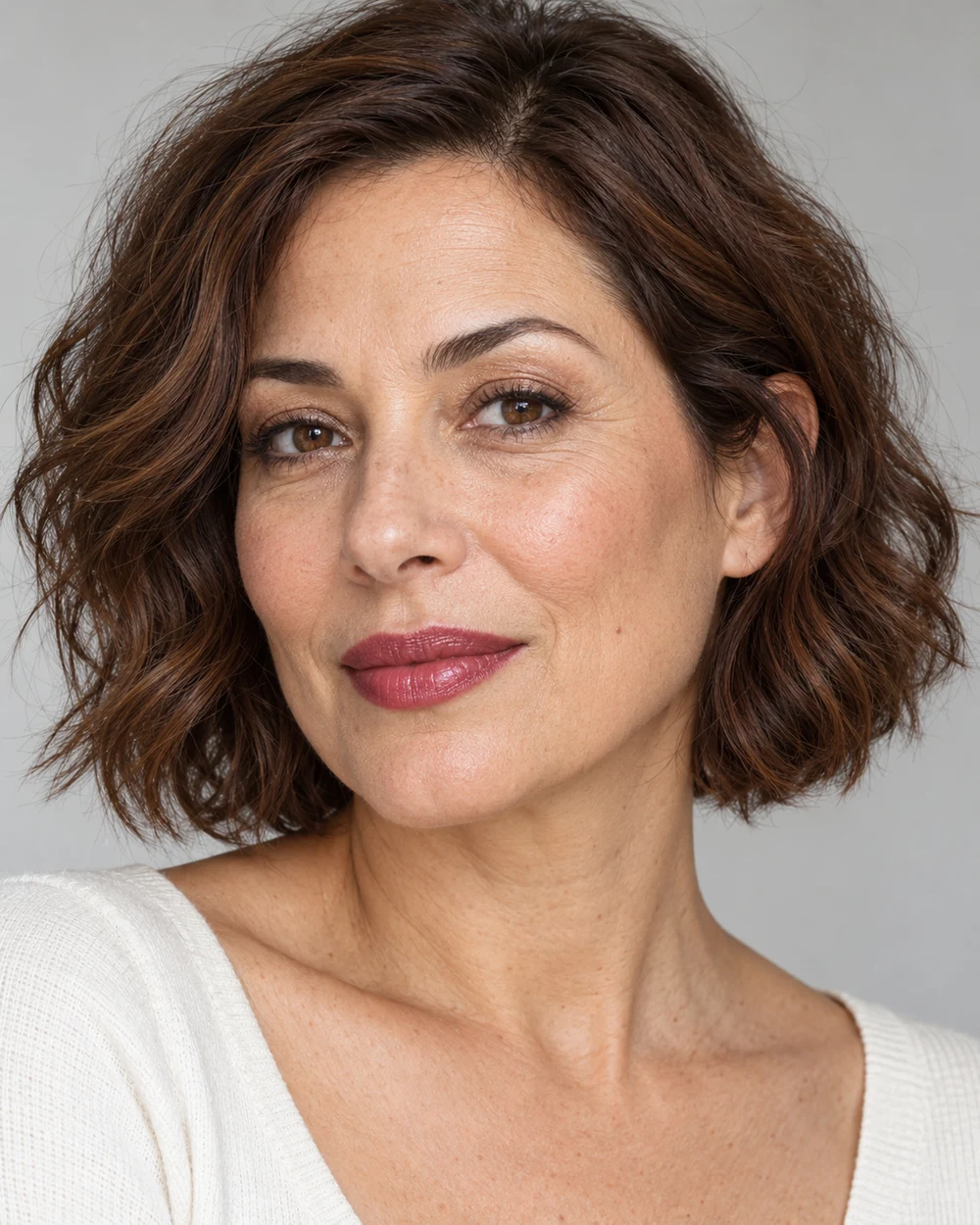
The bronze is the reflection; the dark rose is the more distinct colour. Keeping those jobs separate makes this small combination feel considered without asking either feature to grow. A plain neckline gives the pair ordinary space. Start after your usual preparation with familiar products and a clean appropriate brush; five minutes is an editorial estimate for the core, not a measured result for a first attempt.
Let bronze occupy a contained part of the lid
Place a small amount of eye-intended bronze shadow on the accessible external upper-lid area you want to catch light, following the product’s directions. Keep it away from the inner rim. Soften the outward boundary locally with the suitable clean brush, then check with the eye open before adding another layer.
Choose the bronze against your own skin. It can read as a quiet warm reflection or a more visible metal; those are different versions rather than a rule that every face needs the same opacity. For this softer version, leave space around the chosen area and keep an unfamiliar wing or separate crease design outside the short core.
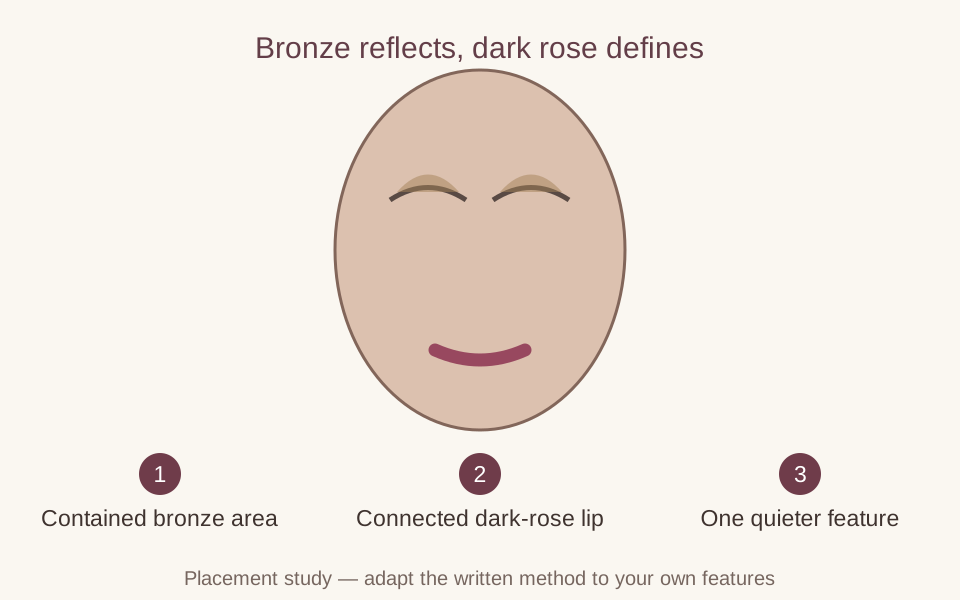
Give dark rose the clearer connected shape
Apply a thin layer of dark-rose lip colour within the relaxed outline you enjoy. Check the corners and join any local missing area with the product’s suitable applicator. Let the colour be distinct enough on your own lips without requiring a pale base or a new separate pencil.
Step back with the actual neckline visible. If the rose is already the clearer colour shape, the bronze can remain quieter. Keep cheek and brow at their familiar finish while making this comparison. Adding matching warmth to every feature would change the composition, rather than complete an absent mandatory step.
Keep the two colour jobs through three plans
Evening. Compare the bronze reflection under the light where you get ready and the rose beside your evening neckline. Let the mouth carry the clearer colour if the outfit already has shine. Make one local adjustment rather than deepening both areas at once.
Celebration. Check the bronze beside jewellery or a warm metallic detail in the clothing without requiring an exact match. Retain the contained lid area even if the rose becomes a little more visible. Carry the familiar lip colour for a refresh if useful to your plans.
Weekend. Use the thinner rose layer and quieter bronze reflection beside a casual knit or tee. Leave the next optional cosmetic step out once those two jobs are clear. The combination can remain small enough for an ordinary lunch or afternoon plan.
When the reflection and colour compete
Identify which feature grew beyond your intention. Reset a local excess with a remover suitable for that area, following and completing its directions before replacing less. If the bronze tone itself is the issue, compare a quieter familiar warm eye colour rather than making the rose darker to compensate. Keep the tools and removers appropriate to their separate areas.
Keep bronze as the light-catching note and dark rose as the connected colour shape. The face can feel finished while one feature is quieter than the other.
Makeup placement and colour are personal choices; adjust the steps to suit you. Follow the directions on your own products.