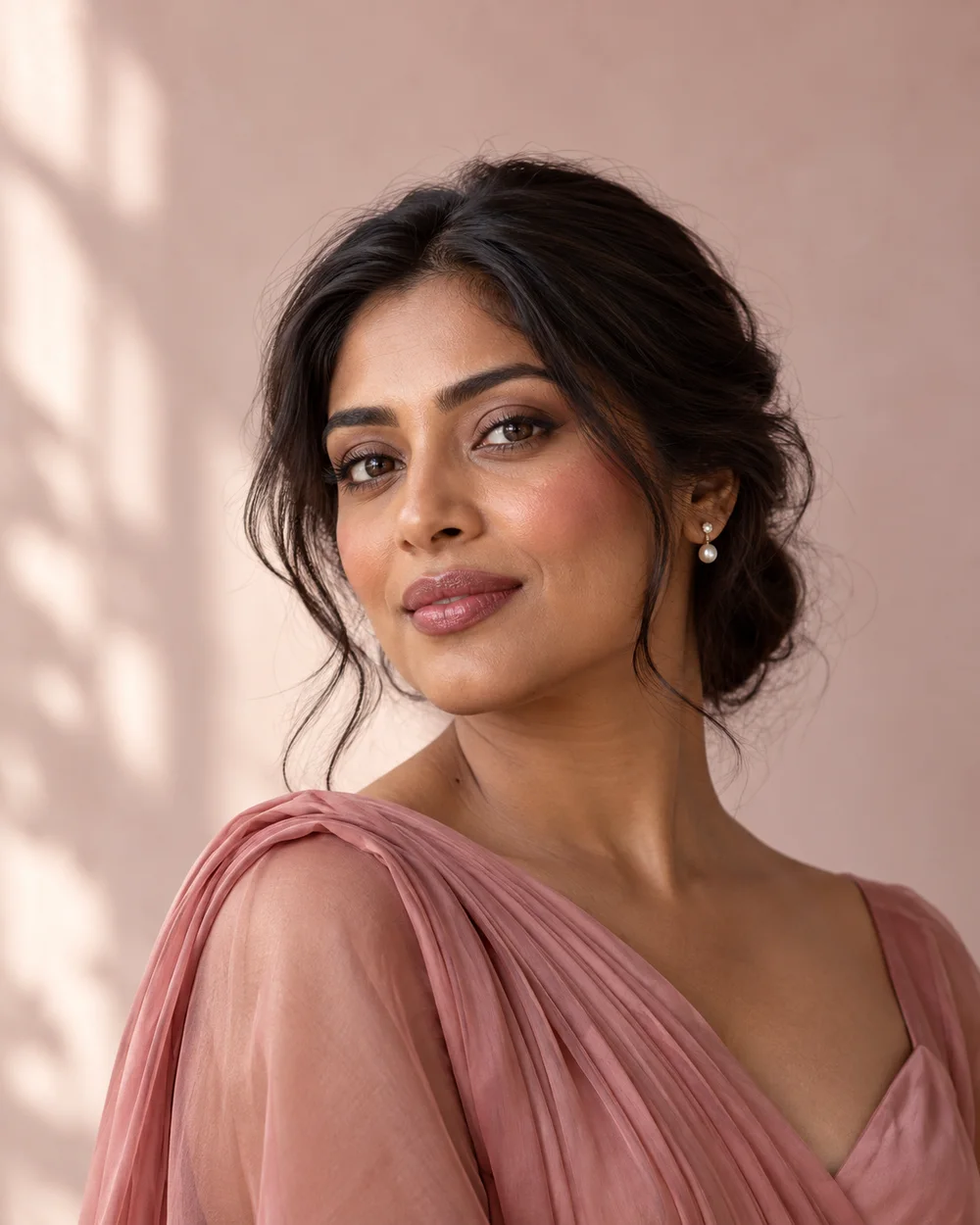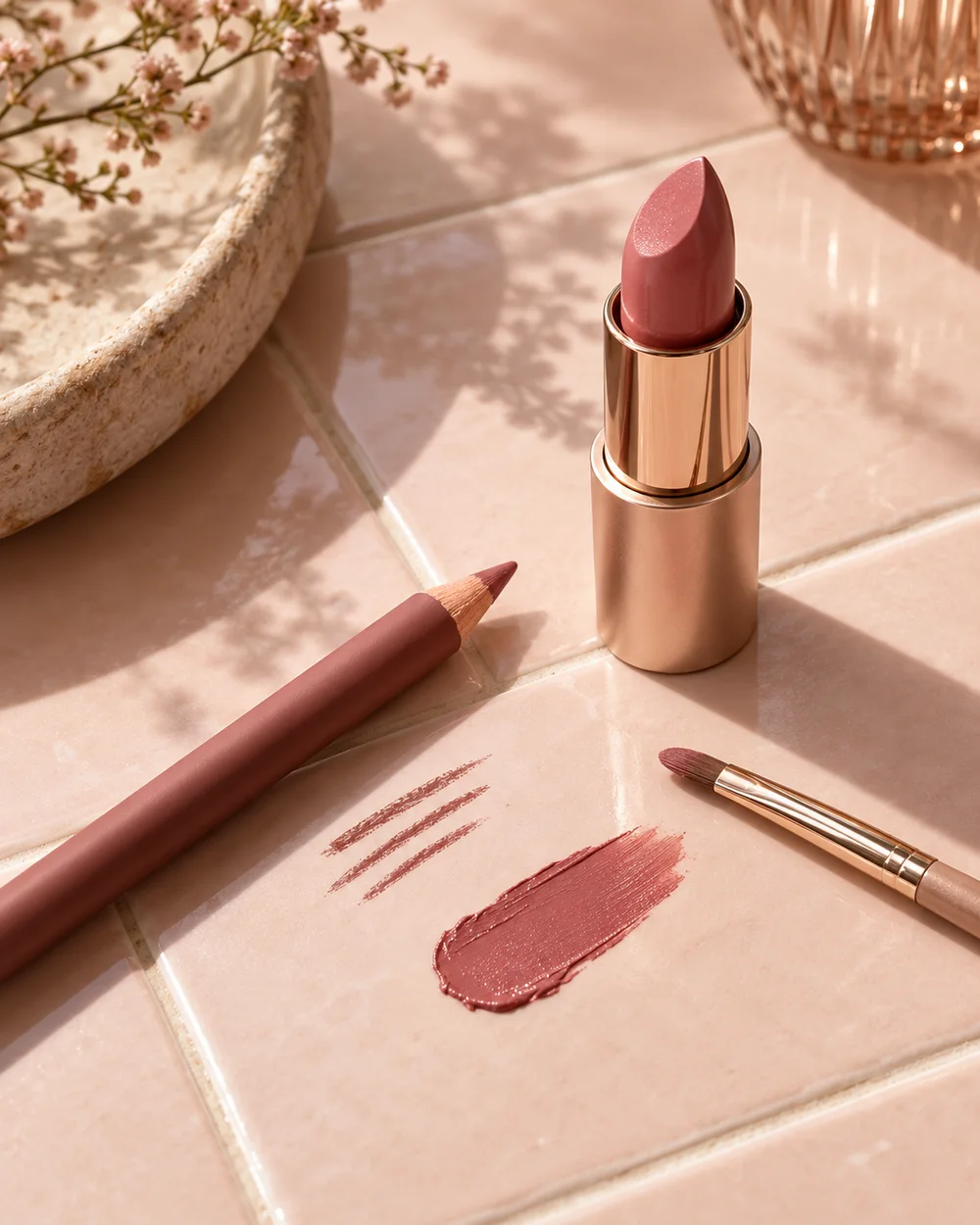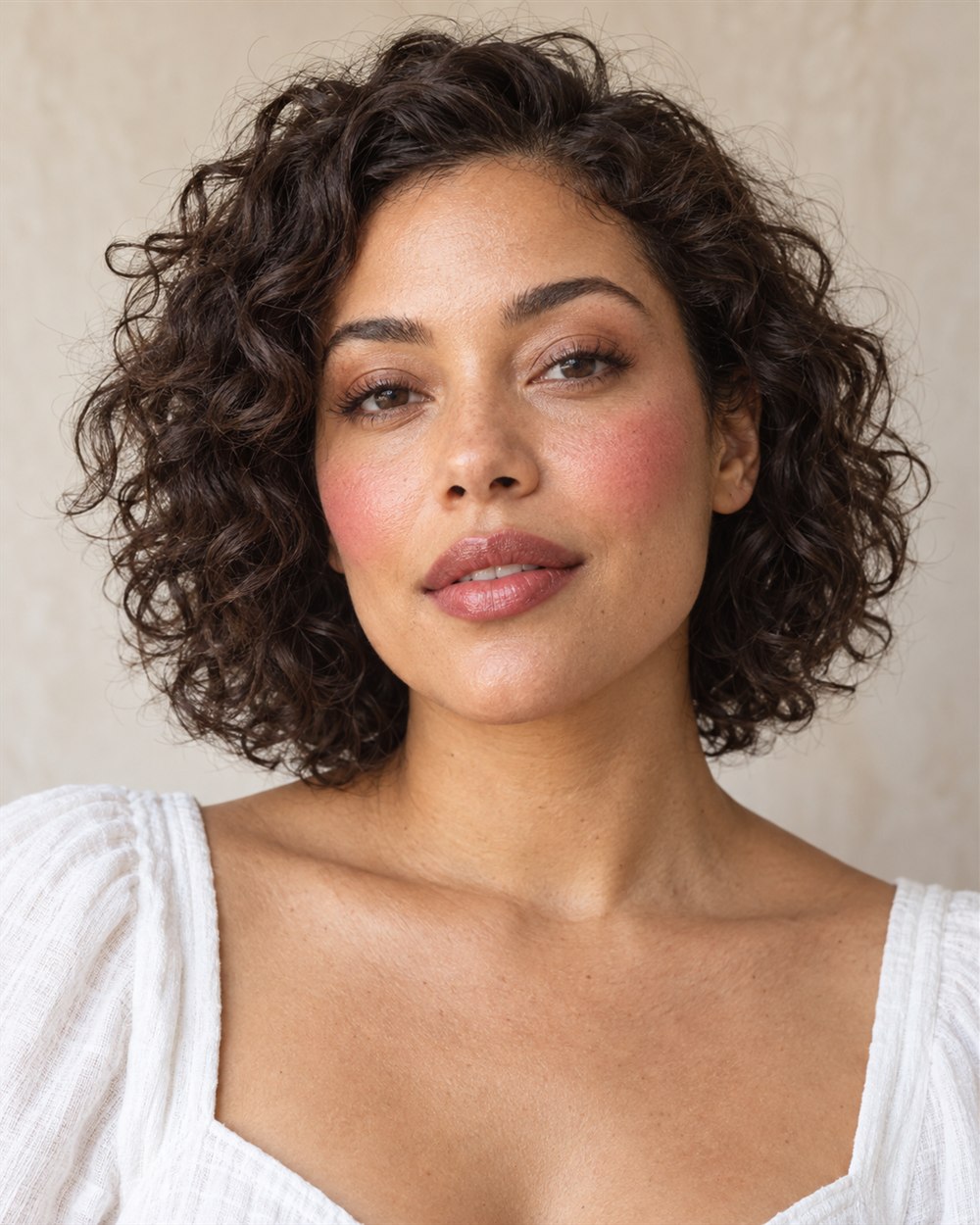
A cheek-led look gives blush the attention often reserved for eyeliner or lipstick. Its statement comes from an intentional amount and a placement you can describe, rather than a requirement to cover a large area. Pair rose cheeks with a related lip and simple eye. Choose a blush formula you know so you can concentrate on its placement and depth.
Choose a shape with your face relaxed
Look ahead and decide where the centre of the colour should sit. You might prefer a compact central patch, a higher outer band or a softly extended shape. None is a corrective requirement. Use your face as the reference and note where you want space around the colour. Begin with familiar blush so you can concentrate on placement instead of learning a new formula.
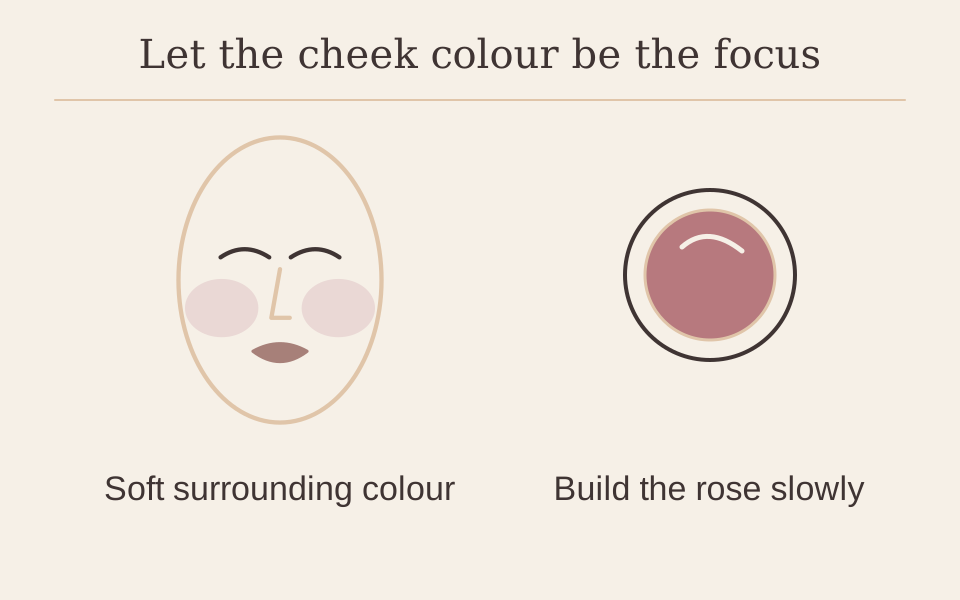
Build colour with a controlled boundary
- Apply only the base you want. Use a thin layer of your usual tint or targeted concealer if desired. Blend its edge before blush. If using cream blush, check its directions about layering over powder before you begin. With powder blush, begin when the base is ready rather than dragging a brush over a very wet patch.
- Place the first small amount. Put a little product on a suitable clean tool and place it near the centre of your chosen area. Keep this pass smaller than the intended finished shape. Repeat the starting amount on the other cheek. Look ahead between passes; smiling throughout can change the view you are using to judge the placement.
- Blend out from the colour. Use light pressure along the boundary while keeping the central colour in place. A clean tool helps when you do not want more product. Check the edges near the nose, under-eye area and hairline separately. There is no need to blend across the whole cheek because one short section has a visible boundary.
- Build the statement deliberately. Add another small amount inside the first patch for greater intensity. More colour and a wider shape are different changes. Compare both cheeks at normal viewing distance before another pass. If the colour is strong enough, leave it alone while assessing the full face; repeated close inspection can encourage extra layers you did not originally want.
- Connect the lip and simplify the eye. Pick a related rose lip, perhaps more muted or deeper than the cheek. Add familiar mascara if wanted, then pause before automatically drawing a dark wing. Compare cheek with lip: soften one if both demand more attention than intended, or keep the stronger combination if it feels right to you.
Choose your approach
A compact statement
Keep colour within a smaller area and build depth. This looks different from a light wash over the whole cheek, even using the same blush.
A softly extended shape
Let the outer boundary travel farther towards the side of the face. Choose the shape before increasing the amount of colour.
Make one adjustment
| What you notice | Check first | Try next |
|---|---|---|
| Colour moves too close to the eye | Identify the boundary beyond your plan. | Blend or remove excess locally instead of widening both cheeks. |
| One side seems stronger | Compare in even light with face relaxed. | Make one small adjustment, then step back before switching sides again. |
| Lip and cheek feel disconnected | Compare depth, brightness and colour direction separately. | Try a sheerer lip layer before replacing both products. |
Record a placement you can repeat
A note such as “compact centre, deeper rose, soft outer boundary” says more than “pink blush”. A reference photograph can remind you of the arrangement, although camera processing alters colour. Include the actual product and approximate application amount if you want to repeat the combination. You can keep the same placement while changing the lip another day.
Questions you might have
Must statement blush be bright pink?
No. Muted rose, berry or brown-rose can be deliberate too. Choose the amount of contrast you like.
Can I add shimmer?
Yes. Try blush alone first to judge its shape, then add sheen only where you want reflection.
How is this different from monochromatic rose?
This makes cheeks the focus. The monochromatic guide repeats related colour across three features, with more freedom about which leads.
Makeup placement and colour are personal choices; adjust the steps to suit you. Follow the directions on your own products.