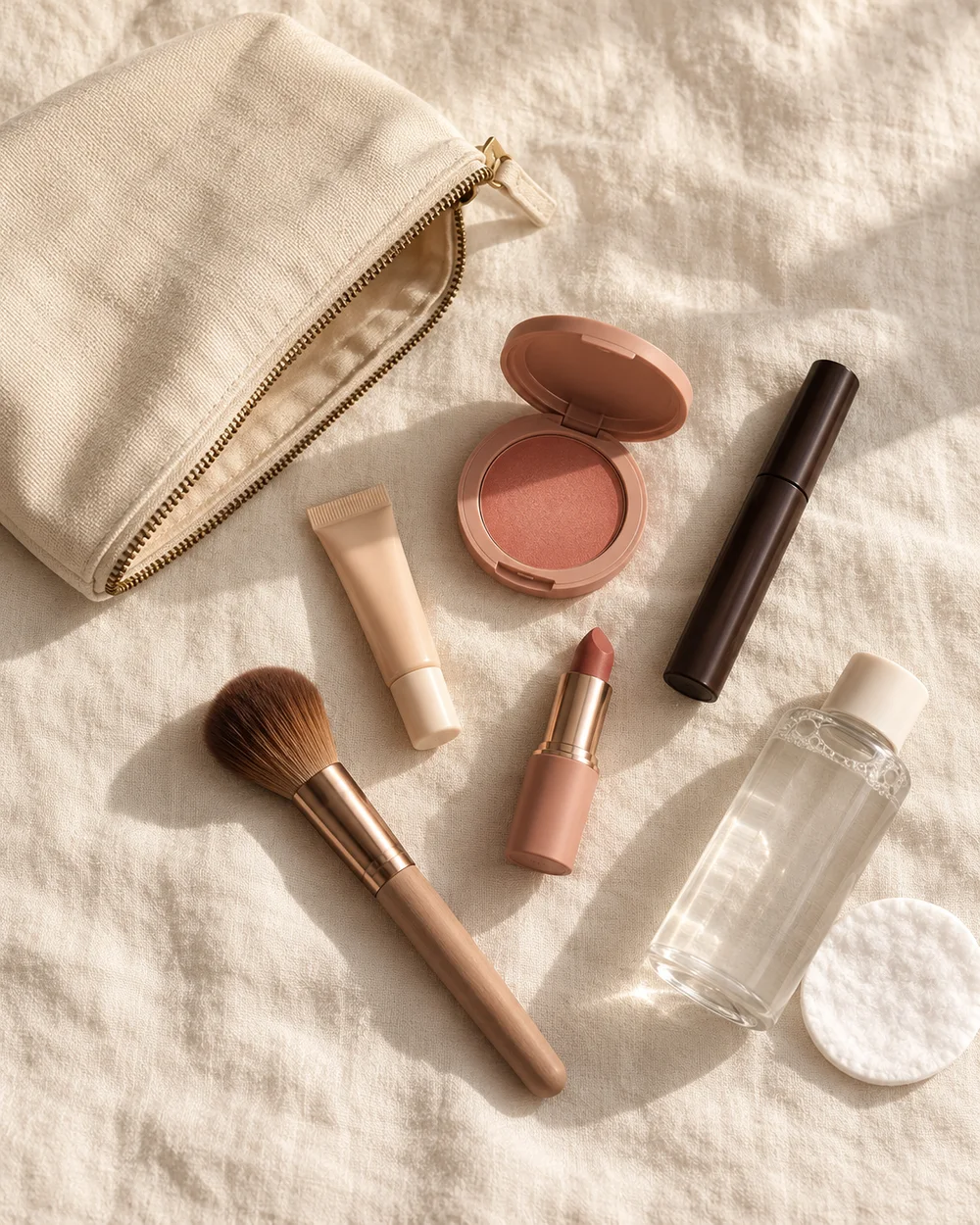
One pot can be convenient when its directions expressly include both cheeks and lips and you enjoy the colour in both places. Separate familiar products remain a useful route when you want different textures or depths. The decision is about the jobs the actual products can do, rather than treating every cream colour as interchangeable across the face.
Choose the one-product route for its actual directions
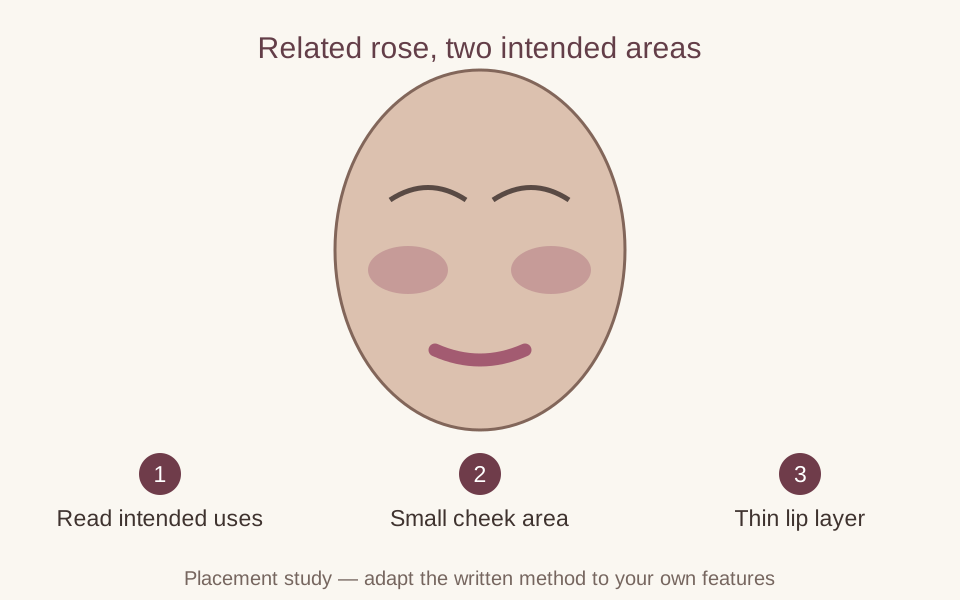
Read the intended-use directions before beginning. Use a rose product explicitly described for both cheek and lip application, with clean appropriate applicators and the method its maker specifies. Prepare as usual first. Start with small amounts so the five-minute core stays a controlled colour edit rather than a new full-face routine.
Place a little colour in the cheek area you enjoy and blend its perimeter with the appropriate clean tool. Apply a thin layer to the lips with a suitable clean applicator, keeping the outline relaxed. The same product can look different over cheek skin and natural lip tone. You are choosing a relationship, not trying to make the two areas identical.
Choose separate products when the textures need different jobs
A lip balm and a blush you already enjoy can share a rose direction without being the same formula. This is the useful alternative when you want a quieter cheek, a more comfortable lip finish or a depth that differs between the two areas. Follow each product’s intended-use directions rather than assuming the shared colour name makes either suitable everywhere.
Keep brown mascara as the small darker point at the lashes if you want it. Follow its directions and leave the lid at a familiar quiet finish. Do not use the cheek-and-lip product as eye colour unless its actual directions separately include that use; this guide only covers the stated cheek and lip jobs.
Decide which route earns its place
Everyday. Try the one-product route when you like its result on both areas and it simplifies the routine you already use. Keep each amount small enough to judge. If it makes one area harder to manage, the separate products you own may be the simpler answer.
Wedding. Compare cheek and lip depth beside the actual event outfit before the day, following the invitation’s dress code. Use separate familiar formulas if you want a different lip finish for the occasion. A single matching product is an option rather than a requirement for coordinated makeup.
Holiday. Pack the expressly dual-intended product only if it genuinely replaces two jobs in your own kit. Include its appropriate clean applicators, follow storage directions and keep usual protection separate. Do not add a new multi-use purchase merely because a smaller number of containers sounds tidier.
When one colour works in only one place
Keep the result you enjoy and change the other product job. An overly pale cheek or an uncomfortable lip finish is useful information about this combination. Remove an unwanted local layer with a suitable remover as directed and finish the cleanup before reapplying. Avoid mixing formulas in their containers or improvising a new intended use to rescue the purchase.
Choose the one-pot route when both uses are directed and both results work for you. Otherwise, two familiar products can make the more economical kit.
Makeup placement and colour are personal choices; adjust the steps to suit you. Follow the directions on your own products.