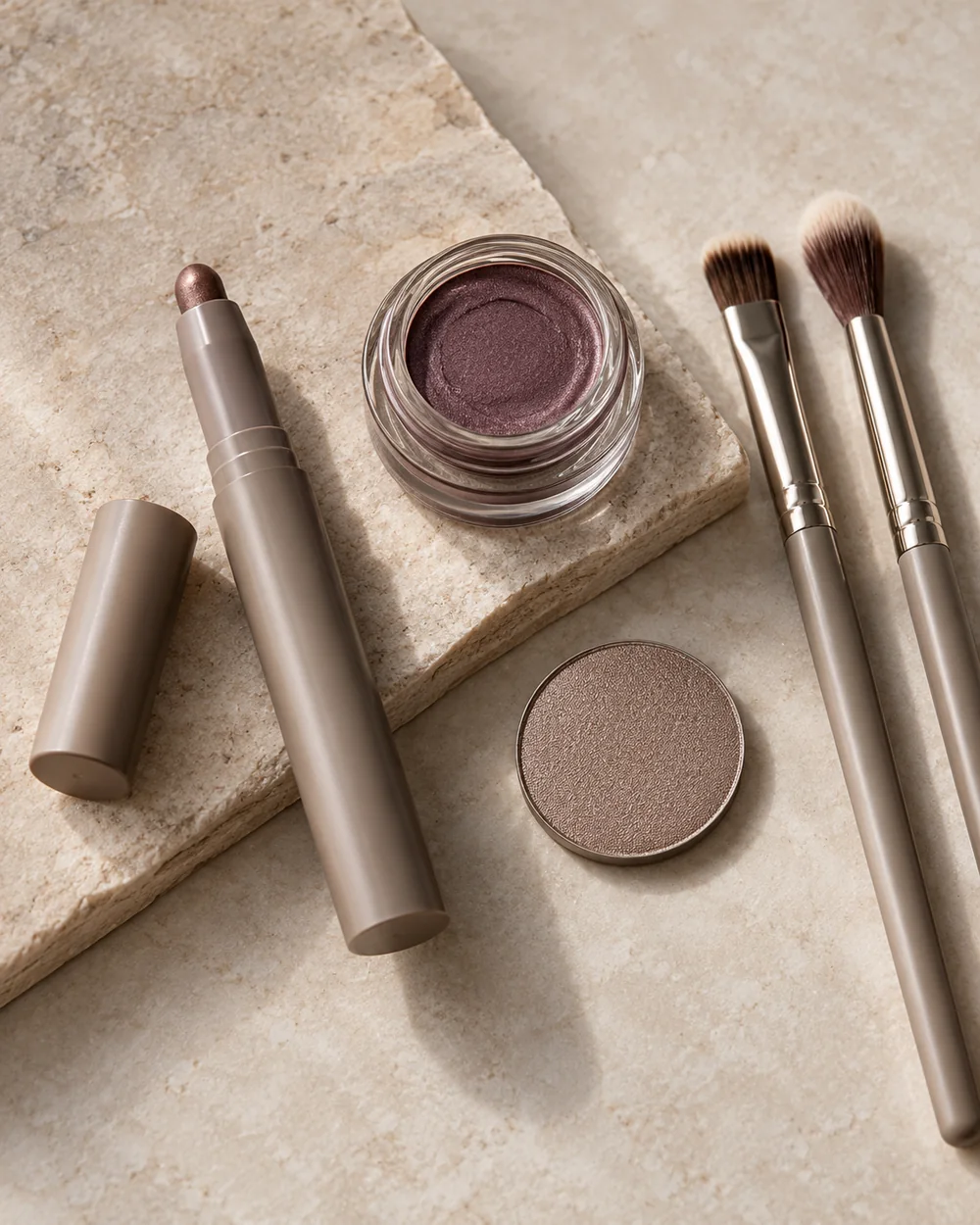
Your frame is already a line near the eye. A grey-brown wash can sit quietly behind it, supplying a little depth without trying to compete with that outline. The useful decision is how much colour remains visible when the glasses go back on. This edit leaves a wing and a separate lower-lash shape out of the five-minute core, so you can spend that time checking the lid and frame together.
Compare the view with and without the frame
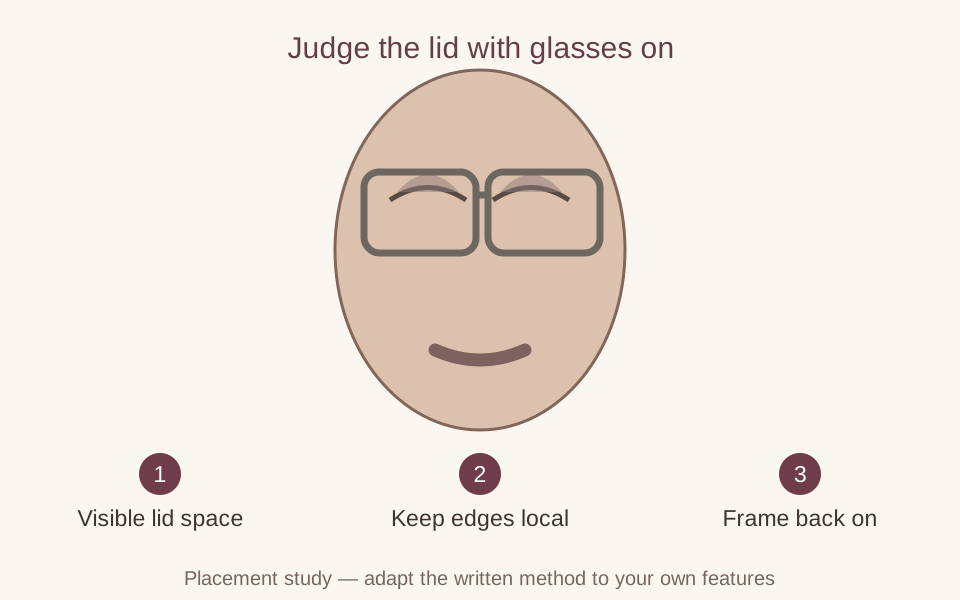
Use your own comfortable working setup and the vision support you normally need. Keep glasses accessible rather than balancing them where they might fall. With the eye relaxed and open, note the lid area you can actually see. Choose a grey-brown eye product intended for that area and an applicator you already control.
Place a thin wash on the visible lid, keeping its lower boundary away from the inside of the eye. Soften the upper perimeter locally rather than continually carrying colour higher. Return the glasses to their usual position and look straight ahead. The frame may cover some of the wash; it does not follow that the whole shape needs to be made larger.
Let the rest of the edit stay quiet
If the lid wash reads as a quiet shadow behind the frame, leave the lash line at its usual appearance. If you prefer more depth, compare a small increase inside the existing area before enlarging it. Put the glasses back in their normal position each time; a repeated frame-on check is the useful part of this method.
Touch a familiar neutral balm onto the lips according to its instructions, or leave it out if you prefer. Keep the brow familiar so you can judge this one eye change. A larger or darker frame, your prescription and the lighting can alter what you notice. Your own open-eye check is more useful than a universal instruction that glasses require heavier makeup.
Keep the frame in the decision
Everyday. Choose the smaller shadow amount and the balm you already keep nearby. If the glasses remain comfortable and you like the visible lid depth, stop there. The same compact method can be repeated without changing every product to match an ordinary top.
Work. Check the glasses at the distance you use for conversation and your ordinary desk setup. Keep the wash within a shape that needs little adjustment between those views. Your prescribed glasses remain the practical priority; makeup does not correct an uncomfortable frame fit.
Wedding. Choose the eye shape with the glasses you intend to wear for the event. Follow the dress code and compare the wash beside the actual neckline. Keep the familiar balm and contained lid shape rather than attempting a new, larger wing under time pressure.
When the colour disappears or spreads too far
If too little remains visible, compare a small increase in depth inside the existing lid shape before expanding the boundary. If the wash has spread beyond the space you wanted, remove that small area with an eye-suitable remover according to its directions, finish any cleanup and replace less colour. Frame pressure, rubbing or discomfort is a fit question to address appropriately, rather than something to solve by pushing makeup into the eye area.
The result is enough when the glasses are comfortable and the grey-brown detail looks deliberate with your eyes open. Keep that version for the next familiar five-minute attempt.
Makeup placement and colour are personal choices; adjust the steps to suit you. Follow the directions on your own products.