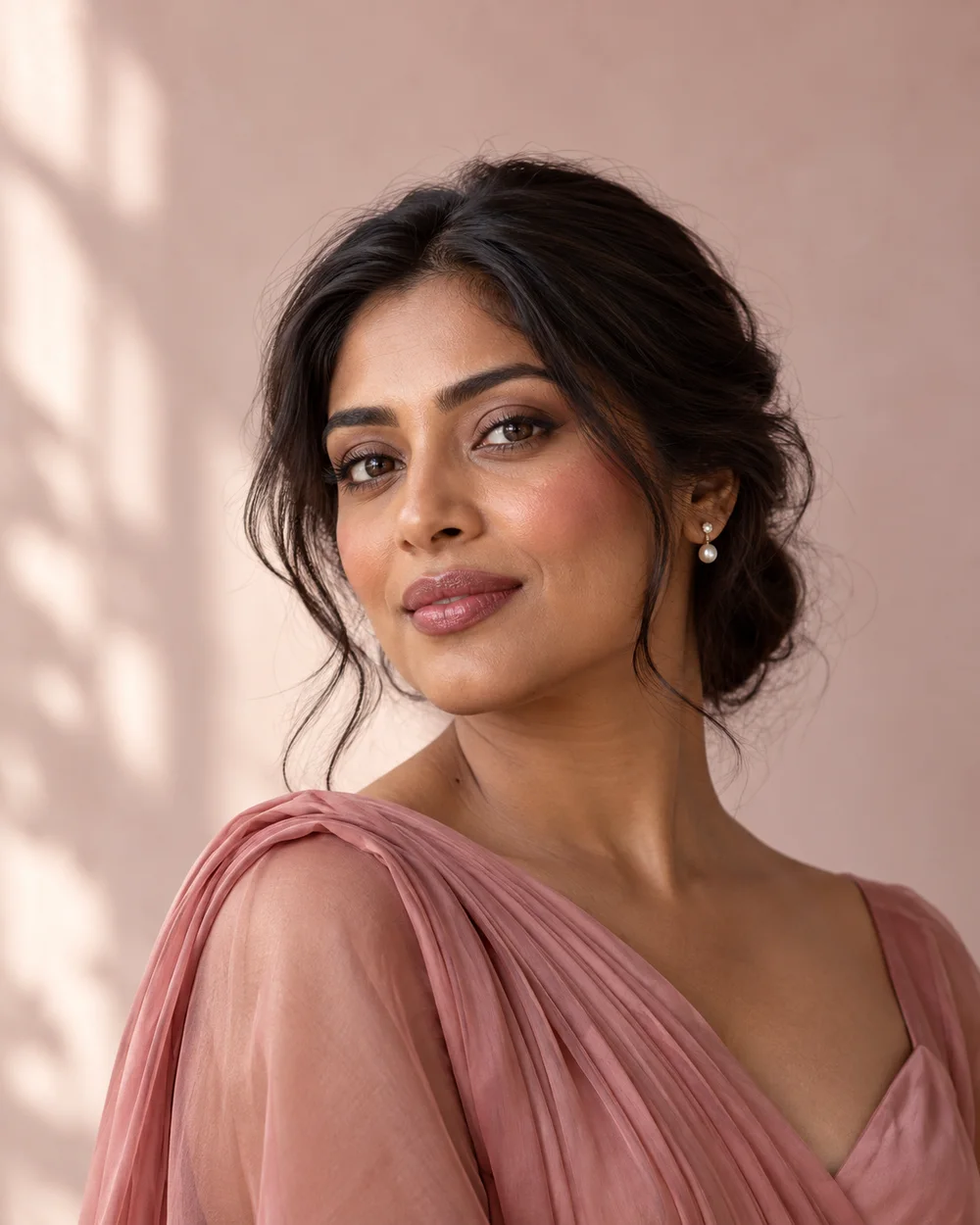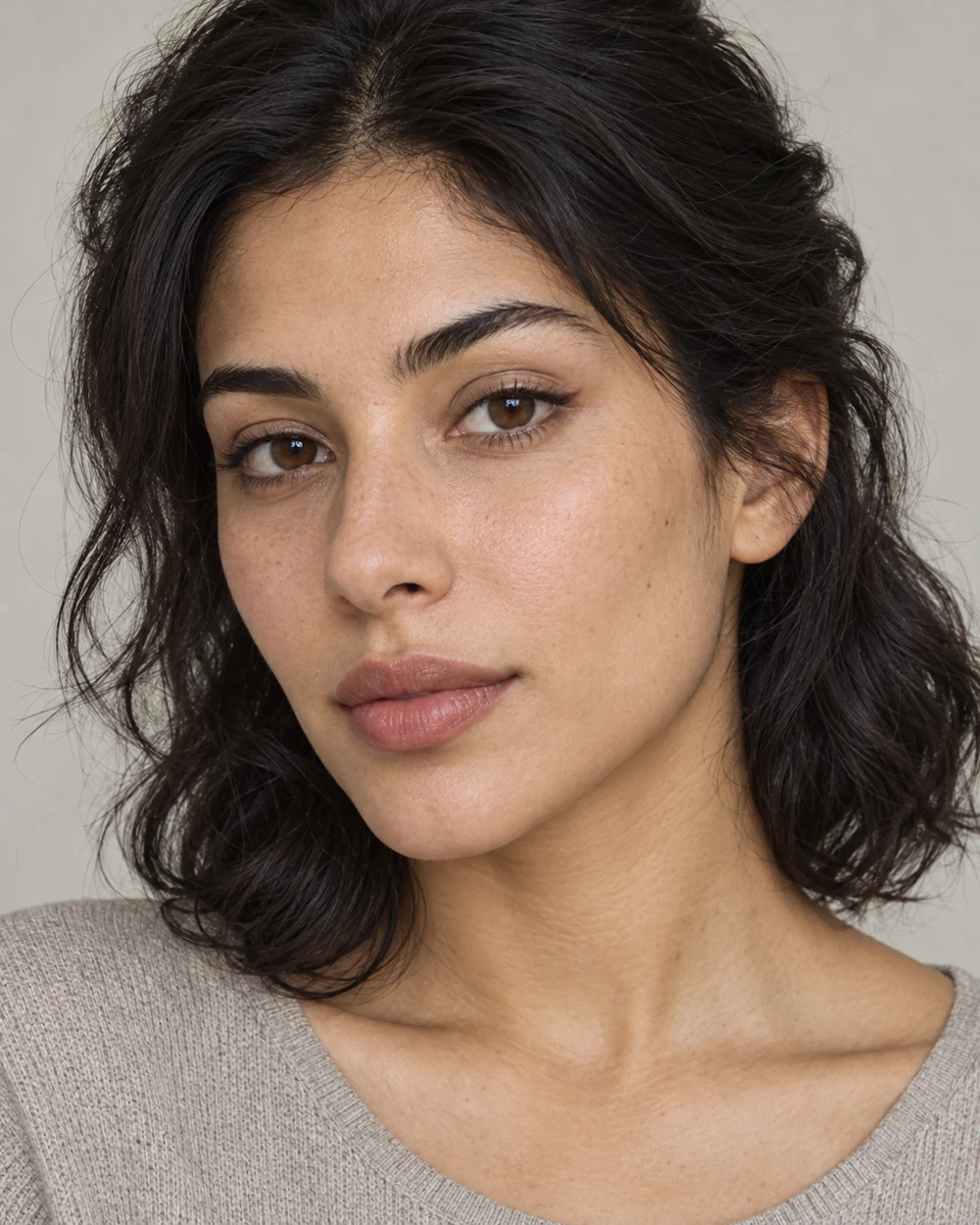
Brown supplies a gentler dark note than a large solid wing, while the neutral mouth leaves that small shape room to be seen. The idea is a short softened tip on familiar external lid space, not a new geometric exercise. This five-minute core assumes you already control that movement after your usual preparation. If the extension is unfamiliar, keep a short lid line and practise the tip another day.
Keep the brown inside a shape you recognise
With the eye relaxed, identify the small external upper-lid area you normally use. Follow the eye pencil’s directions and connect short sections where you can see the contact point. Keep product away from the inner rim. Add only the little outer tip you already know how to place, rather than extending it until it resembles a photograph.
Use a clean suitable eye brush to soften the outward edge locally while preserving the direction you chose. Open the eye and check whether the tip is visible enough. The amount of available lid space can change with the gaze and your own features; there is no fixed wing length to copy. Leave the shape shorter if that makes it easier to repeat.

Give the mouth a quieter version of the warmth
Choose a neutral lip colour related to the depth you enjoy on your own lips. Apply a thin connected layer within the relaxed outline, then compare it with the brown eye. A rose-brown, warm beige or another familiar neutral can supply the quiet support without insisting that the mouth match the pencil exactly.
Keep the cheek and brow at their existing familiar finish. In this composition the brown tip is the small dark direction, while the mouth is a broader softer shape. If the eye already carries enough attention, stop instead of adding another darker feature for supposed balance.
Let the small tip travel with the palette
Wedding. Practise the exact short tip before the event and follow the hosts’ dress code. Check the neutral lip beside the planned outfit, especially if its colour is close to your skin. On the day, keep the familiar lid-line version if time or working light makes the extension awkward.
Evening. Compare the tip with your actual evening neckline and leave it short if the clothing already has detail. A slightly deeper neutral lip can change the overall contrast without requiring a longer wing. Make that lip decision after the eye is complete.
Holiday. Keep the same familiar brown and neutral lip in a protected small kit, maintaining the brush as directed. Check that your travel mirror supports the hand position you normally use. Skip the outer extension when the setting makes it difficult rather than rehearsing an unfamiliar technique in a rush.
When the tip starts growing
Reset a local excess with a suitable eye-area remover used as directed, finishing its cleanup before drawing a smaller section. Avoid chasing perfect sameness by lengthening both sides in turn. If the familiar tip still feels awkward, retain a short softened external lid line and let that be the completed look.
Keep the useful contrast between the little brown direction and the quieter mouth. The right stopping point is the shape you can repeat comfortably.
Makeup placement and colour are personal choices; adjust the steps to suit you. Follow the directions on your own products.