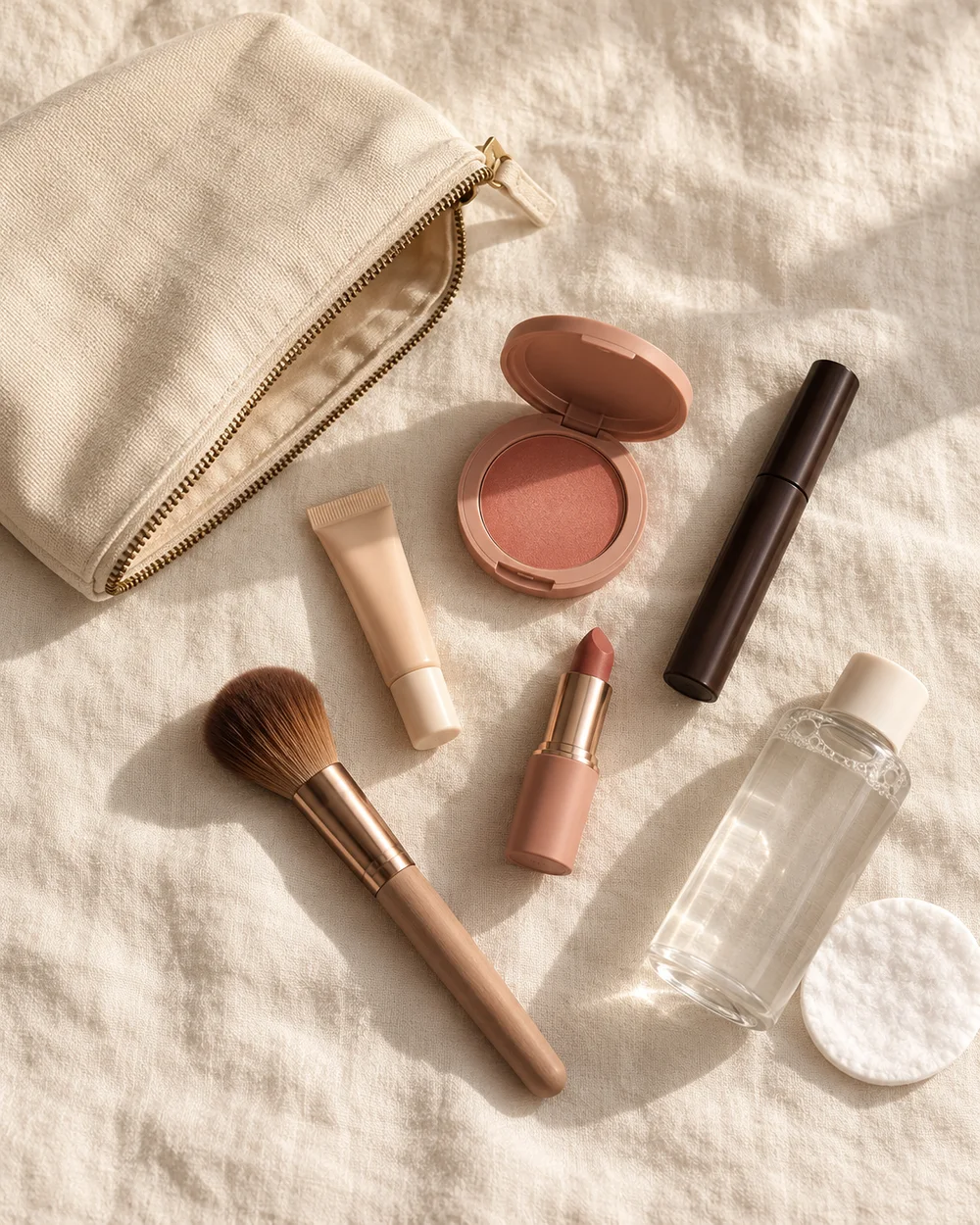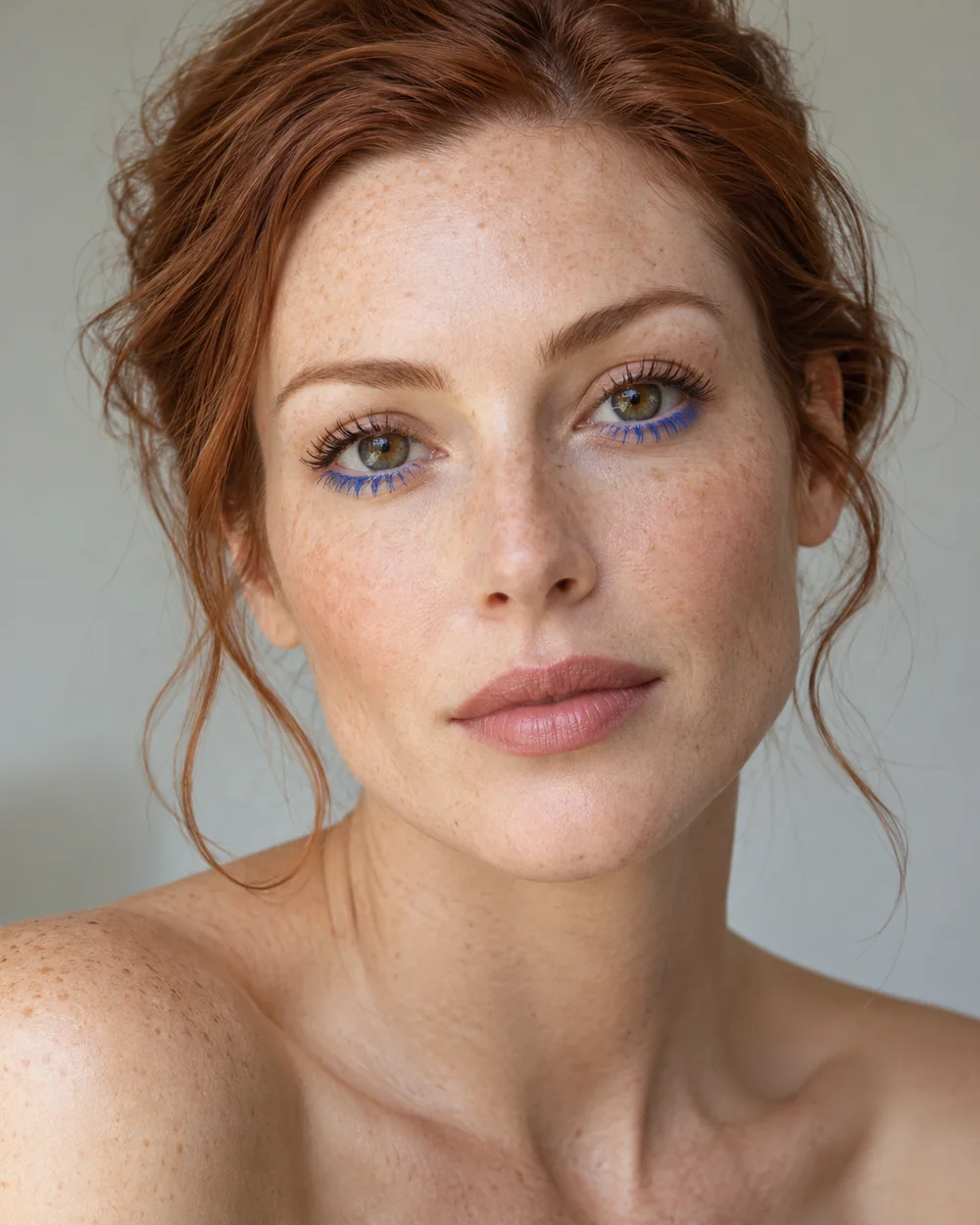
The burgundy becomes interesting when you leave some brown around it. In the illustrated version, a small outer-upper-lash group carries the wine colour while the remaining upper lashes stay brown. It is a detail to notice at conversation distance, rather than a demand for a complete coloured eye. Start with clean lashes and two familiar eye-intended mascaras after your usual preparation; the five-minute estimate covers this small core, not a first attempt with new products.
Choose the small area before opening the tube
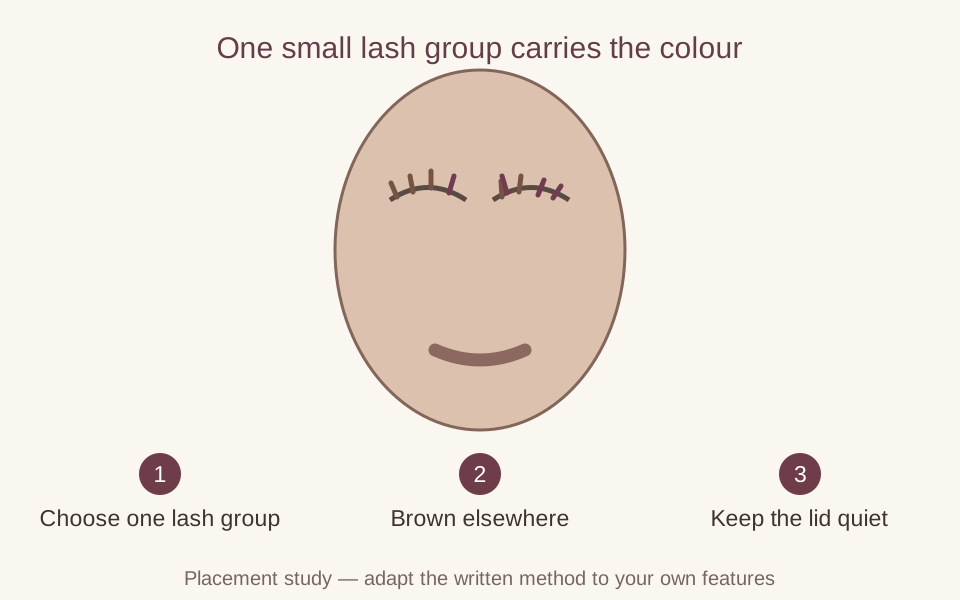
Look straight ahead and choose an accessible group on the external upper lashes. Use the burgundy there, following its own directions and keeping the wand away from the eyeball. Work only where you can see and control the contact. Let the lower lashes stay at their familiar finish rather than adding another intricate area to the plan.
Apply brown to the other upper-lash groups, without deliberately coating the same lashes with both formulas. This version uses separate areas; it is not a recipe for stacking unrelated products. If the small group is difficult to isolate, use one mascara across the upper lashes instead. The other tube then becomes an alternative, not a second compulsory purchase.
Let the colour have some ordinary space
Keep the lid and cheek quiet. Use a thin layer of neutral lip balm according to its directions if that is part of the finish you want. Step back and check the lash line as a whole before deciding that the wine colour needs to be brighter. Burgundy may read close to brown in some light or on some lashes; the name on the tube does not establish the result.
Stop when the chosen group is distinct enough for you and the lashes are comfortably separated. Chasing a more photographic colour with repeated coats changes the texture as well as the colour. A modest accent that you can repeat is more useful to this short routine than a large correction at the eye.
Give the same accent three different amounts of attention
Everyday. Keep the burgundy to the smallest group you can apply comfortably, with brown elsewhere and a familiar plain neckline. If the distinction is barely visible, you can enjoy it as a close detail rather than increasing the whole routine.
Evening. Check the wine accent beside the colour of your actual evening top under your getting-ready light. Leave the eyelid quiet so the lash colour does not have to compete with a new shadow shape. Carry the neutral balm if you want a simple lip refresh.
Celebration. Let the burgundy echo a plum, rose or wine detail in the outfit without requiring an exact match. Compare the complete face before adding a festive eye finish. The accent can remain small even when the clothing has more colour.
If the accent becomes a clump
Stop adding product. Follow the mascara’s directions for removal or correction, using a remover intended for that area and completing its cleanup instructions before starting again. Do not pick at dried product near the eye or improvise dilution. If you cannot comfortably separate the chosen group, reset to a one-mascara version and leave the second shade for another day.
Keep the burgundy in the area you chose, and let brown remain useful around it. The finished idea is a small colour decision with an easy stopping point.
Makeup placement and colour are personal choices; adjust the steps to suit you. Follow the directions on your own products.