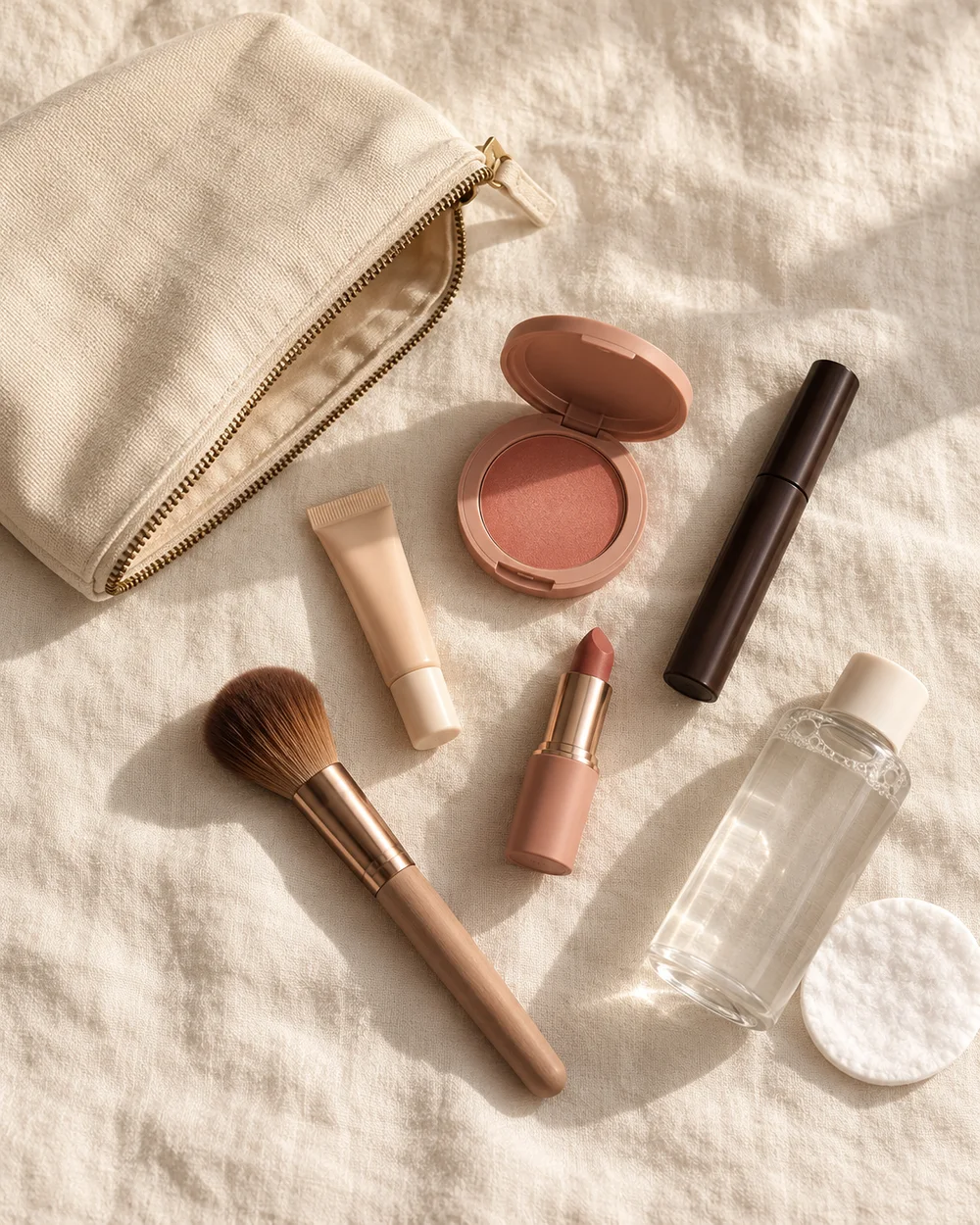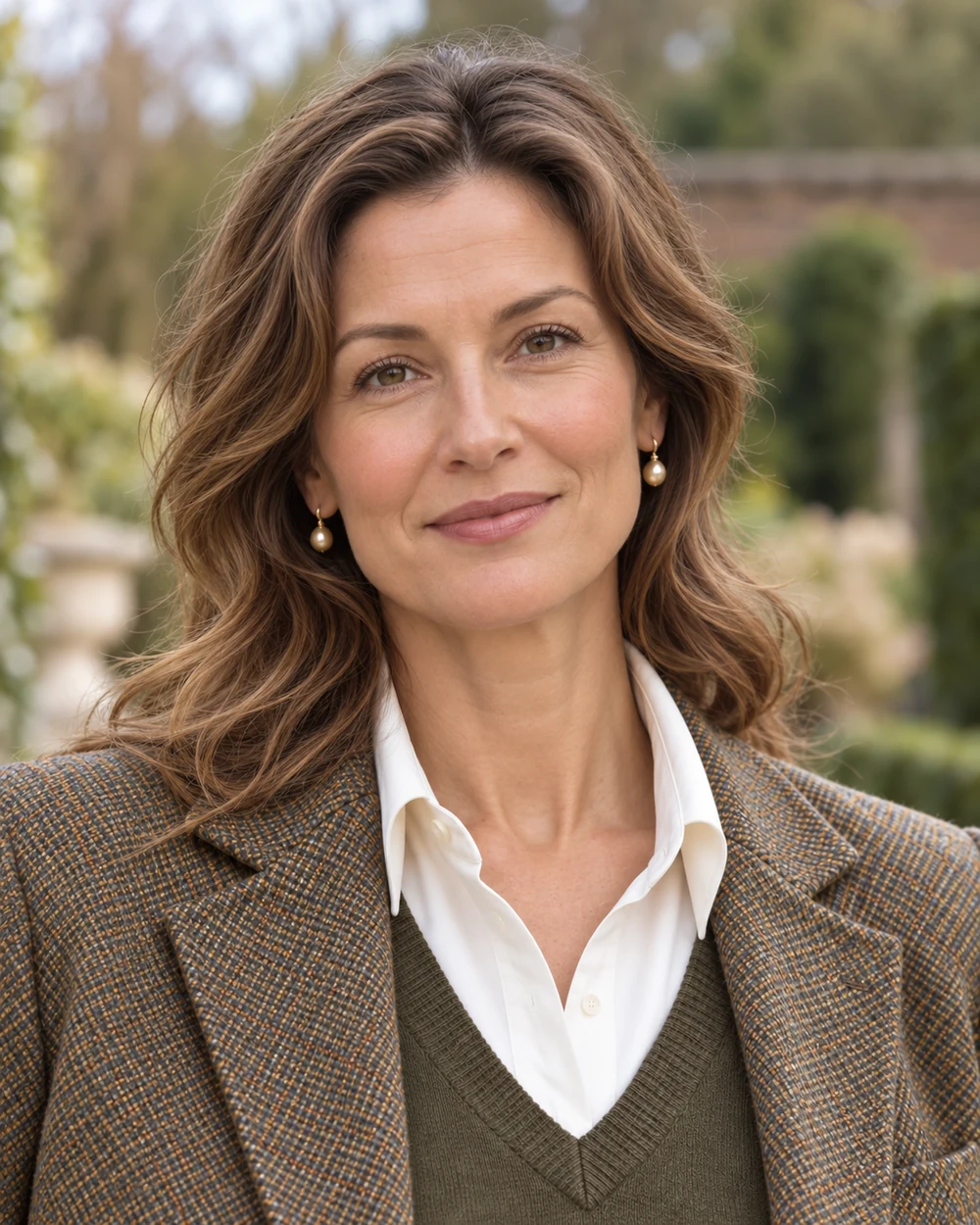
This soft rose palette is our editorial companion to the Princess of Wales-inspired tweed outfit. The cited style report supports the clothing reference, not a claim about her makeup artist, products or routine. A fictional model shows a quiet rose cheek, muted lip and fine brown lash definition on her own features. Use the palette as a starting point while choosing the coverage and colour contrast that feel right to you.
Choose the colour jobs
Place the ivory blouse and tweed near your face before choosing rose shades. Cooler rose, dusty pink and brown-rose create different contrasts with olive and brown clothing. You can use a familiar blush and lip product from the same broad family without requiring an exact match. Keep the eye detail optional and small; its purpose is gentle definition, not a new eye shape.
Apply it in six clear steps
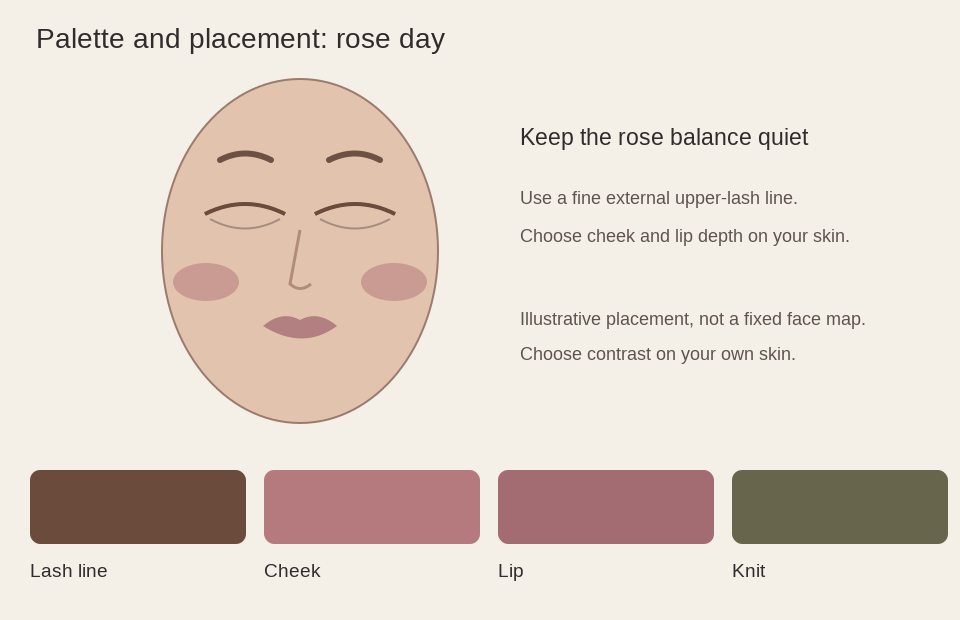
- Keep the base comfortable. Apply familiar coverage where wanted and blend the boundaries. Leave areas of skin visible if you prefer, or use more coverage locally. A daytime interpretation does not require either a bare face or a particular level of shine.
- Choose the rose cheek area. Look at your face relaxed and place a little blush where you enjoy colour. Begin with one modest patch. Check the position with your eyes open and the blouse collar visible rather than copying a diagram’s proportions exactly.
- Soften the cheek boundary. Use a clean part of the blush tool at the perimeter. Keep some colour in the intended area so it does not vanish. Compare both cheeks from conversational distance before adding another layer or enlarging the placement.
- Add fine brown definition. Place short marks with eye-intended pencil just above the upper lashes on the external lid. Join only as much as needed. Check the line with relaxed eyes; leave out a wing if a narrow edge already gives enough definition.
- Set a comfortable rose lip. Apply muted rose colour within the lip boundary you can see. Use a compatible liner if it helps control the edge, then soften any obvious meeting point. A satin or sheer finish can make a simple, complete day version.
- Check with the outer layer. Add familiar mascara if wanted and put on the tweed jacket. Step back and assess the face with the collar and knit together. Remove any displaced liner locally with suitable remover before reapplying, keeping corrections contained.
Adapt the placement and strength
For glasses, check whether the frame already supplies the eye definition you wanted before adding more pencil. For hooded lids or monolids, judge the visible line open-eyed; its closed-eye outline is not the final test. Choose a deeper brown-rose if a pale pink disappears on your skin, or a sheerer application if you want less contrast. Age does not prescribe the finish.
| What you notice | Try this |
|---|---|
| The rose disappears beside tweed | Try a slightly deeper shade or one more thin layer in the chosen area. |
| The line becomes thicker than intended | Remove excess locally and rebuild a shorter external section. |
| Cheek and lip seem disconnected | Compare their warmth with the collar visible before changing one tone. |
Questions you might have
Is this the Princess of Wales’s actual routine?
No. It is our independent colour interpretation for the sourced clothing reference, illustrated on a fictional model.
Must cheek and lip be identical?
No. Related rose tones can feel coherent without matching exactly. Judge them together on your face in the light you expect.
The garden-party guide offers another gentle daytime option if you want to change the emphasis while keeping the tweed outfit. Read the related technique guide and the paired outfit guide.
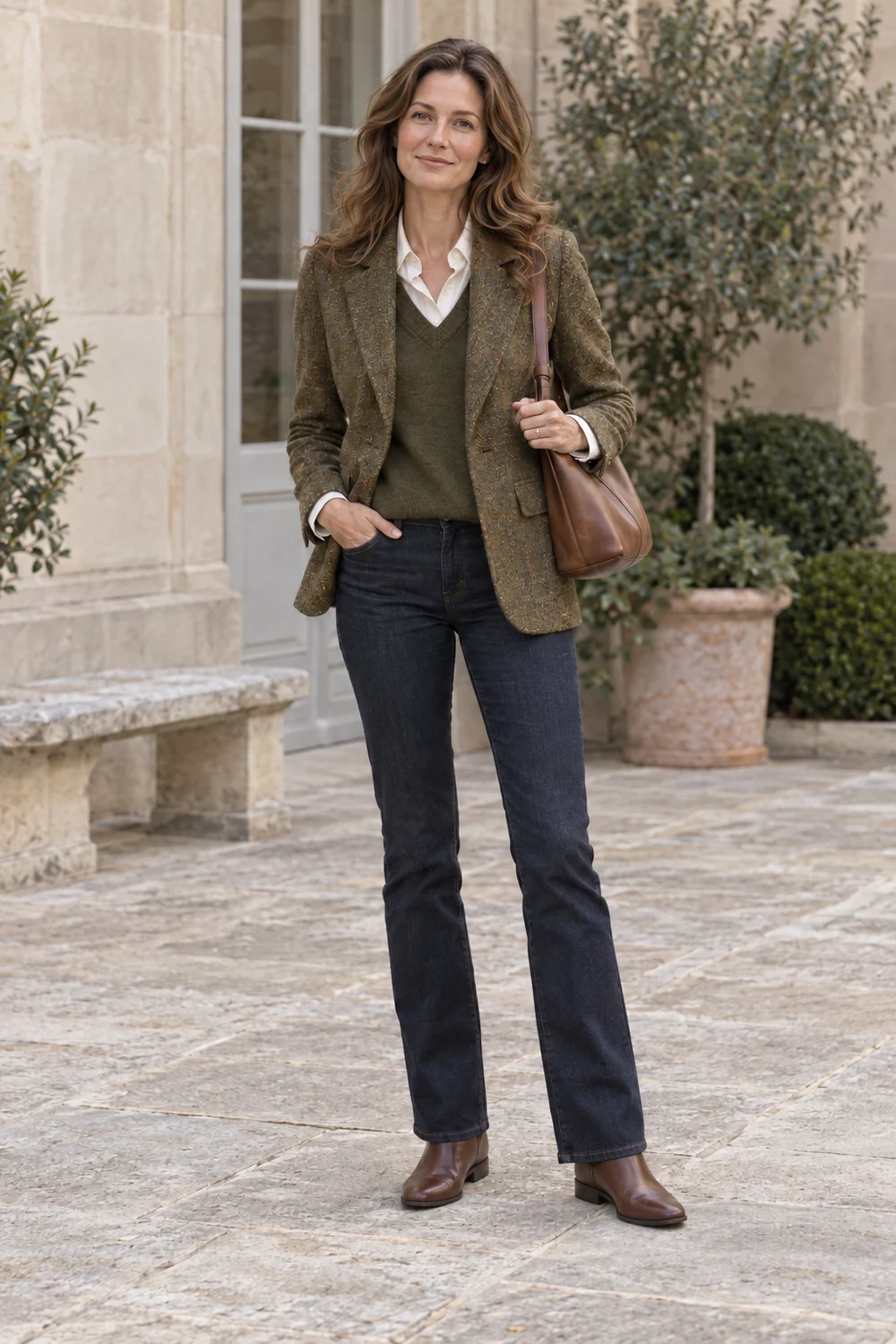
THE COMPLETE LOOK
Wear it together.
Keep the outfit and its makeup interpretation in one collection, with a combined checklist.
Makeup placement and colour are personal choices; adjust the steps to suit you. Follow the directions on your own products.