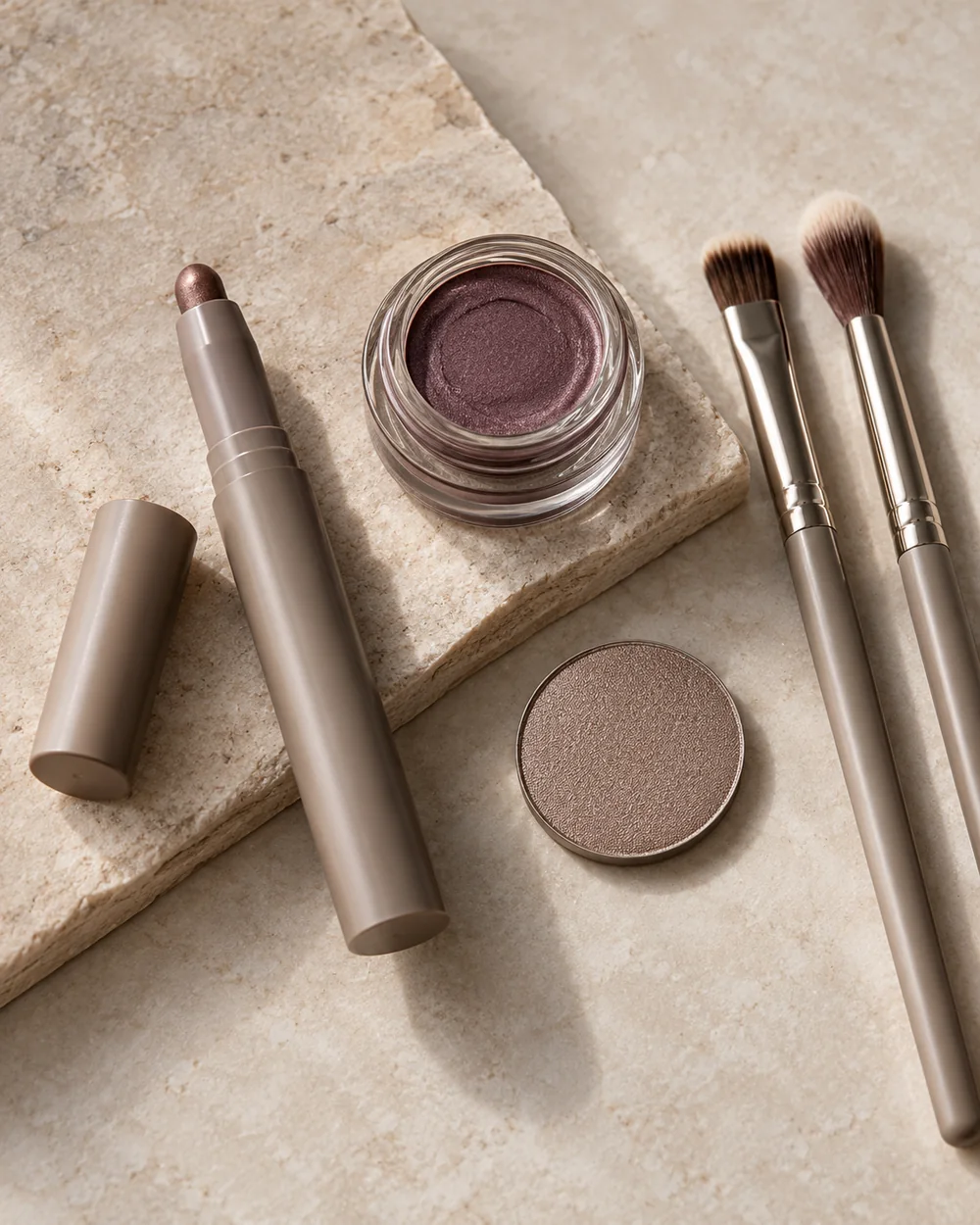
Apply a thin layer of eye-intended multichrome shadow to a small lid area using the method directed for your formula. Let it settle as instructed, then look straight ahead and turn a little to each side before adding more. Decide where you want the shifting reflection before covering the whole lid.
Check whether it is a base or a topper
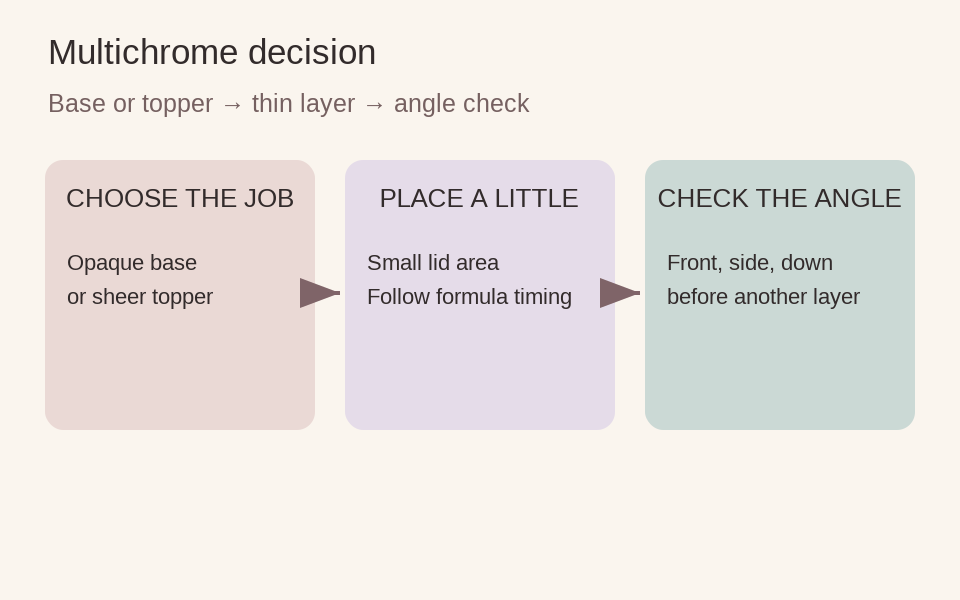
For colour without another shadow underneath, choose a formula intended to supply its own base. For a light-catching detail over another colour, a sheer topper may be the useful route. Danessa Myricks’ guidance distinguishes deeper base shades from lighter toppers in its ranges; check the description of the product you own rather than assuming every multichrome works the same way.
Follow its stated brush, fingertip or applicator method. If a coat needs to set before another layer, keep that sequence. Do not add glitter glue, mixing medium or a wet brush just because a tutorial uses them with a different formula.
Place, pause, change the angle
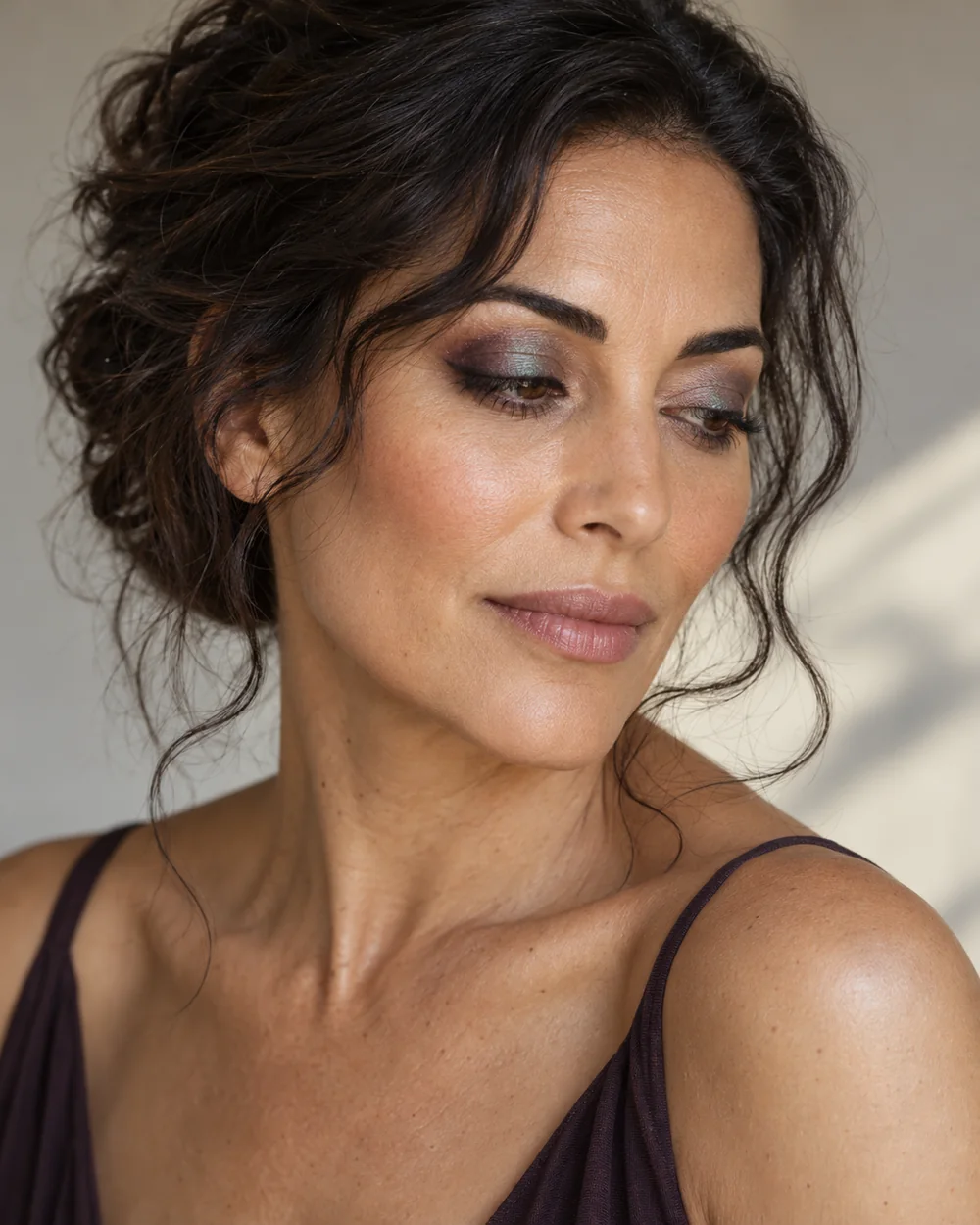
Start on one contained part of the mobile lid. The pictured teal-and-plum arrangement is one colour direction; use a depth and shift you enjoy. Keep the inner corner and lower lash line quiet during the first comparison so you can judge that single area.
Let the product settle, then compare a relaxed forward view, a slight turn to each side and a downward glance. Check another ordinary light source without staring into a bright lamp. Notice whether the base looks darker straight on, whether the shift appears only as light catches it, and whether the small area already gives enough effect.
If you want more, add only where it serves that shape and where the product’s directions allow another layer. More coverage does not guarantee a more colourful result at every angle. For an evening look, choose the visible depth in your rehearsal rather than adding extra layers merely because the room may be dim.
Keep the edge contained
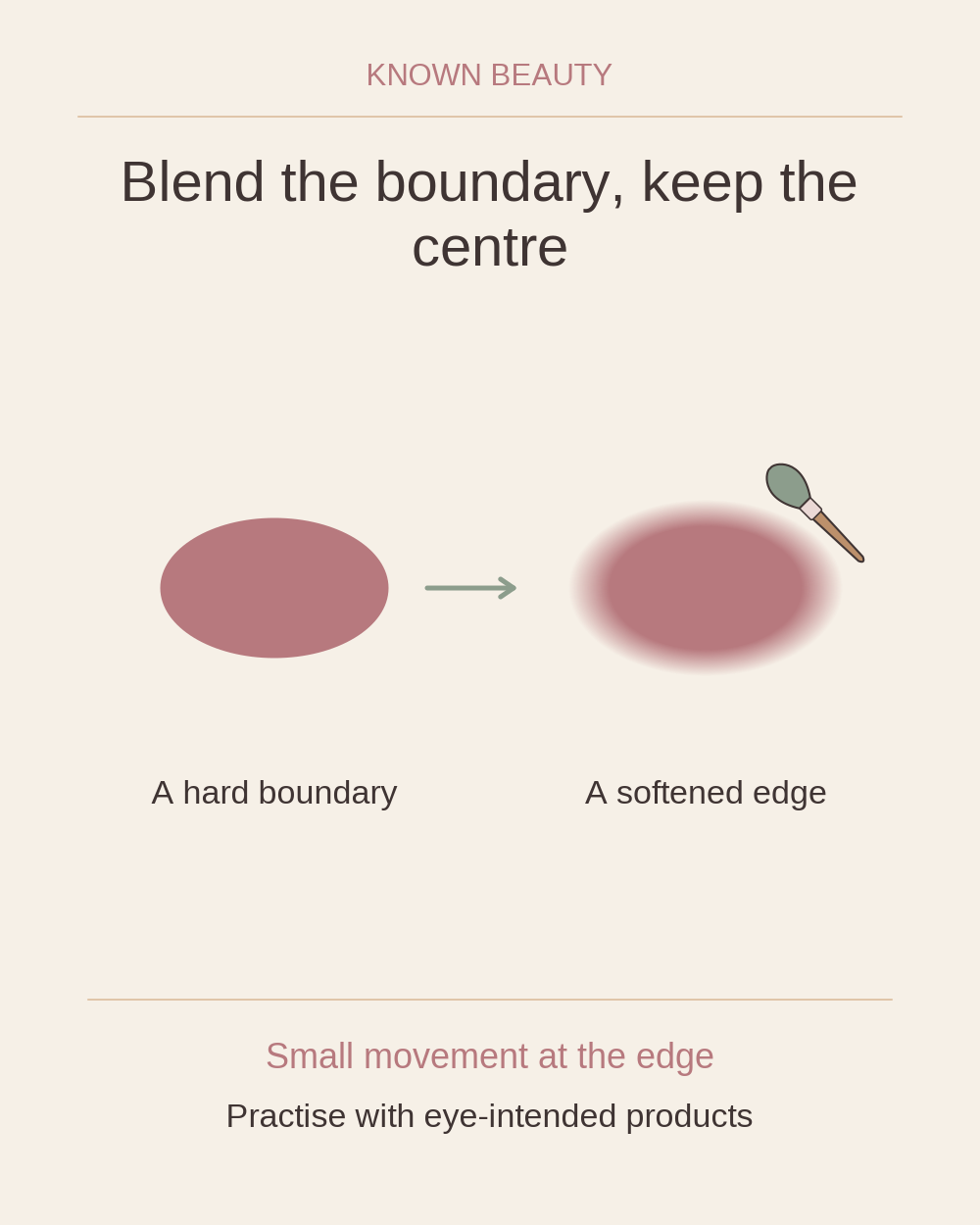
A softly blended boundary and a small graphic patch are different choices. For a setting liquid, follow any one-eye-at-a-time directions and avoid repeatedly brushing a layer that has already set. If a patch grows uneven, remove that local area with an appropriate remover as directed, then rebuild less colour.
With hooded lids, plan the visible area while looking forward and check where colour touches as you blink. The open-eye placement practice helps with that decision. With glasses, check through the frames you actually wear. Visible texture does not require a matte-only choice.
Use eye-intended products and clean applicators. If one shadow gives you the base and reflection you wanted, stop there. A second shade needs a different job before it needs space in your kit.
Makeup placement and colour are personal choices; adjust the steps to suit you. Follow the directions on your own products.