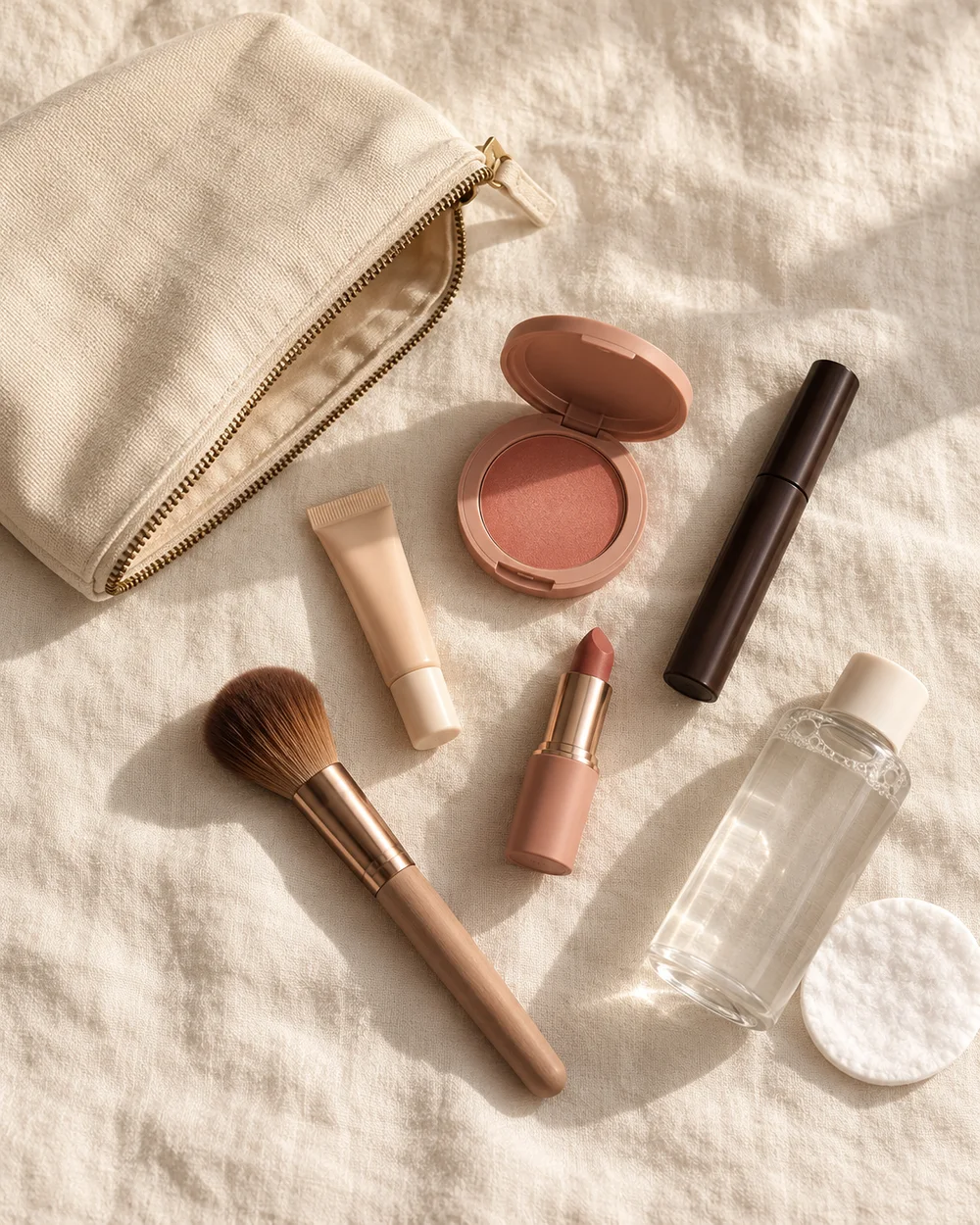
Selective coverage can be a useful partner to linen because both allow a relaxed, real-texture finish. In an original Glamour interview, makeup artist Daniel Martin explains keeping Meghan Markle’s skin and freckles visible. That broad approach provides the reference for our independent everyday version, shown on a fictional freckled model. This is not the wedding routine, a product test or a requirement to leave any particular skin feature uncovered.
Choose the colour jobs
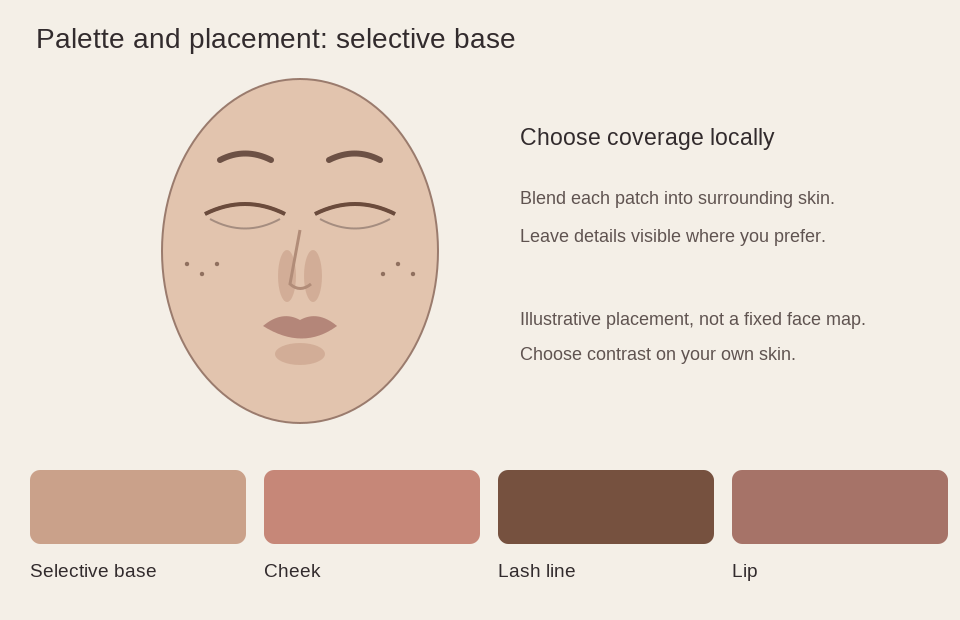
Decide what you want from coverage before choosing its amount. You might want more around the nose and less over freckles, or a small amount only in isolated areas. Use a familiar formula and a clean tool suited to it. Sheer does not mean using every product thinly across the entire face, and a minimal-looking result can still take careful blending at the boundaries.
Apply it in six clear steps
- Observe before covering. Look in comfortable light and identify the areas where you want more evenness. Keep the decision personal. There is no need to label every freckle, line or colour variation as a problem before you begin.
- Place small amounts locally. Apply familiar base or concealer in the selected areas. Start with less than you expect to need and check its appearance before spreading further. Follow the product’s directions rather than thinning it with unrelated products to create a new mixture.
- Blend into surrounding skin. Use the clean tool to soften the outside boundary of each patch. Check the jaw and hairline if coverage reaches them. Leave the middle of a small coverage area intact when that is doing the job you wanted.
- Choose reflection separately. Look at the finish before adding powder. Use a little only where you want less shine, if any. A sheer base need not be equally glossy everywhere, and visible skin texture does not mean the application has failed.
- Add a restrained colour pair. Place peach-rose blush in a small cheek area and blend its edge. Apply sheer rose-brown lip colour or balm within the visible lip boundary. These are our linen-palette choices rather than claims about an exact celebrity shade.
- Finish the eye simply. Use a fine external brown upper-lash line or familiar mascara if wanted. Check the whole face with the ivory shirt near it. Add coverage only to a specific area that still needs it, then stop before the selected finish becomes an all-over layer.
Adapt the placement and strength
If you want more coverage, build it locally with a formula suited to the task rather than treating sheer makeup as a rule you must follow. For glasses, check where frames touch the base and keep layers comfortable there. On dry-feeling or textured areas, reassess product amount and your familiar preparation rather than scrubbing to force a smooth appearance. A satin finish works equally well with linen.
| What you notice | Try this |
|---|---|
| Coverage patches have obvious edges | Blend their perimeter into surrounding skin with a clean tool. |
| The finish becomes heavier than planned | Remove excess locally and rebuild only the area needing coverage. |
| Powder hides the reflection you liked | Use less over those areas next time and finish only where wanted. |
Questions you might have
Do I need freckles for this look?
No. Selective coverage works with the skin details you have. You do not need to add freckles to use the method.
Is minimal-looking makeup always quicker?
No. Local placement and careful blending can take time. Practise without rushing and choose the number of steps that fits your routine.
The minimal dewy guide explores finish choices further; compare your finished base with the linen shirt in ordinary daylight. Read the related technique guide and the paired outfit guide.
THE COMPLETE LOOK
Wear it together.
Keep the outfit and its makeup interpretation in one collection, with a combined checklist.

Makeup placement and colour are personal choices; adjust the steps to suit you. Follow the directions on your own products.