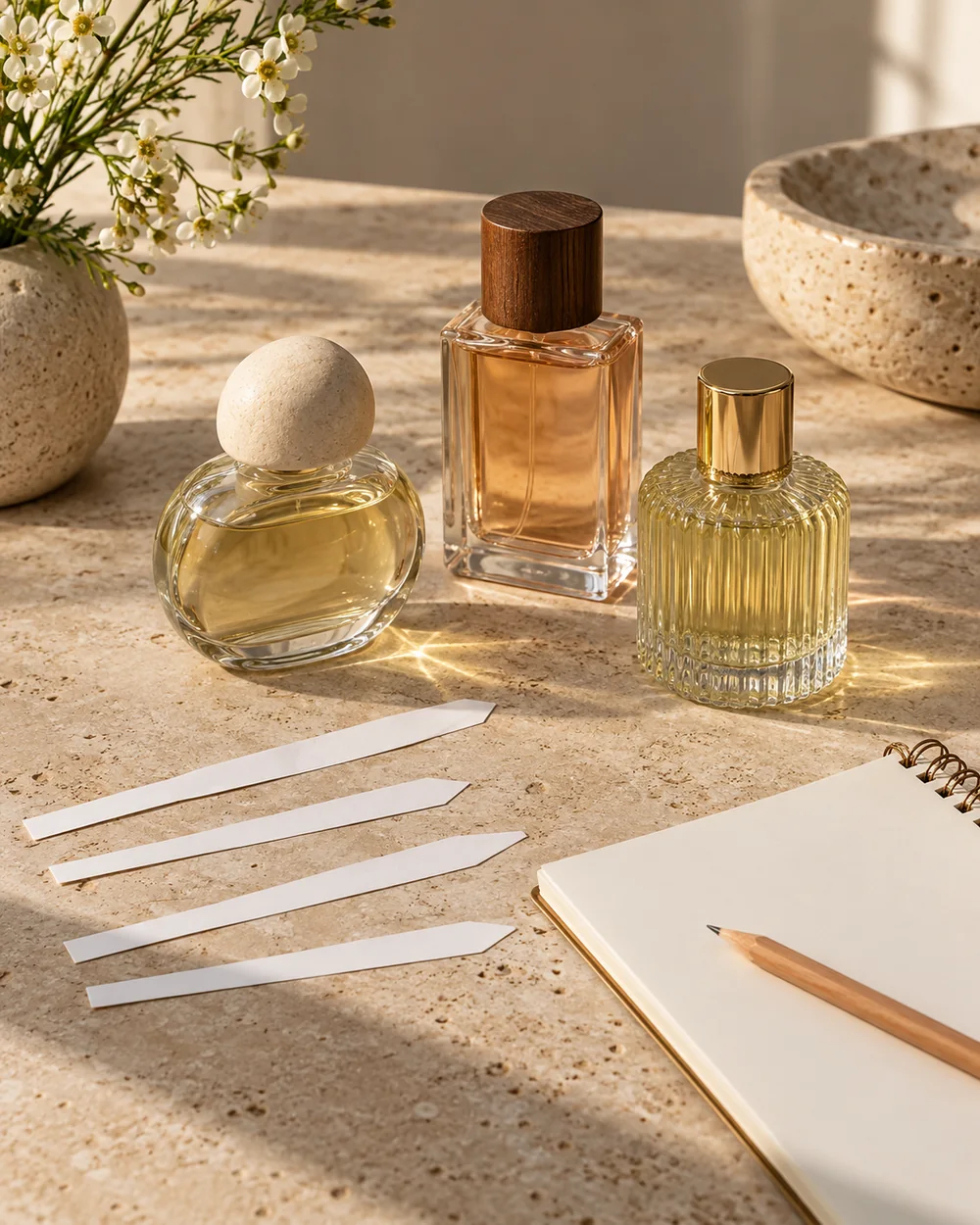
Three attractive bottles can suggest a collection, but they cannot tell you whether you will want to wear what is inside. A useful fragrance wardrobe begins with repeated preferences: something you enjoy in a particular setting, a different scent you return to, or one bottle that already does everything you need. The number comes after that observation.
Fragrance wardrobes appear in Pinterest’s October 2026 report. Before filling a shelf, consider how you want to use the scents you choose.
Start with a question you can answer
Choose one intended use: a fragrance you enjoy on an ordinary day, an occasional evening choice, or a replacement for a bottle you have finished. Do not start by trying to own every named fragrance family. Descriptions such as floral, woody or gourmand can help you ask for samples, but your own response matters more than recognising a list of notes.
In John Lewis’s original perfumer interviews, paper testing and allowing a fragrance to develop are recurring practical ideas. Their measured approach leaves room for your own preferences, without expecting a perfume to create a particular mood.
Use paper to narrow the choice
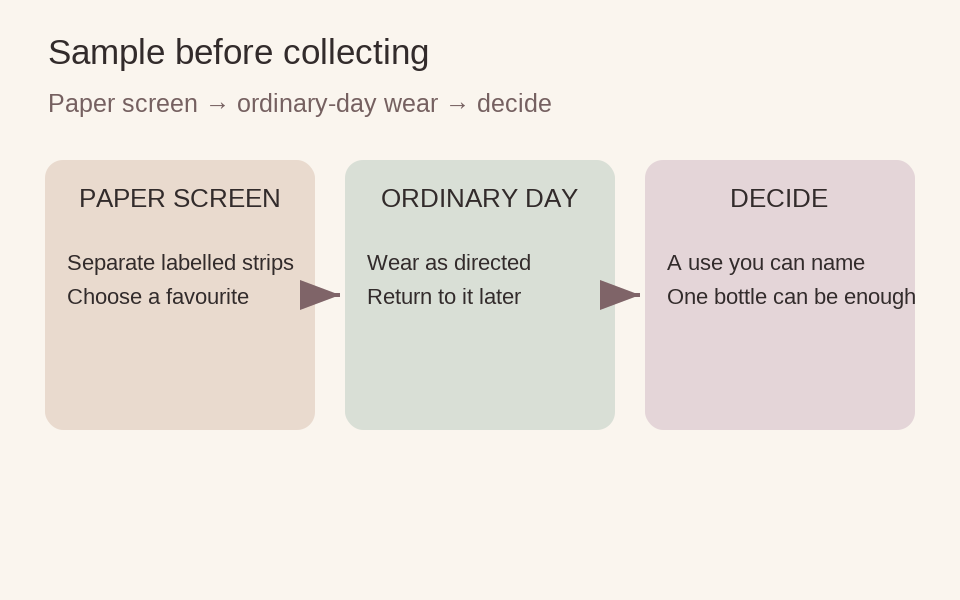
Ask for a small number of options and use a separate blotter for each. Write the exact fragrance name and version on the strip before you confuse them. Follow the tester’s directions and let a fresh application settle before smelling from a comfortable distance. Keep the strips separate so you can return to the right one.
Write an ordinary description: too sweet for this use, pleasantly dry, softer than expected, or worth trying again. You do not need a technical vocabulary. If the scents become hard to distinguish or the setting feels uncomfortable, stop and return another time. A decision made while everything smells similar is unlikely to teach you much.
Give the favourite an ordinary day
If you choose to wear a sample, follow its directions and use only a fragrance intended for personal use. Check the opening and return to it later in your normal day. Note whether you still enjoy it and whether its presence suits the place you are in. Respect fragrance restrictions and the comfort of people sharing the space; leaving it off is always an option.
Keep the exact version in your note. Eau de toilette, eau de parfum and other versions under one name can be different compositions, not simply predictable stronger or weaker copies. Do not assume a concentration label guarantees a fixed wear time, or that a paper strip proves how the scent will behave when worn.
Buy for a repeatable preference
Try again if the first day was unclear. Buy when the sample gives you a reason you expect to use: you enjoy its later character, its scale suits the setting, and it adds something your existing fragrance does not. One well-used bottle is already a workable wardrobe; the next can wait until your preferences make room for it.
Choose tools and products for the job you need. Check the directions, care information and any compatibility guidance for your own items.